Analysis · Meta
Smart Glasses Hit Mainstream in 2026: Key Moments So Far
From Meta's multimillion-unit surge to minimalist HUDs and budget virtual monitors, connected frames transformed into legitimate consumer staples over five fast months.

On May 11, 2026, a look back across the first half of the year confirmed what industry observers had suspected: smart glasses finally shed their novelty status and evolved into a legitimate eyewear category. The shift took barely five months. Between legacy tech giants establishing long-delayed platforms and boutique hardware makers refining specialized form factors, connected spectacles stopped acting like awkward mobile accessories. Instead, they began earning their place on retail shelves and prescription counters on their own merits.
The primary catalyst for this acceleration remains Meta. After launching the second-generation Ray-Ban Meta frames in late 2025 at $379, the tech giant transformed an experimental line into a genuine consumer blockbuster. Armed with double the battery life of its predecessor, 3K video recording, and faster multimodal on-device AI, the Gen 2 preserved the classic Wayfarer and Headliner styling that consumers already accepted. According to figures reported by The Gadgeteer, eyewear titan EssilorLuxottica confirmed sales topped seven million pairs of Meta AI glasses in 2025, more than tripling their previous annual volume. With their licensing pact extended into the next decade, Meta's formula of hiding digital hardware inside iconic acetate frames set the pace for the entire industry.
That dominance forced rivals to innovate in entirely different directions rather than cloning Meta's audio-and-camera blueprint. At the opposite end of the spectrum, Even Realities gained widespread attention at CES 2026 with its G2 frames. Rather than outfitting users with front-facing cameras and speakers, the G2 leans into discreet heads-up displays, weighing roughly the same as standard prescription glasses. As The Gadgeteer notes from its hands-on testing on the trade show floor, the device went unnoticed by attendees while quietly serving turn-by-turn directions, real-time translated captions, and glanceable alerts directly in the wearer's peripheral field of view.
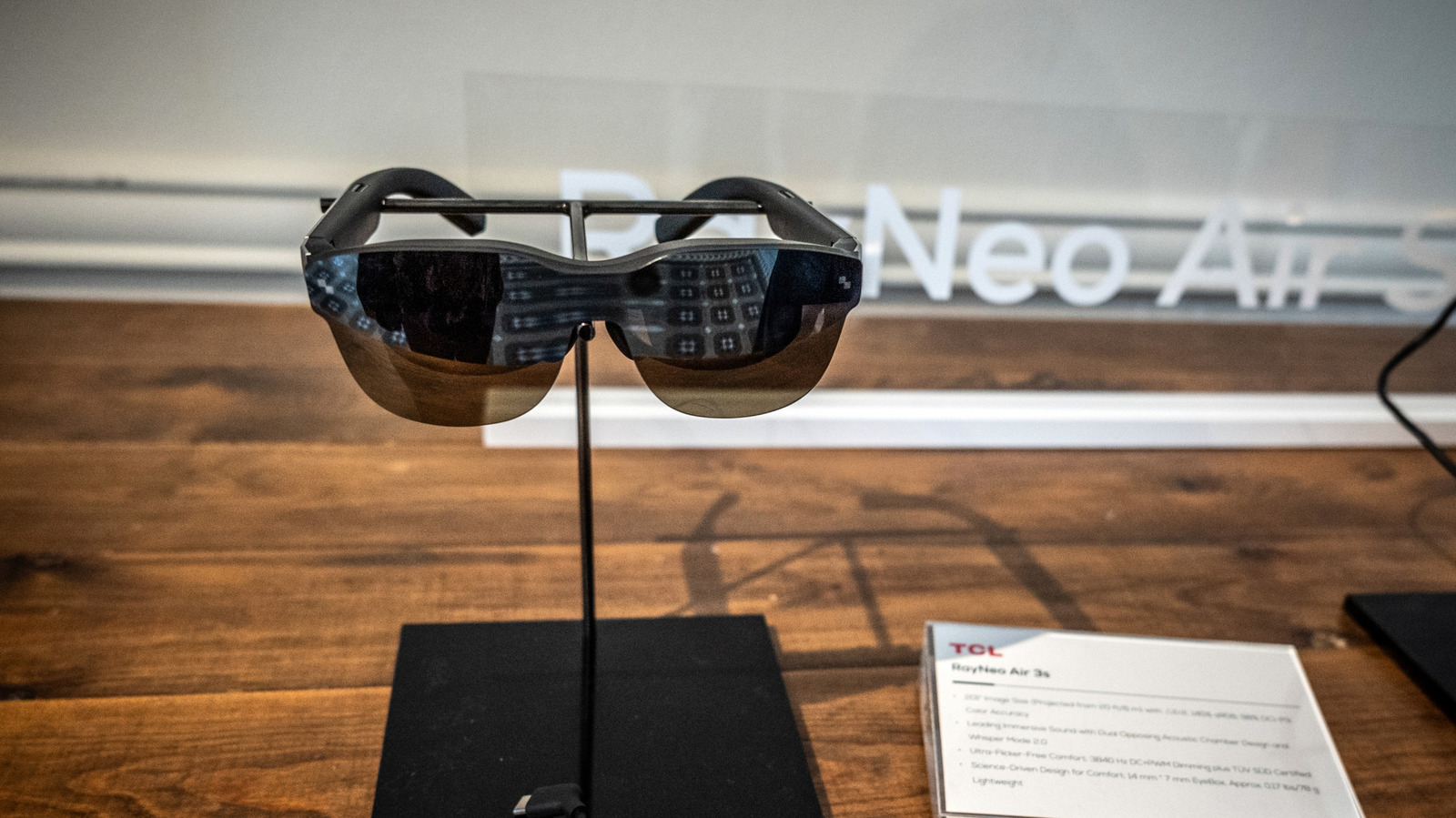
Meanwhile, wearable display makers abandoned luxury pricing to capture utilitarian desktop use. XREAL brought its tethered AR glasses down to $449 with the 1S line, positioning the hardware less as a standalone computing environment and more as a giant virtual monitor for smartphones, laptops, and portable gaming rigs like the Steam Deck. By slashing prices and refining plug-and-play video passthrough, screen-mirroring eyewear turned what used to be an expensive visual flex into a practical travel productivity tool.
The broader platform wars also began solidifying. Google partnered with luxury fashion house Gucci to project Android XR into the high-end apparel sector, while Apple shifted its spatial ambitions from experimental rumors into an active hardware roadmap. Together, these moves proved that ambient computing is no longer treated as an offshoot of virtual reality, but rather as the primary battleground for everyday personal interfaces.
Our take: The smart eyewear sector is finally mature enough to fracture into distinct, sustainable niches. Meta proved that camera-equipped AI frames can sell by the millions if they look like timeless sunglasses. Even Realities demonstrated that privacy-conscious buyers will embrace featherweight HUDs that omit cameras entirely. And XREAL showed that portable virtual monitors can thrive without complex spatial tracking. There is no longer a single, all-encompassing template for smart glasses, and that functional diversity is precisely why the category has reached critical mass.
Interactive guide: prices, displays, cameras, battery.
Share this story