Analysis · —
Smart Glasses are Dying Slow, Powerless Deaths. Nobody Cares.
The smart eyewear industry is obsessed with features, privacy, and form factor, completely ignoring its fatal flaw: power. We are building digital brains with analog hearts, a recipe for inevitable, frustrating failure.
Meta is prepping camera-free smart glasses to combat privacy backlashes and impending lawsuits. Snap is pouring billions into enterprise AR and trying to justify a $2,200 price tag for its Specs. SmartXY is entering the arena with a diverse strategy. Everyone, it seems, is playing a different game, chasing different dragons, yet a fundamental, crippling flaw pervades all their efforts, a flaw so obvious it's become invisible: the battery problem.
Look at the flurry of recent news. Meta is caught in a legal crossfire over privacy breaches and Right-to-Repair violations, all stemming from Ray-Ban Meta glasses that users are physically hacking. French prosecutors are investigating sexual harassment cases tied to discreet camera-equipped smart glasses. These are critical issues, certainly, but they are symptoms of adoption, of pushing these devices into the messy reality of human life. What enables that adoption, and then fundamentally limits it, is power.
We are witnessing a collective industry delusion. Companies are designing sophisticated AI into these tiny form factors. Snapchat Lens+ is integrating advanced AI for creative tools, allowing users to generate music from text and enhance photos. Meta's future glasses, both camera-enabled and camera-free variants, will undoubtedly lean heavily on AI. These are power-hungry processes, yet the conversation around their foundational energy source is conspicuously absent.
The geopolitical stakes are rising, as we've noted previously in 'China's Aggression Versus America's Smart Glasses Retreat'. Chinese firms are aggressively undercutting prices and diversifying their attack. America's giants, like Meta, are grappling with repair issues and privacy. This race, however, is being run by sprinters who forgot to hydrate. You can't win a global tech war on a two-hour charge.
Consider the solutions, or lack thereof. Verizon and SPECS Inc. recently debuted SPECS AR glasses, touting a 5G charging case that enables hands-free, untethered augmented reality experiences. This isn't a solution; it's a workaround. It's an acknowledgement that the glasses themselves cannot hold sufficient power or connectivity. This external, bulky "charging case" paradigm speaks volumes about the inherent power limitations plaguing the form factor.
Snap CEO Evan Spiegel, with characteristic boldness, asserts the smartphone era is concluding, with smart glasses poised as the future. He's backing this vision with a $3.5 billion investment in AR for enterprise applications. This is a massive bet. But what good is a post-smartphone era if your smart glasses die halfway through your workday, or worse, mid-presentation? An enterprise-grade device demands enterprise-grade endurance, not a constant scramble for a charger.
The current crop of smart glasses, including Meta's dominant Ray-Ban models, operate on limited internal batteries, often necessitating recharging multiple times a day if used actively. This isn't just an inconvenience; it's a fundamental barrier to the seamless, always-on utility that the industry relentlessly promises. We're building the infrastructure for a continuous digital layer, but powering it with the equivalent of disposable watch batteries.
Right-to-Repair movements, like the one Acme Revival is championing against Meta and Luxottica in Colorado, highlight a different facet of the problem. While focused on component access, the difficulty of replacing internal, often non-standardized batteries in these miniature devices is a repair nightmare. The design choices made to achieve sleek aesthetics directly compromise longevity and user autonomy, pushing devices towards planned obsolescence.
This isn't just about consumer annoyance. If smart glasses are truly to be the next ubiquitous computing platform, they must transcend the fragile, power-dependent nature of their predecessors. We can't have augmented reality breaking off mid-interaction because the device ran out of juice. We can't have seamless AI integration that constantly reminds you of its tether to a wall socket or an external battery pack.
The industry needs a radical shift in focus. Instead of endlessly iterating on camera resolutions, display technologies, or even privacy features, which are admittedly important, we need a genuine breakthrough in power storage. This means more than just slightly larger batteries; it demands entirely new energy solutions, or at minimum, an industry-wide commitment to energy-efficient AI and hardware at a fundamental level.
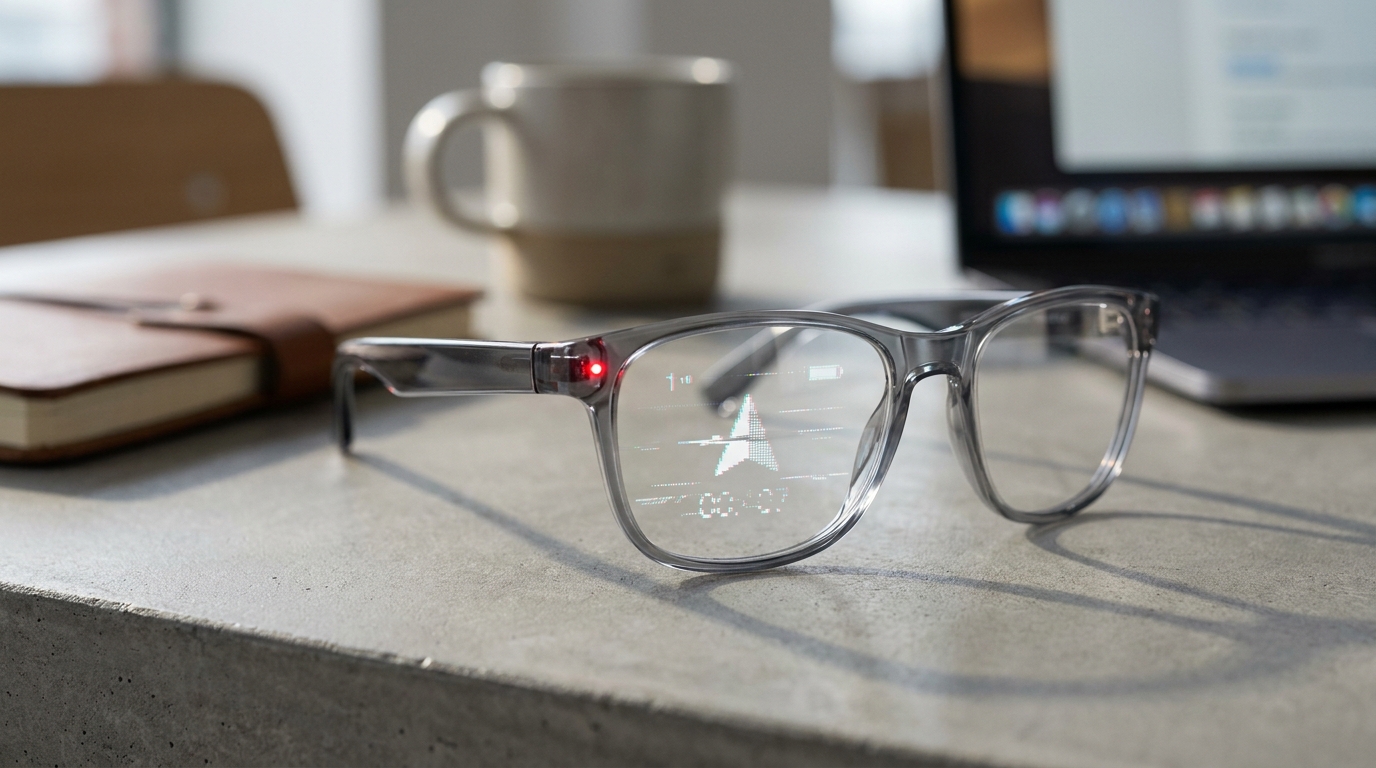
The smart glasses market is a battleground, as Smart Glasses Daily Originals has consistently observed, but it's one where all contenders are fighting with depleted weapons. We see exciting AI advancements, privacy controversies, and geopolitical machinations. Yet, beneath it all, the blinking red light of a dying battery remains the silent, ignored killer of innovation, rendering every grand vision impotent.
Smart eyewear is a future worth fighting for, but not if that future is perpetually tethered to a power outlet. Until a significant, industry-wide focus shifts towards solving the fundamental power problem, these devices will remain niche gadgets, hobbled by their own ephemeral energy, perpetually promising more than they can deliver on a single charge.
Interactive guide — prices, displays, cameras, battery.
Share this story