Reviews · Rokid
Rokid Glasses Review: Do AI Glasses Need a Screen?
Rokid enters the AI glasses space with a unique twist: a built-in monochrome display. This hands-on review explores if the addition of a screen genuinely elevates the smart eyewear experience or amounts to little more than a marketing gimmick.

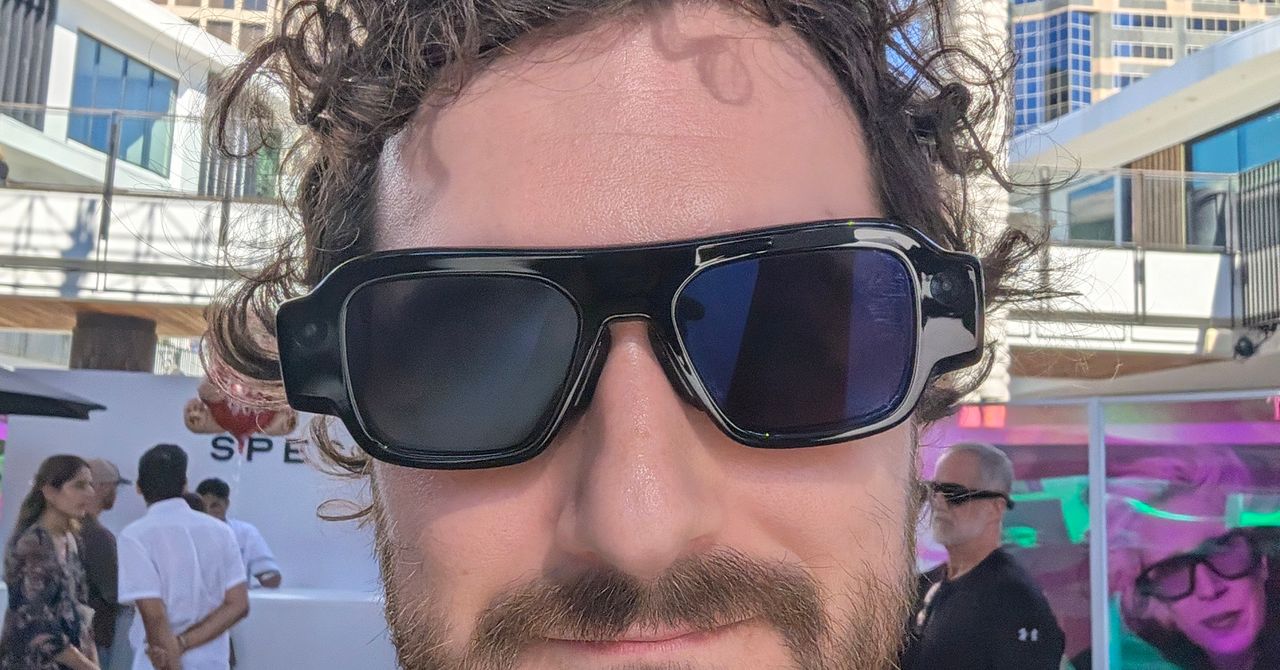
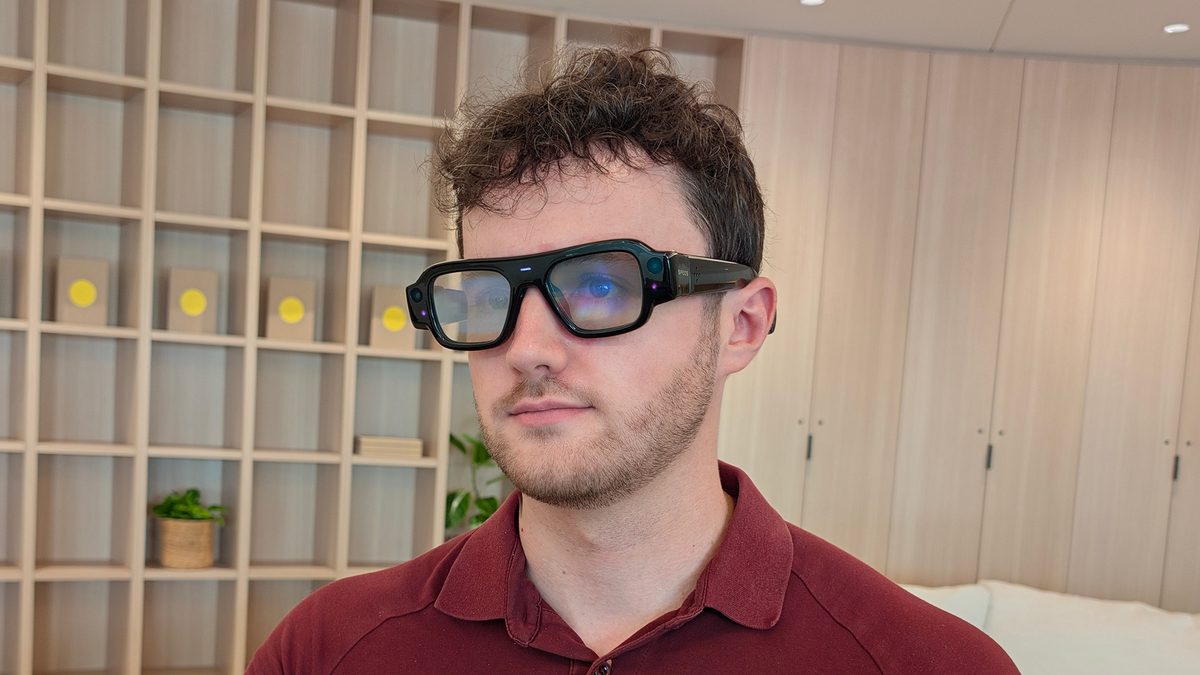
Rokid is making waves with its new Rokid Glasses, a hybrid offering blending AI and AR capabilities. While these smart specs share a resemblance to Meta's Ray-Ban lineup, Rokid distinguishes itself with a key feature: an integrated screen. PhoneArena, in its recent review, notes this display is monochrome and tiny, yet it represents a fundamental departure from the screen-less AI glasses trend.
The Rokid Glasses generated significant buzz during their crowdfunding campaign, reportedly securing over $4 million in less than two months. However, PhoneArena's review questions the genuine nature of this excitement, suggesting that established companies sometimes leverage platforms like Kickstarter primarily for marketing visibility rather than pure grassroots support. The outlet raises a pertinent question: Is the hype surrounding these glasses truly justified?
Our take: We've been tracking the market's reception to subtle visual feedback in smart glasses. The inclusion of even a small, monochrome screen by Rokid indicates a divergence from the minimalist approach taken by some competitors. Whether this adds crucial utility or merely complicates the design without significant benefit remains a critical point for user adoption. The challenge for Rokid, as for any innovator in this space, is to prove that its distinct features offer tangible value beyond initial crowdfunding enthusiasm.
## Key specs and display utility
The core question PhoneArena asks hinges on whether adding optical hardware compromises the lightweight form factor expected from daily eyewear. Rokid managed to keep the Rokid Glasses down to 49 grams while operating untethered with no cable required. Rather than projecting full-color media, the hardware relies on a dual-eye monochrome display with a 30-degree field of view and 1,500 nits of brightness, tuned specifically for legible text overlays in ambient light.
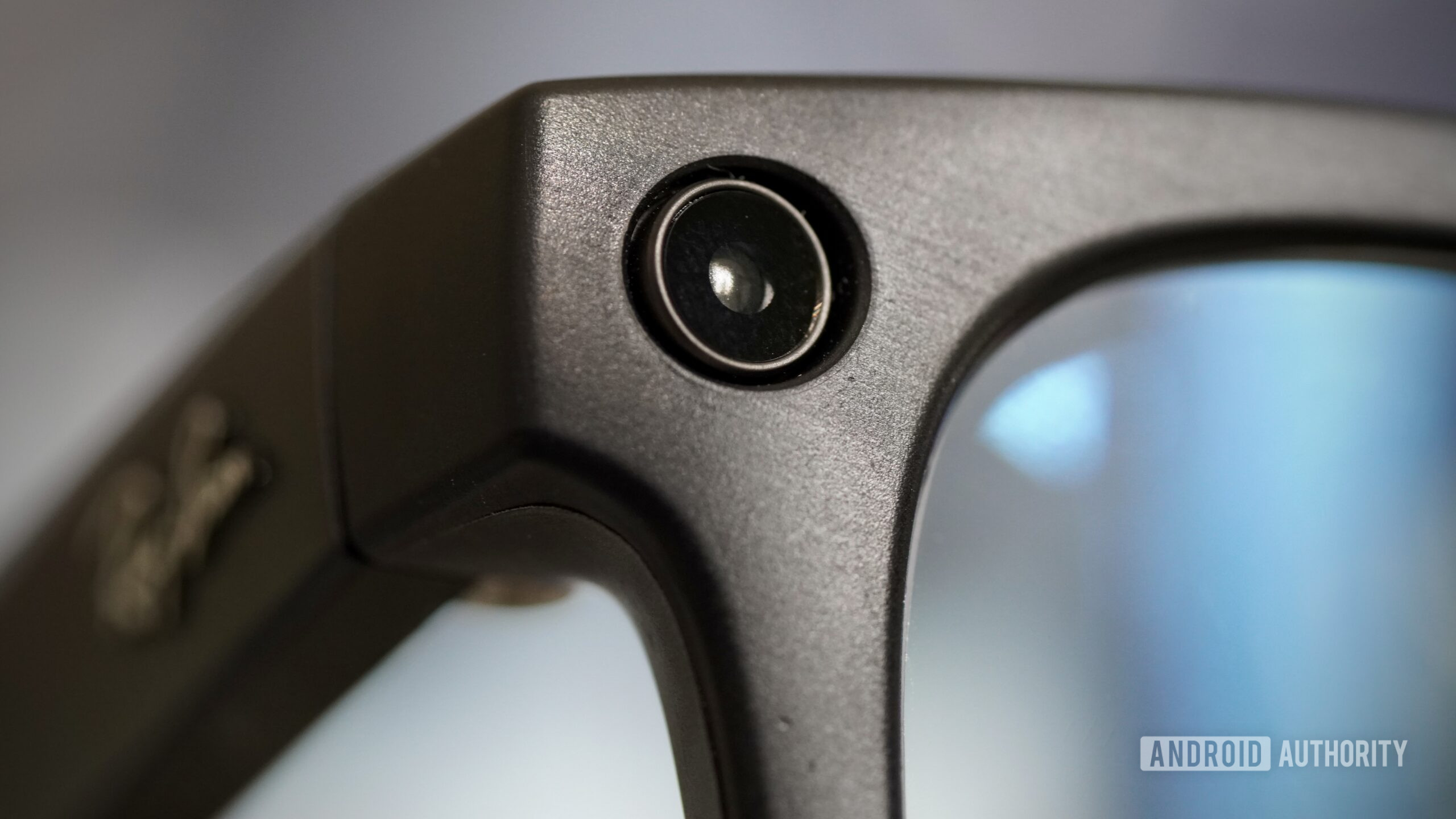
Internally, the frames run on Qualcomm's Snapdragon AR1 Gen 1 platform alongside an RT600 coprocessor (MIMXRT685SFAWBR), backed by 2GB of RAM and 32GB of storage. Connectivity includes Wi-Fi 6 and Bluetooth 5.3. Audio capture and playback rely on four directional microphones and two AAC 0920 speakers. The onboard 12 MP camera uses a Sony IMX681 sensor with a 109-degree wide view, an F2.25 aperture, fixed focus with depth of field from 34 centimeters to infinity, and a 3-degree inward tilt to align with user gaze. Video records at 1680p.
Where Rokid attempts to justify the heads-up display is through practical utility over entertainment. The glasses support on-device AI as well as cloud assistants including GPT, Gemini, and Rokid's proprietary Hi Rokid LLM. The monochrome screen provides instant visual feedback, notably enabling live translation across 89 languages with side-by-side bilingual subtitles in conference mode.
## How it compares to screenless AI frames
To understand Rokid's gamble on a built-in display, it helps to examine the brand's parallel hardware strategy. Alongside the HUD glasses, Rokid introduced the screenless Rokid AI Glasses Style (Bolon). That voice-first model drops the frame weight to 38.5 grams and costs $349, compared to the regular $799 price (discounted to $679 or $699 during pre-order) of the display model.
The screenless Style frames share the same Snapdragon AR1 Gen 1 and RT600 architecture, dual AI integration with GPT and Gemini, Wi-Fi 6, Bluetooth 5.3, a 12 MP camera, four directional microphones, and dual AAC open-ear speakers, while providing a 12-hour battery life. By offering both designs, Rokid allows users to decide whether textual visual feedback justifies an additional price premium and an extra 10.5 grams of weight.
Meanwhile, Rokid's dedicated display line serves a completely different audience. The tethered Rokid Max 2 weighs 75 grams, connects via USB-C DisplayPort, and uses Sony 0.68-inch micro-OLED panels delivering 1200p per eye at 120 Hz and 600 nits across a 50-degree field of view. Unlike the Max 2, the Rokid Glasses are built as a functional heads-up notification prompt rather than a wearable theater.
## Updates since publication
Since this article was published in June 2026, Rokid's smart eyewear lineup has expanded, while also drawing regulatory and user scrutiny. On June 12, 2026, we reported on covert filming concerns and privacy loopholes surrounding Rokid AI glasses, as users were observed recording without consent and masking indicators with stickers.
Later, as we reported on September 17, 2026, Rokid updated its pricing details, listing the 49-gram Rokid Glasses at $699. In October 2026, we reported that Rokid brought both the display model and the voice-focused Rokid AI Glasses Style to France.
Most recently, as we reported on November 2, 2026, Rokid introduced the Rokid Glasses 2 with a 4K camera and Dolby audio, alongside the 55-gram full-color Rokid Color glasses priced at 4,999 yuan and the Rokid Ring controller. These developments show that Rokid remains committed to heads-up displays, pushing optics and input methods well past its initial monochrome HUD.
Interactive guide: prices, displays, cameras, battery.
Share this story