Reviews · BlackSheep
Blacksheep Launches 49-Euro AI Smart Glasses, Challenging Ray-Ban Meta's Dominance
Florian Bayard of 01net puts the ultra-affordable Blacksheep smart glasses to the test, finding surprising AI capabilities despite inevitable budget limitations in audio and hardware.
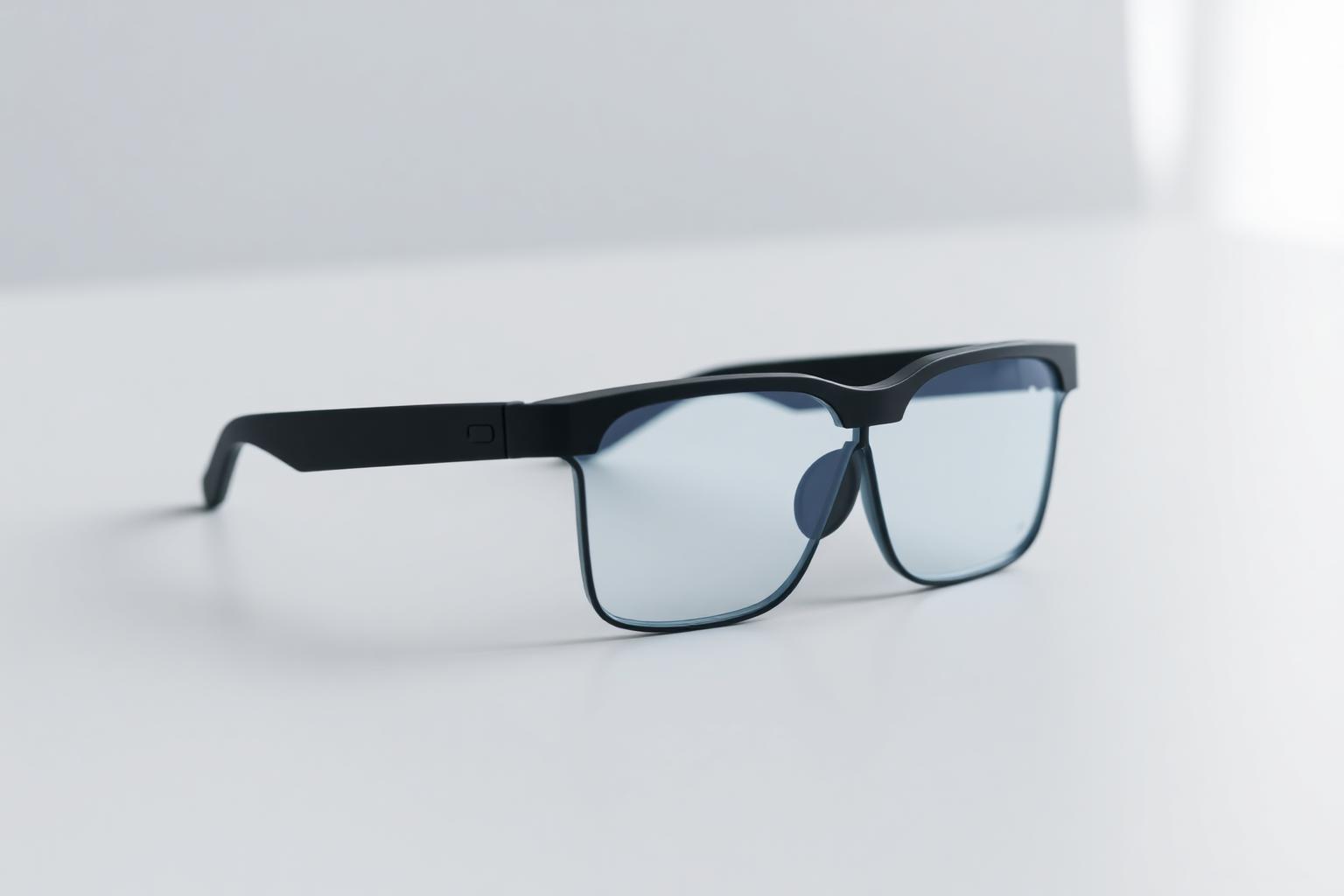
Chinese tech giant Blacksheep has made a bold entry into the French smart glasses market, launching an AI-powered pair for an astonishing 49 euros. This aggressive pricing positions them as a direct challenger to premium devices like the Ray-Ban Meta, which typically retail for over 300 euros. Florian Bayard of 01net spent several days testing these "made in China" smart glasses, initially approaching them with understandable skepticism given the vast price difference. Blacksheep explicitly aims to be the "Shein of eyewear," disrupting the market with ultra-competitive pricing across its product range.
The budget-conscious approach is immediately evident in the Blacksheep's unboxing experience. Florian Bayard notes the glasses arrive in a lightweight cardboard box, lacking brand inscriptions and a proper protective case. This minimalist packaging, reminiscent of supermarket chocolates rather than a tech gadget, starkly contrasts with the sophisticated leather charging case accompanying Ray-Ban models. The reviewer found this ultra-low-cost presentation initially off-putting, raising concerns about the overall connected experience.
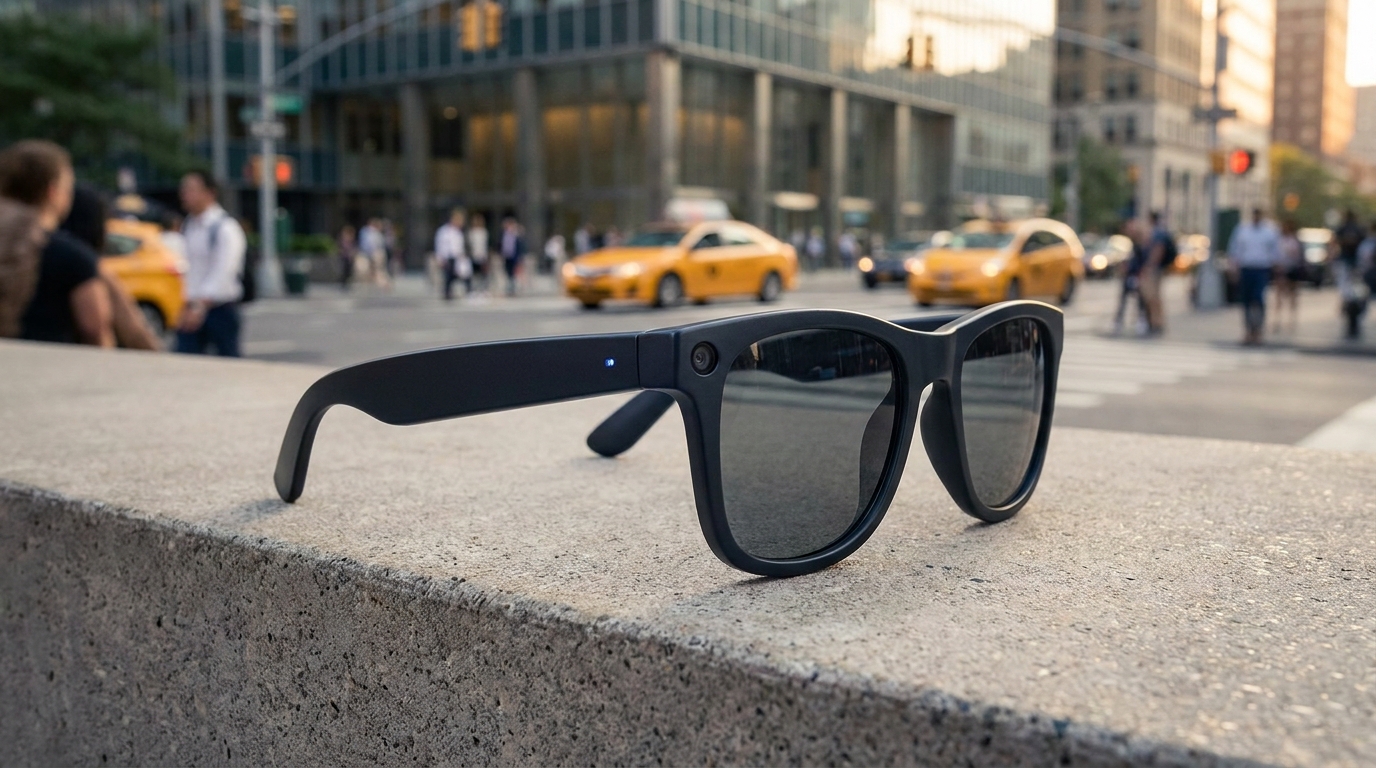
Despite the no-frills packaging, the Blacksheep glasses themselves present a surprisingly refined design for their price point. Florian Bayard describes them as somewhat thick but relatively light, featuring matte black frames and tinted lenses. Notably, the glasses bear no branding or legal mentions, an oddity the reviewer pointed out. They are equipped with physical buttons and a touch panel on the temples, alongside a dual-camera setup near the lenses, offering a comprehensive suite of smart functionalities.
The Blacksheep glasses deliver a complete connected experience, enabling music listening, calls, audio recording, and photo capture, all managed via the "HeyCyan" companion app. This app, also devoid of Blacksheep branding, features a clean interface and detailed tutorials, making setup straightforward. However, the integrated speakers, located at the temple ends, betray the device's budget constraints. Florian Bayard likened the audio quality to an "old radio," noting significant distortion and crackling at higher volumes, especially in quiet environments.
The audio experience falls short in practical scenarios, as Florian Bayard discovered while listening to an audiobook during a windy walk. The sound was easily disrupted, a problem not encountered with Ray-Ban Meta or Oakley Vanguard glasses. Call quality also demanded maximum volume. Despite this, the dual microphones performed adequately, with call recipients unaware the reviewer was using smart glasses. The reviewer concluded these glasses would not replace dedicated headphones for audio consumption.
The HeyCyan voice assistant, while basic, proved more effective than anticipated for daily inquiries like weather or time, according to Florian Bayard. Its integration with a smartphone remains limited, preventing actions like sending messages. However, the AI's image recognition capability was a pleasant surprise. Using the photo sensors, the assistant accurately described surroundings, a feature Florian Bayard found practical for navigation or shopping, and noted it even surpassed the performance of Ray-Ban in this specific aspect.
Blacksheep distinguishes itself further with effective translation tools. Florian Bayard was impressed by the real-time simultaneous interpretation, which, despite a few seconds of latency, allowed for following conversations in foreign languages, comparable to Meta's offering. The screen translation feature, facilitating face-to-face communication, was also deemed practical and accurate. While the meeting transcription tool showed potential, it suffered from inconsistencies, particularly with rapid or less articulate speech.
The dual 8-megapixel cameras capture 1080p photos and videos. While not on par with modern smartphones, Florian Bayard considered the quality acceptable for casual use, though unsuitable for demanding photographers or content creators. Low-light performance was particularly weak. Battery life, with a 410 mAh capacity, ranges from 2 to 4 hours, plummeting to under 1.5 hours with heavy use. The absence of a charging case means no on-the-go recharges, relying instead on a proprietary magnetic cable for a 1-1.5 hour full charge, another cost-saving measure evident in many Chinese smart glasses.
Our take: The Blacksheep smart glasses represent a significant development in the burgeoning wearable tech market. While Florian Bayard of 01net's review highlights clear compromises in audio and battery life, their astonishingly low price and surprisingly effective AI translation and image recognition capabilities are noteworthy. They aren't a direct competitor to premium offerings like Ray-Ban Meta in overall refinement or integrated ecosystem. However, these budget-friendly glasses signal a growing wave of accessible smart eyewear, particularly from Chinese manufacturers. For consumers seeking core AI features without the premium price tag, Blacksheep offers a compelling, albeit imperfect, entry point, potentially expanding smart glasses adoption beyond early adopters.
Interactive guide — prices, displays, cameras, battery.
Share this story