Analysis · —
Meta's Smart Glasses Diversion: The AR Display War is Being Won Elsewhere
Meta's Connect 2026 announcements unveiled fashion frames, Dolby audio, and advanced AI, but conspicuously absent was any meaningful progress in consumer AR displays.
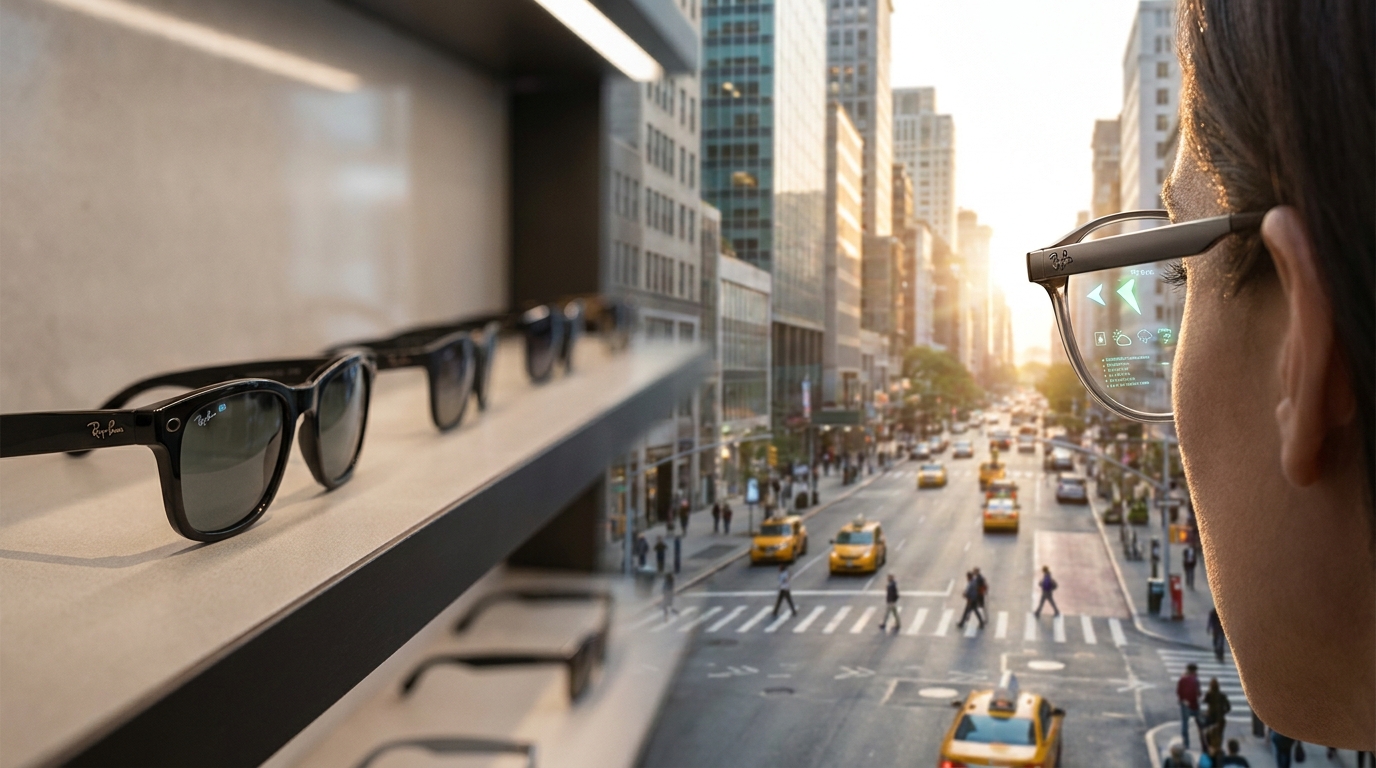
Meta wrapped up Connect 2026 with a predictable flurry of announcements. New Ray-Ban Meta Gen 3 frames, a collaboration with BLACKPINK's LISA, Dolby Atmos audio, and the "Muse" AI agent all took center stage. The company is clearly trying to reposition its smart glasses as a fashion accessory and a discreet AI companion, desperately seeking mainstream appeal and a path out of its privacy quagmire. But behind the glitz and the influencer endorsements, one glaring omission speaks volumes about the true state of the AR market.
What Meta didn't talk about, not for its consumer Ray-Ban line, was any substantial advancement in integrated AR displays. This is not an oversight; it's a strategic retreat from the fundamental promise of augmented reality. Instead, Meta is heavily leaning into its camera and audio capabilities, with the Gen 3 models boasting a 12-megapixel camera and a six-microphone array for "360-degree Dolby Atmos spatial sound" [2]. These are impressive features, certainly, but they sidestep the core challenge of placing persistent, contextual visual information directly into a user's field of view.
The company's focus on aesthetics is undeniable. The Ray-Ban Meta Gen 3 offers 27 distinct frame and lens combinations, introducing new styles like the Zena cat-eye [1]. Meta is pushing camera-free Ray-Ban Meta Audio models, stripping back features to prioritize discretion and extended battery life [5, 9]. This signals a company grappling with its identity, attempting to be everything to everyone: a fashion statement, a discreet audio device, a privacy-conscious option. But it's not a cohesive strategy for winning the AR display war.
Indeed, much of Meta's energy is consumed by damage control. The persistent battery problem, as we've noted previously, plagues the entire smart eyewear industry [6]. More critically, Meta faces ongoing privacy backlashes and class-action lawsuits stemming from its camera-first strategy, with allegations of non-consensual sharing of sensitive user images [8, 9, 12]. This legal and reputational quagmire forces Meta to make reactive moves, like introducing camera-free versions, rather than proactive innovations in AR display technology.
Their supposed "display" play, the Meta VR Glasses, is a completely different beast [4]. Priced at $1,299.99 and arriving in 2027, this tethered device achieves a lightweight form factor by offloading its processing to an external puck. With dual micro-OLED panels delivering a "5K Infinite Display" at 120 Hz, it's a potent VR headset designed for extended film viewing and virtual workspaces. It is, by all accounts, a technical marvel for virtual reality, not augmented reality seamlessly integrated into everyday smart glasses.
This distinction is crucial. Meta is pouring resources into a premium, tethered VR device while its mainstream smart glasses remain largely camera and audio conduits. The "Meta VR Glasses" project is an admission that achieving high-fidelity, untethered AR displays in a conventional form factor remains an elusive goal for them. They've effectively punted the true AR display challenge to a different product category, one with fewer constraints on size, weight, and computational power.
This strategic gap leaves the door wide open for competitors. While Meta is chasing fashion trends, battling privacy lawsuits, and building niche VR systems, companies like RayNeo, XREAL, and Rokid have been quietly, relentlessly focused on the actual AR display. They understand that the future of smart glasses isn't just about recording what you see, but about augmenting what you see, effortlessly.
These silent victors are not bogged down by the baggage of a social media empire or the need to constantly reinvent consumer privacy narratives. Their mission is singularly focused: to deliver high-quality, transparent, and aesthetically acceptable AR displays into the frames of smart glasses. They are prioritizing the core visual interface that defines true augmented reality.
The mainstream media, heavily influenced by Meta's marketing muscle, continues to report on Meta's product iterations as the pinnacle of smart glasses innovation. Yet, these reports frequently miss the elephant in the room: Meta's primary consumer offering lacks the very component essential for what most people envision as true smart glasses. There's no heads-up display projecting digital information onto the real world in Meta's Ray-Ban line.
While Meta is busy with Dolby integrations and AI agents in screen-free glasses, the real innovation in visual overlay is happening elsewhere. The market for true AR display-equipped smart glasses is maturing, driven by companies dedicated to overcoming the optical and power challenges Meta seems content to avoid in its primary consumer line.
Consider the geopolitical landscape: China's "aggression versus America's smart glasses retreat," as we've noted [8]. While Meta is distracted by privacy compliance and fashion collaborations, agile Chinese firms, including players like RayNeo and Rokid, can operate with different market pressures and regulatory environments, accelerating their display R&D without the same public scrutiny over features like integrated cameras.
The future of smart glasses demands more than just a camera and an AI assistant. It requires a seamless, intuitive visual layer that integrates digital information with the physical world. This is the promised land of augmented reality. By sidestepping this critical path for its consumer products, Meta is effectively ceding the most important battleground.
Meta's strategy, for all its polish, reveals a fundamental miscalculation or a deep-seated technological hurdle regarding true AR display in a conventional form factor. While they are celebrating new frame styles and advanced audio, the silent contenders are quietly perfecting the very technology that will define the next era of smart eyewear.
The AR display war is not being fought on the fashion runway or in the legal trenches over privacy. It is being won in the labs and factories of companies laser-focused on micro-LEDs, waveguides, and optical engines. When true AR smart glasses finally break through, it will be on the back of display technology Meta has chosen to largely ignore for its mass-market offerings.
Interactive guide — prices, displays, cameras, battery.
Share this story