
News · Meta
Meta's AI Glasses Face German Criminal Complaint Over Privacy Breaches
German advocacy group HateAid filed a criminal complaint against Meta and its retail partners, alleging Ray-Ban Meta smart glasses qualify as banned covert recording devices.
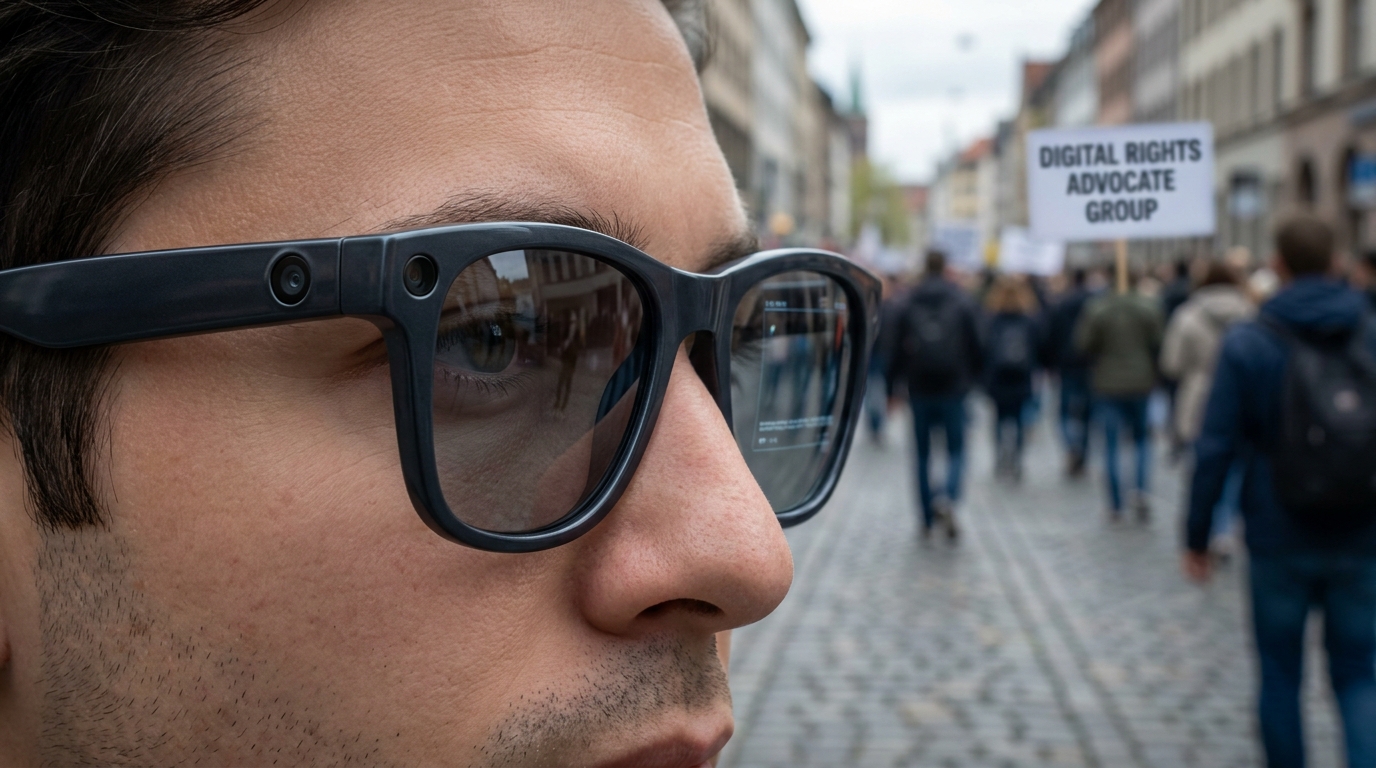
Meta's European hardware expansion is hitting a familiar legal wall. On August 16, 2026, reports highlighted a criminal complaint filed by German digital rights advocacy group HateAid against Meta, eyewear partner EssilorLuxottica, and four major retail distributors across Germany. The filing alleges that the Ray-Ban Meta Wayfarer smart glasses violate strict federal privacy and telecommunications laws designed to curb covert recording gear.
The complaint targets top management at Meta and EssilorLuxottica, as well as prominent opticians and electronics chains including Fielmann, Apollo-Optik, Mister Spex, and MediaMarkt. HateAid submitted the complaint directly to ZIT, the specialized digital crime prosecution unit based in Frankfurt. According to Reuters, HateAid managing director Josephine Ballon argued that bystanders have no way to escape the technology, warning that members of the public must now expect to be filmed and broadcast online without consent at any moment.
At the heart of the legal action is a German federal statute that forbids manufacturing, distributing, or possessing covert surveillance equipment that conceals a camera inside ordinary everyday objects. Germany has historically maintained some of the most aggressive personal privacy safeguards in the Western world, treating surreptitious recording as a criminal offense rather than a civil dispute. Reuters reports that ZIT confirmed receipt of the complaint and is conducting a routine preliminary review to determine if a formal investigation is warranted.
Retailers are already feeling the pressure. MediaMarktSaturn stated that it takes the complaint seriously, adding that its contracts strictly obligate suppliers to provide goods compliant with local laws. Mister Spex indicated that it had not yet received official notice of the filing. Meanwhile, the Federal Network Agency (BNetzA), which regulates telecommunications equipment, told Reuters it is monitoring the consumer smart glasses market closely but is not currently running an active investigation.
The regulator previously noted that smart glasses remain legal to sell, import, and wear in Germany as long as the capture function is prominently signaled, such as through a visible optical indicator. Meta built an exterior LED into the frame that illuminates whenever video capture is active or photos are taken. However, privacy advocates and researchers have pointed out that users can easily bypass this measure by obstructing or taping over the diode, effectively turning consumer eyewear into an undetectable espionage tool.
What this means: Smart glasses makers cannot rely on Silicon Valley assumptions when entering privacy-conscious European markets. While Meta treats its small capture LED as an adequate compromise between utility and notice, German legal standards around surveillance hardware are exceptionally strict. If regulators or prosecutors decide that a tapeable optical diode fails to eliminate the covert nature of the camera, Meta and EssilorLuxottica could face severe retail bans that unravel their hardware distribution across the European Union.
Interactive guide: prices, displays, cameras, battery.
Share this story





