Analysis · —
Kickstarter, 80 Days Later: What Happened to the Smart Glasses Campaigns We Tracked
In May we said crowdfunding was screaming. We went back to check every campaign, and two brand new ones just raised $1.7 million between them.
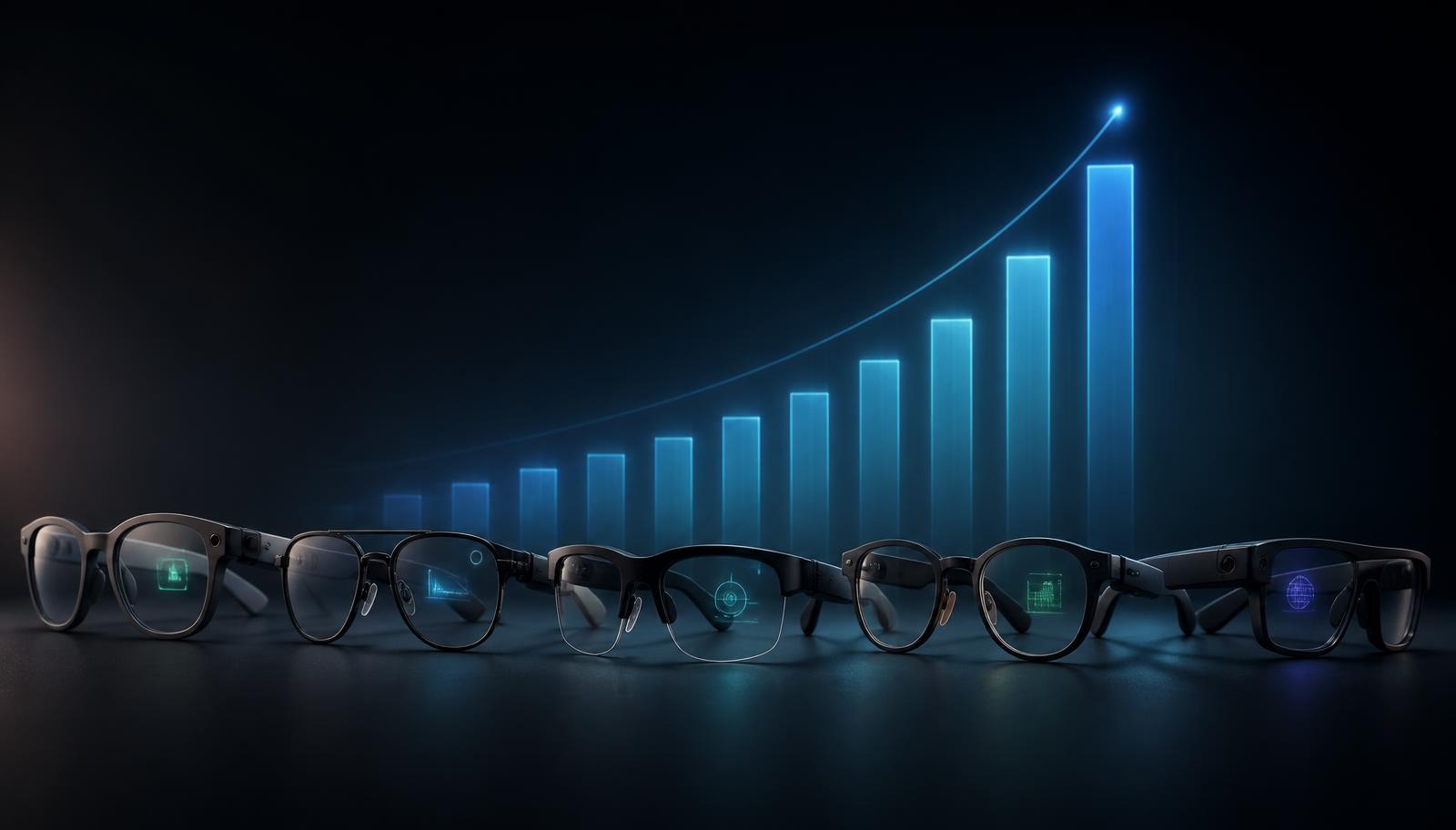
Eighty days ago we argued that the smart glasses revolution was not being announced at keynotes, it was being crowdfunded. Five campaigns had raised roughly $5 million from more than 7,500 backers on goals that added up to less than $90,000. That piece was a snapshot. A snapshot is worthless if you never go back, so we did, and we also went looking for what has launched since. The short version: nothing collapsed, the money kept coming, and the newest arrivals are raising more, faster, on harder hardware.
- Goal
- $10,000
- May 28, 2026
- $1,393,942
- Aug 15, 2026
- $1,440,000
- Backers
- ~3,500
- Funded
- 14,400%
- Campaign
- Kickstarter
- Goal
- HK$100,000
- May 28, 2026
- ~HK$4.49M (~$575k)
- Aug 15, 2026
- HK$8,414,447 (~$1.08M)
- Backers
- 1,513
- Funded
- 8,414%
- Campaign
- Kickstarter
- Goal
- $1,000
- May 28, 2026
- $646,200 (closed)
- Aug 15, 2026
- $657,000+ (late pledges)
- Backers
- n/a
- Funded
- 65,700%
- Campaign
- Kickstarter
- Goal
- S$28,000
- May 28, 2026
- S$448,574 (closed)
- Aug 15, 2026
- Shipped, direct sales
- Backers
- n/a
- Funded
- 1,602%
- Campaign
- Kickstarter
- Goal
- $10,199
- May 28, 2026
- not launched
- Aug 15, 2026
- $1,100,000+
- Backers
- 2,000+
- Funded
- ~11,000%
- Campaign
- Kickstarter
- Goal
- n/a
- May 28, 2026
- not launched
- Aug 15, 2026
- ~$673,000 ($500k in 24h)
- Backers
- n/a
- Funded
- n/a
- Campaign
- Kickstarter
- Goal
- < $90,000
- May 28, 2026
- ~$5,000,000
- Aug 15, 2026
- > $7,000,000
- Backers
- > 10,000
- Funded
- Campaign
| Brand / Model | Goal | May 28, 2026 | Aug 15, 2026 | Backers | Funded | Campaign |
|---|---|---|---|---|---|---|
| Everysight Maverick AI | $10,000 | $1,393,942 | $1,440,000 | ~3,500 | 14,400% | Kickstarter |
| INMO GO3 | HK$100,000 | ~HK$4.49M (~$575k) | HK$8,414,447 (~$1.08M) | 1,513 | 8,414% | Kickstarter |
| VIZO Z1 Pro | $1,000 | $646,200 (closed) | $657,000+ (late pledges) | n/a | 65,700% | Kickstarter |
| TQSKY T1 | S$28,000 | S$448,574 (closed) | Shipped, direct sales | n/a | 1,602% | Kickstarter |
| XGIMI MemoMind One | $10,199 | not launched | $1,100,000+ | 2,000+ | ~11,000% | Kickstarter |
| URXR One | n/a | not launched | ~$673,000 ($500k in 24h) | n/a | n/a | Kickstarter |
| Total | < $90,000 | ~$5,000,000 | > $7,000,000 | > 10,000 |
Start with Everysight. The Maverick AI campaign closed on May 15 as a fully funded project and has kept collecting late pledges ever since. The Seattle-based team, founded in 2012 by aerospace optical engineers and previously picked by BMW Motorrad to power its ConnectedRide smartglasses, is now sitting around $1.44 million from roughly 3,500 backers on a goal of about $10,000. The pitch has not moved: 47 grams, full-color OLED in-lens display, eye tracking on the Pro version, live translation, prescription-ready frames, and a claimed 8 hours of battery. Late-pledge windows are the tell here. A campaign that keeps taking money weeks after the clock stops is a campaign with demand it never engineered for.
INMO's GO3 was still mid-flight when we wrote. It finished at HK$8,414,447, roughly $1.08 million, from 1,513 backers against a HK$100,000 goal. That is a 84x overshoot on a $499 pair of translation-first glasses with 98-plus languages, two-way and photo translation, AR navigation, a teleprompter mode, AI notes and hot-swappable batteries. INMO is now selling the GO3 on its own site with backers getting shipping priority, which is the classic crowdfunding graduation move: use Kickstarter to prove the demand curve, then move the funnel in-house before the margins get eaten by platform fees.
VIZO, the XR brand incubated by TOZO, is the case study for what a $1,000 funding goal really means. The Z1 Pro campaign wrapped on March 27 at $646,200 pledged and has since passed $657,000 through late pledges. The product is unglamorous in the best way: 63 grams, a 160-inch virtual screen, high brightness, SteamVR compatibility. No agent, no assistant, no ambition to reinvent your day. Just a private cinema and a gaming display you fold into a case, which turns out to be a product thousands of people will pay for without being told a story about the future of computing.
TQSKY is the one that answers the question every crowdfunding skeptic asks first: did anyone actually get the hardware? The T1, funded at S$448,574 out of Singapore, has completed backer fulfillment according to Chinese trade press, and the company now runs direct sales through its own store with standard worldwide shipping. That matters far more than the funding multiple. Delivery is where crowdfunded eyewear historically dies, and the smaller, entertainment-focused projects are the ones clearing that bar first, because a display and a pair of speakers is a supply chain problem, not an AI problem.
Now the new arrivals, and this is where the last eighty days got interesting. XGIMI, a projector company most people know from living rooms rather than faces, put the MemoMind One on Kickstarter in June. It has crossed $1.1 million from more than 2,000 backers against a goal of about $10,199, which works out to roughly 11,000 percent funded, with the campaign running to August 28 and shipping promised for the end of this month. Prices start near $400. The notable part is what it leaves out: there is no camera. Just a microLED display, always-on microphones, and an AI layer for capture and recall.
That deserves a pause. Every privacy fight in this category, from the New York court ban to the 'pervert glasses' label to the exam-cheating panic out of Asia, is a fight about the camera. MemoMind One raised seven figures by removing it. If a camera-less pair of display glasses can clear $1 million while regulators sharpen their knives, the industry has been handed a very cheap piece of market research: a meaningful slice of buyers wants the screen and the assistant, not the lens pointed at everyone else's face.
The second newcomer is the most technically aggressive thing we have seen on the platform. Unseen Reality launched URXR One on August 4 and passed $500,000 in the first 24 hours. It is now above $670,000 from around 860 backers on a $50,000 goal, at $699 early bird, $799 campaign price and $899 retail, with shipping targeted for the fall. The specs are the story: 93 grams, mini pancake optics, video see-through mixed reality, and full 6DoF room-scale tracking with hand gestures running on an on-glasses processor, with no external puck. Until now you chose between a headset with tracking and glasses with a screen. This campaign is a bet that the choice is over.
Zoom out and the pattern from May has not just held, it has hardened into three lanes. Entertainment glasses like VIZO and TQSKY sell a screen and ship on time. Assistant glasses like INMO GO3 and MemoMind One sell translation, memory and recall, and are now competing on what they refuse to include as much as on what they add. And spatial glasses like URXR One are trying to drag headset-class tracking into an eyewear frame. None of these is waiting for Apple or Meta to define the category, and buyers are clearly not waiting either.
The precedent everyone in this space is chasing remains Rokid, which closed the highest-profile XR campaign in Kickstarter history at $3.6 million in October 2025, pushed past $5.5 million globally with Taiwan crowdfunding included, then moved all new pre-orders to its own website. That is the template now: use the platform to establish proof, then own the customer. Expect the next wave of Chinese and American challengers to compress that cycle even further.
So what should you actually do with this? If you back a campaign today, weight the team's shipping record over the funding multiple, because a 10,000 percent overshoot tells you about marketing, not manufacturing. Everysight has shipped globally before. XGIMI has run a hardware supply chain for years. TQSKY has already delivered. Those are the signals worth paying for. And if you are still waiting for the mainstream launch that proves the category is real, you missed it: the proof has been sitting in public funding tickers for the last six months, and it keeps going up.
Interactive guide — prices, displays, cameras, battery.
Share this story