Analysis · —
Hackers' Utopia: Why $18 Glasses and Privacy Panic Fuel Open-Source Eyewear
The smart glasses market is fractured: ultra-cheap hardware floods shelves while privacy fears mount over high-end devices. This chaotic landscape offers an unprecedented opportunity for builders to craft truly ethical, user-controlled experiences.

A seismic shift is underway in smart eyewear, but it isn't driven by Silicon Valley's usual suspects. Instead, the ground has been shaken by budget retailers like Kmart and obscure catalogue brands, pushing the price floor of camera glasses to an astonishing $58 with Anko, and even $18 with BlackSheep. These aren't AR headsets, nor are they sophisticated AI assistants, but their mere existence at these price points is revolutionary. They are raw, accessible platforms, ripe for reinvention.
This new era of dirt-cheap hardware immediately creates a fascinating dichotomy. While Apple reportedly pivots its future smart glasses towards comprehensive health and fitness, and Viture focuses on ergonomic comfort with its Pro 2 smartglasses, a more fundamental battle is being waged at the very bottom of the market. The Anko Camera Glasses and BlackSheep's BL30 are not just budget options, they are the new entry points into a world that was, until recently, gated by hundreds of dollars.
These devices, stripped bare of complex features, are essentially commodity hardware. They are cameras and microphones on frames, devoid of the sophisticated, often opaque, software layers found in their premium counterparts. This simplicity is their strength for hackers and builders, offering a blank slate for experimentation and alternative operating principles. The barrier to entry for hands-on modification has never been lower.
However, this explosion of accessible camera glasses coincides with a deepening public crisis of trust. Meta's Ray-Ban smart glasses, despite TechRadar's praise for their Scriber Optics' wearability, are under intense scrutiny. EU regulators and German authorities are escalating calls for bans and tighter controls, citing profound privacy concerns over subtle recording indicators and opaque data handling.
The problems are not theoretical. A TikToker, Scott Margerison, is under police investigation for allegedly covertly filming hundreds of strangers with Meta smart glasses, posting unsolicited comments online. This incident, alongside the rapid sell-out of Kmart's Anko camera glasses in Australia sparking immediate privacy fears, demonstrates the potent, destructive potential of unbridled, always-on recording devices in public spaces.
Even new entrants are fumbling the ethical ball. Xgimi, a projector giant, made a controversial entrance with its MemoMind One, prioritizing continuous audio capture. This aggressive approach immediately sparks crucial debates around privacy and ambient AI ethics, reinforcing the industry's dangerous trajectory of prioritizing data capture over human dignity and consent.
This is precisely where the concept of Mentra, an ethical, mindful approach to wearable AI, finds its most urgent calling. The current industry model, driven by proprietary software and corporate data harvesting, is failing on a fundamental human level. EssilorLuxottica may be seeing significant AI glasses revenue growth, but this profit comes at the cost of public trust, a currency far more valuable in the long run.
Open-source smart glasses, built by and for the community, offer a critical alternative. Hackers and builders, equipped with these sub-$100 frames, can bypass the ethical quagmire created by Meta, Xgimi, and others. They can develop custom firmware that prioritizes user control: explicit recording indicators, on-device processing to protect privacy, and granular permission settings that are truly transparent.
Imagine an open-source framework where the user, not a tech giant, dictates what data is captured, when, and how it is processed. This is the promise of Mentra through open-source. It's about designing smart glasses not as surveillance tools or data vacuums, but as personal, transparent, and ethically-aligned extensions of ourselves. The raw hardware is now available for this revolution.
The hacker community can take these basic camera glasses and transform them into something genuinely 'smart' by making them ethically sound. They can implement alternative user interfaces, build local-first AI models that process data on the device, or even create entirely new forms of interaction that prioritize consent and privacy by design. This is a direct repudiation of the industry's 'ask for forgiveness, not permission' approach.
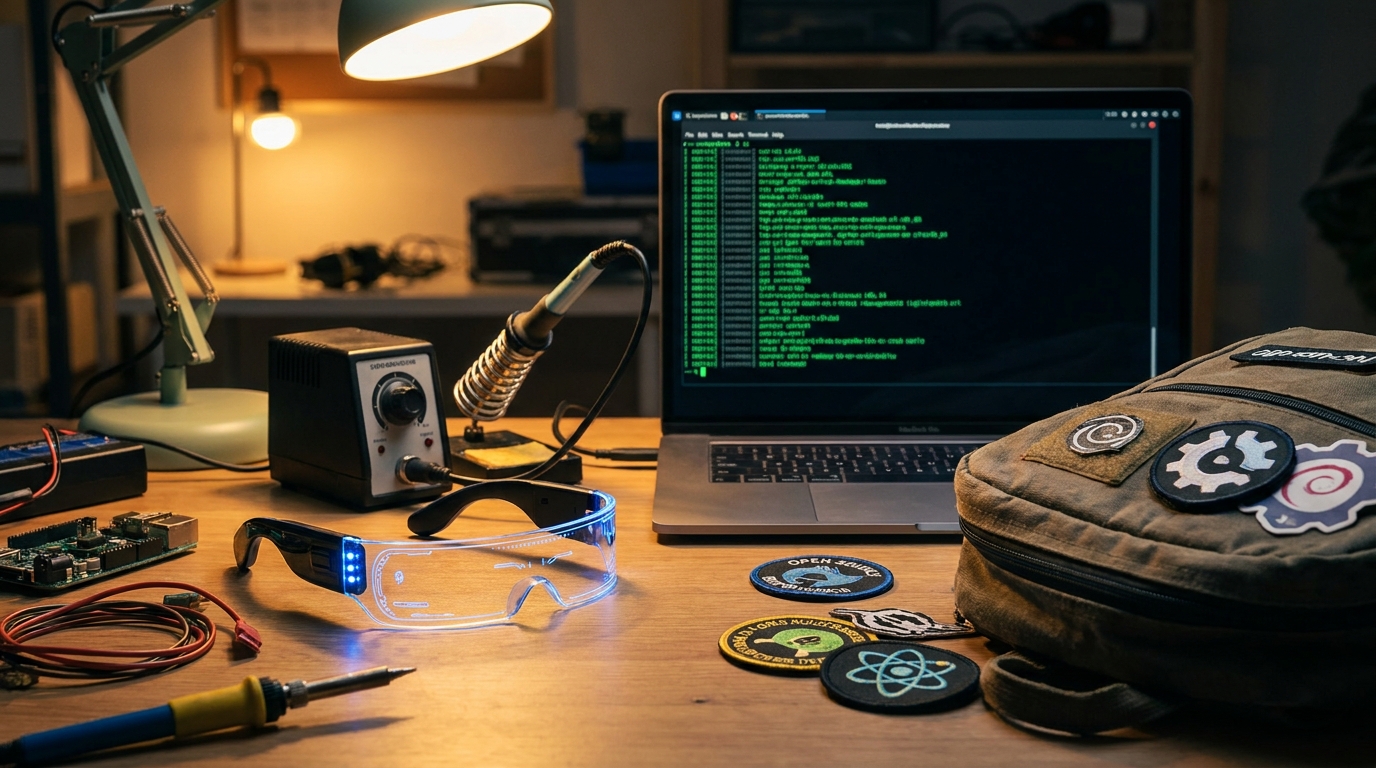
This movement will not emerge from the polished labs of Cupertino or Menlo Park. It will be forged in garages and hacker spaces, driven by a frustration with existing models and an urgent need for alternatives. The cheap hardware provides the canvas, the privacy crisis provides the motivation, and the open-source ethos provides the blueprint for a better way forward.
The race for optics and AI in smart glasses is happening, as Norman M. (XR Eyewear) highlighted, but the *meaning* of smart glasses is still up for grabs. By reclaiming the hardware and building a Mentra-driven, open-source ecosystem, hackers and builders have the chance to define what smart eyewear truly means for human flourishing, rather than just corporate profit. The future of ethical wearable technology depends on it.
Interactive guide — prices, displays, cameras, battery.
Share this story