
News · Apple
Apple Smart Glasses Will Rely on Siri and iPhone Apps
Apple is preparing Siri to bring deep iPhone app integration to its future smart glasses, bypassing the need for a separate wearable app ecosystem.
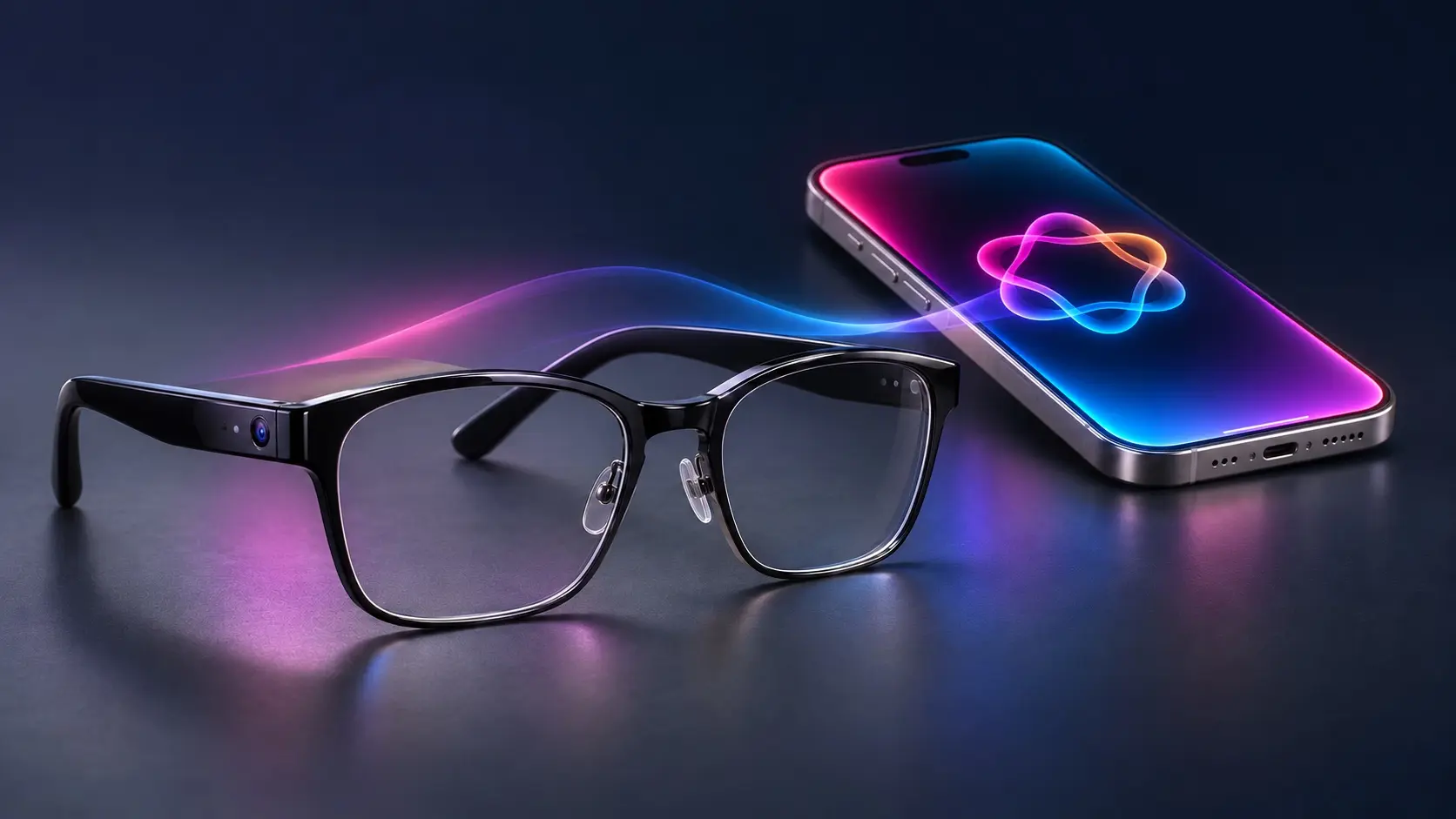
On November 16, 2026, cultofmac.com reported that Apple's upcoming entry into the smart glasses market leans heavily on a platform already sitting in millions of pockets: an upgraded Siri wired directly into iPhone app features. Rather than forcing developers to build specialized standalone apps for a brand-new wearable screen, Apple is reportedly positioning its voice assistant and underlying iOS frameworks as the primary bridge between everyday eyewear and native phone tasks.
According to cultofmac.com, Apple is preparing Siri to translate hands-free voice commands on upcoming smart glasses directly into deep, actionable workflows inside existing iOS applications. This strategy leverages the foundation Apple has built over several iterations of iOS, particularly through App Intents, SiriKit, and the broader Apple Intelligence architecture. By processing complex app actions on the tethered iPhone, Apple can avoid bogging down wearable frames with excessive silicon, heat dissipation hardware, or hefty battery packs.
The competitive landscape makes this approach vital. Meta found substantial commercial success with its Ray-Ban Meta smart glasses by keeping the hardware slim, prioritizing audio and video capture, and integrating Meta AI. Yet Meta faces a persistent structural limitation: without owning a mobile operating system, its assistant cannot seamlessly trigger deep in-app actions across banking, food delivery, airline bookings, or fitness trackers. Even when Google enters the category with Android-powered XR and AI frames, coordinating cross-app intents across third-party hardware partners has historically proved messy.
What this means: Apple's hardware development cycle often appears slower than its Silicon Valley peers, but its developer moat remains uniquely powerful. Every time an iOS developer builds an App Intent for Siri, Spotlight, or automated Shortcuts, they are effectively designing the voice interface for Apple smart glasses without writing a single line of optical software. A user asking their glasses to hail a ride, split a bill, or check a flight status will simply fire an existing iOS hook. That gives Apple day-one utility spanning millions of applications, eliminating the cold-start problem that plagued early smartwatches and dedicated spatial headsets.
The broader question is whether audio-first glasses or optical head-up displays will lead Cupertino's lineup. Cultofmac.com points toward a voice-driven model where the iPhone handles the heavy lifting, reinforcing industry reports that Apple is exploring camera-equipped smart frames similar to Ray-Ban Meta before attempting full-color optical waveguides. By keeping the glasses tethered to the iPhone's processing core, Apple can prioritize lightweight materials, long battery endurance, and aesthetic appeal that matches designer spectacles.
As Apple continues refining Siri's contextual awareness and cross-app capabilities, the software trajectory for wearable computing is becoming clear. The battle for the face will not just be won by optical engineering or raw processing power. It will be decided by which platform can turn a simple voice command into an immediate, reliable action across the apps people already use every day.
Interactive guide: prices, displays, cameras, battery.
Share this story





