Analysis · —
2026: The Global Gaze. USA vs. China, the Fight for Your Face Intensifies.
The year 2026 marks the decisive inflection point for smart glasses, defining whether Western individualism or state-backed might will dominate our digital periphery. This geopolitical tech contest pits privacy-first innovation against seamless, opaque integration.

The year 2026 is not merely another calendar mark, it is the coming-of-age for smart glasses, a moment poised to reshape the geopolitical tech landscape. While Western discourse fixates on Meta's evolving strategy or Samsung's Android XR play, a far more significant, unspoken contest is escalating. This is the race between USA-led innovation and China's formidable, often opaque, tech ambitions, with our faces as the ultimate prize.
On the American front, Meta has undeniably commanded attention, particularly with its Ray-Ban AI glasses. The company's groundbreaking Muse AI agent, slated for smart glasses launch, offers a compelling vision of pervasive, hands-free assistance, a true 'ghost in the machine.' Muse is designed to execute complex tasks proactively, reducing smartphone reliance and fundamentally altering daily interaction.
Yet, Meta's dominance is tempered by deep vulnerabilities. The persistent privacy backlashes and thermal issues plaguing Ray-Ban AI glasses highlight a core tension. The market's clear preference for discretion, underscored by the rapid sell-out of DuckDuckGo's 'Normal F***ing Sunglasses,' signals a fundamental disconnect with pervasive surveillance.
This public skepticism has forced strategic concessions, not breakthroughs. Meta's introduction of Ray-Ban Meta Audio glasses, devoid of cameras, and Samsung's focus on voice interaction, are hailed as privacy-first triumphs. However, these are ultimately 'calculated compromises' to battery limitations and societal friction, not fundamental innovations solving core problems.
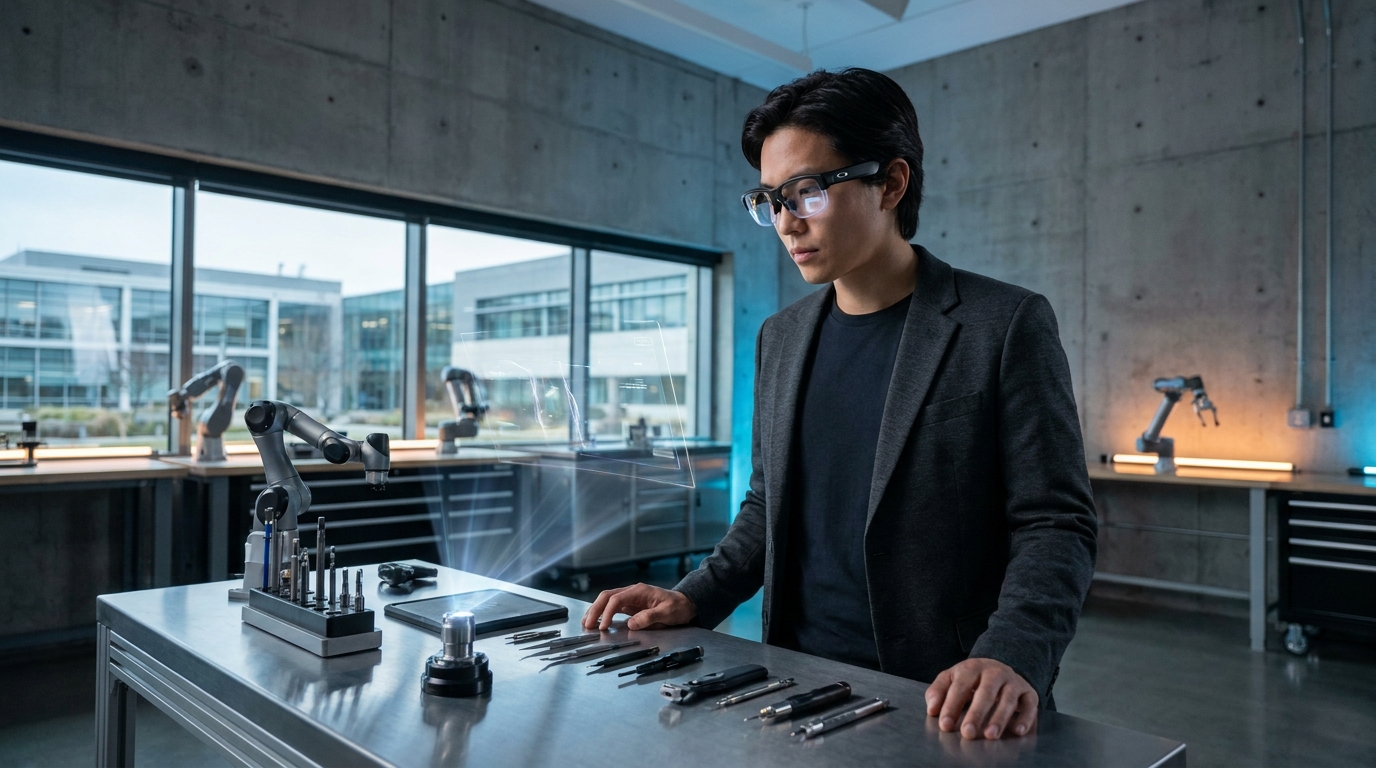
The Oakley Meta Vanguard collaboration perfectly exemplifies this calculated approach, validating the smart glasses category while carving out specialized niches. Its focus on performance and enterprise, especially with the new clear-lens option, signals a massive commercial opportunity in industrial environments. Yet, even here, safety claims remain unconfirmed, highlighting the cautious, segmented rollout in the West.
The narrative for USA-led innovation is further complicated by its 'walled garden' tendencies. While Meta's Muse AI is powerful, its proprietary ecosystem ultimately constrains the very builders and hackers who could redefine intelligent eyewear. The true revolution, for many, lies in open platforms like Android XR, which promise to liberate AI from corporate gatekeepers and empower independent development.
This tension between closed systems and open frontiers is a uniquely Western dilemma. Our market demands transparency, user control, and rigorous debate over privacy implications. This often slows adoption, forces design compromises, and prioritizes incremental improvements over radical, omnipresent integration.
Conversely, China's 'silent rise' in smart eyewear promises a fundamentally different future. While specific product details are scarce, the pattern of state-backed innovation in other tech sectors suggests a unified, integrated approach. The emphasis will likely be on ubiquitous utility, data collection for broader societal applications, and a rapid deployment unburdened by the same privacy hurdles.
Imagine a future where smart glasses in China are seamlessly integrated into a national digital infrastructure from day one. Enterprise adoption, public safety initiatives, and even consumer-facing features could prioritize efficiency and pervasive connectivity over individual data autonomy. This is the 'different future' that 'state-backed might' can forge.
While Western brands grapple with battery life, open platforms, and the delicate dance of public trust, China's approach may bypass these altogether through top-down mandates and a different cultural calculus. This divergence in strategy is not merely technological; it is deeply ideological, reflecting distinct societal values and governmental priorities.
By 2026, we will see two profoundly different paradigms of smart eyewear solidify. The USA, with its dynamic but fragmented ecosystem, will continue to innovate, but also to hesitate, caught between groundbreaking AI and the demands of privacy-conscious consumers. Its strength will lie in diverse, user-driven niches and the burgeoning open-source community.
China, on the other hand, will likely present a cohesive, perhaps even monolithic, vision. Its strength will be in scale, speed, and a pervasive integration that bypasses Western concerns, creating a deeply embedded, always-on AI presence. This battle for our faces is intensifying, defining not just who wears the glasses, but how our societies interact with artificial intelligence itself.
The ramifications extend far beyond gadget sales. This is a battle for data sovereignty, for the future of human-computer interaction, and for geopolitical influence. The outcome of the 2026 smart glasses race will tell us much about the kind of world we are building, and whose vision will ultimately prevail.
Smart glasses are no longer just a consumer product; they are a strategic asset. The nation that masters their integration, utility, and acceptance, whether through open innovation or centralized control, will hold a significant advantage in the next era of pervasive computing. The clock is ticking.
Interactive guide — prices, displays, cameras, battery.
Share this story