Analysis · —
2026 Smart Glasses Still Miss the Mark for Real Life
The industry is making calculated compromises, not breakthroughs, leaving everyday users with a sophisticated, yet fundamentally incomplete, vision of intelligent eyewear. Current models mostly sidestep the core challenges, resulting in limited utility and enduring user friction.
The smart glasses market in 2026 is a fascinating study in technological hesitation. Despite fervent promises and significant investment, the current crop of devices, even the most hyped, fundamentally misunderstands or actively sidesteps the needs of everyday users. Companies are not solving the deep, intractable problems of smart eyewear; they are making calculated compromises, leaving consumers with a vision of the future that feels half-baked.
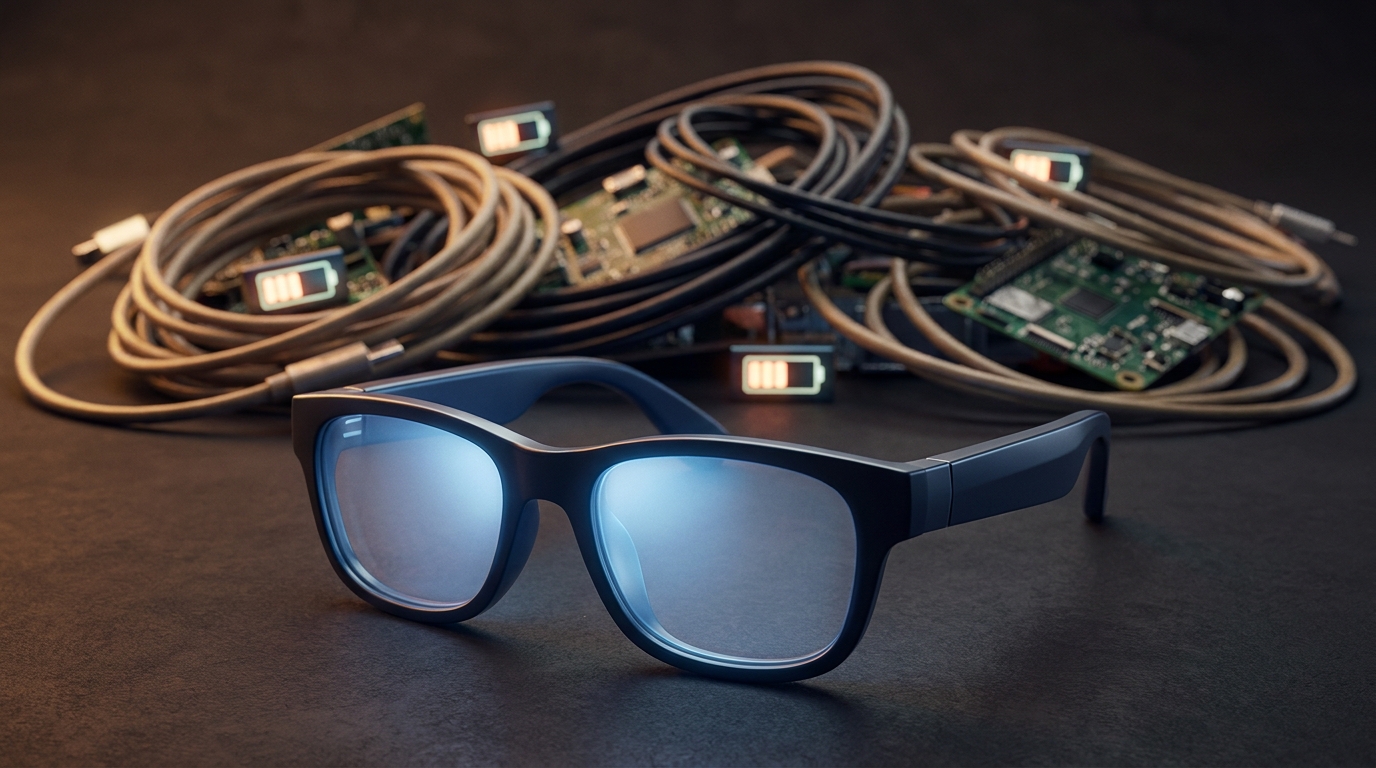
The most glaring evasion remains the battery problem. Our own "Smart Glasses are Dodging the Battery Problem, Not Solving It" piece highlighted how the industry makes strategic retreats instead of genuine breakthroughs. Display-less designs and offloading processing, while framed as elegant solutions, are ultimately concessions to limited power. They are managing, not innovating, the core constraint.
Consider the rampant trend toward display-less designs, hailed by many as a privacy-first triumph. Meta's Ray-Ban Meta Audio glasses and Samsung's upcoming Android XR glasses, along with Rokid's AI Glasses Style, all eschew visual displays to focus on sound and voice. This choice undoubtedly reduces visible footprint and societal friction, but it is also a substantial, if unspoken, concession to battery limitations, sacrificing rich visual context for extended operation.
This compromise extends to processing power. Samsung's Android XR glasses, for example, will heavily lean on a connected Galaxy phone for "heavier AI processing tasks." Similarly, Meta's advanced Muse AI agent, while powerful, relies on a persistent Linux virtual machine in the cloud. This functional tethering undermines the promise of truly autonomous, untethered intelligence, adding another layer of reliance on a device that users are trying to escape.
The privacy hangover from early, camera-first experiments still looms large. Meta's initial "camera-first strategy" birthed a public relations nightmare, and the market's response was swift and telling. DuckDuckGo's "Normal F***ing Sunglasses," a defiant, tech-free rebuke of pervasive smart eyewear, sold out quickly, signaling a strong user preference for utility over surveillance. This lingering distrust often necessitates overly cautious, feature-limited designs.
Meta's supposed victory with Ray-Ban AI glasses, which some call "Meta's Trojan Horse," highlights this delicate balance. By focusing on "seamless, social utility" and a fashionable form factor, Meta is "winning the war for your face" against Apple's "AR Ghetto." Yet, this success is predicated on subtle, often limited AI capabilities, inherently constrained by the very need for discretion and power efficiency.
The industry's reliance on fashion partnerships, while essential for mainstream appeal, creates another paradox. Samsung's collaborations with Gentle Monster and Warby Parker, or Meta's enduring partnership with Ray-Ban, prioritize design and wearability. However, this often means that true technological advancements, which might require more space or power, are either scaled back or made invisible, leading to an aesthetic win but a functional compromise.
What defines "smart" in these 2026 devices often feels limited. Meta's Muse AI agent, designed to execute proactive tasks, and Samsung's Gemini-powered interactions focus heavily on voice commands and hands-free assistance. While useful, these capabilities frequently replicate what a smartphone can already do, without fully leveraging the unique, potentially transformative, visual and contextual advantages of eyewear. It's often just a phone in front of your face.
Even the promise of "open platforms" like Android XR, touted as a "true playground for smart glasses hackers," offers a partial solution. While it empowers independent builders and fosters innovation unburdened by corporate gatekeepers, the underlying hardware limitations persist. Openness doesn't magically solve the battery life deficit or conjure robust, full-color displays into stylish frames overnight.
For the average user, the compelling "why" behind adopting smart glasses remains elusive. The incremental utility of hands-free voice control or basic environmental interaction, while convenient, struggles to justify the cost, the additional charging, or the enduring social awkwardness associated with new wearable tech. Many still ask: "Why not just use my phone, which is already incredibly powerful and versatile?"
The collective industry narrative for 2026 smart glasses is a story of strategic avoidance. Instead of tackling the monumental engineering challenges head-on, companies are opting for palatable, albeit constrained, user experiences. They offer discreet accessories with some smart features, rather than truly integrated, indispensable daily tools that seamlessly augment reality in a meaningful, persistent way.
Until fundamental breakthroughs in power density, miniaturized true AR displays, and genuine user trust are established, smart glasses will continue to occupy a niche. They will remain sophisticated gadgets, making calculated compromises that prevent them from becoming the truly untethered, universally adopted computing platforms their creators envision. The path to mainstream relevance demands more than clever workarounds; it demands fundamental innovation.
Interactive guide — prices, displays, cameras, battery.
Share this story