Analysis · —
The Slow Burn: Why Meta's Ray-Bans Are Quietly Torching Apple's Vision
Apple built a $3,500 masterpiece of isolation, a spatial computer for the living room. Meta built sunglasses people actually wear, and now it's making them think - a Trojan horse strategy that's winning the real war for our faces.
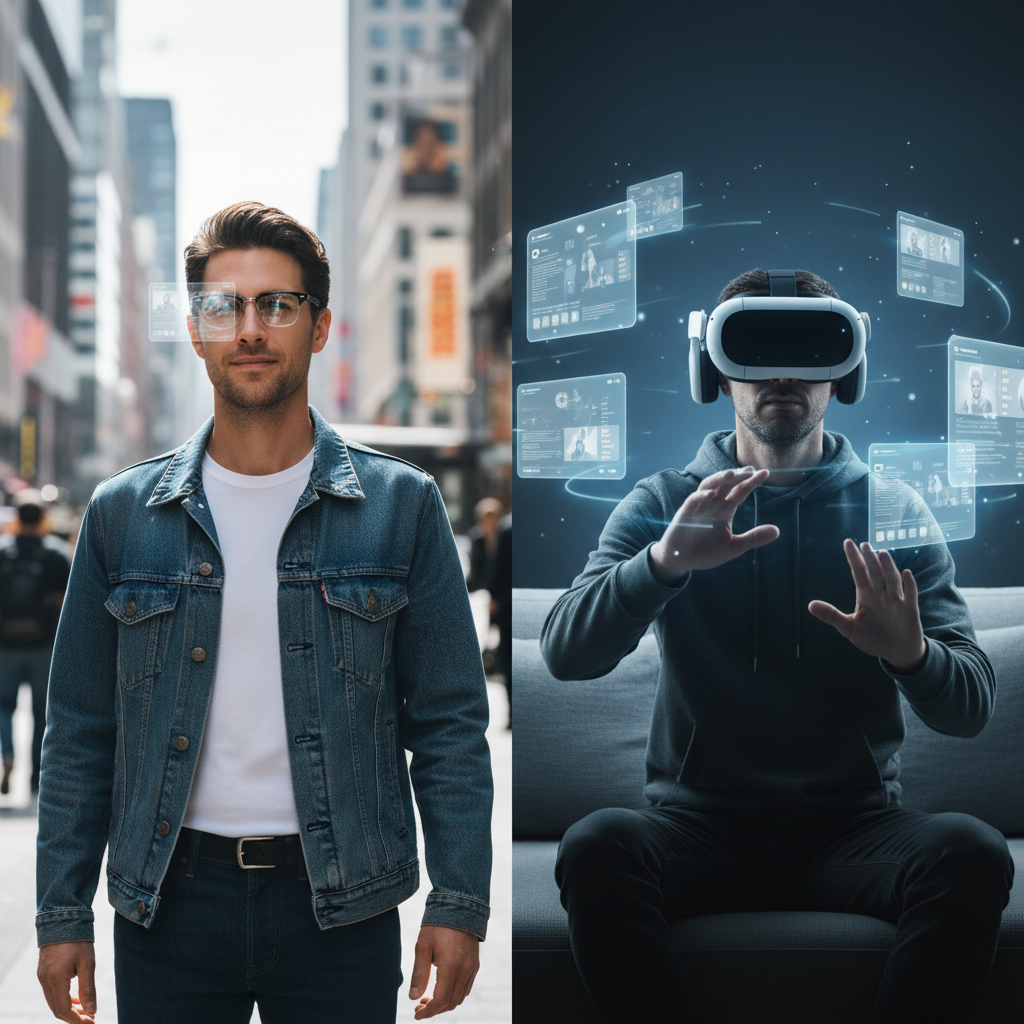
Let’s cut the noise. The war for the future of eyewear isn’t a single battle; it’s two entirely different conflicts being fought on separate continents of philosophy. In one camp, you have Apple’s shock-and-awe campaign, a maximalist assault on reality itself with the $3,500 Vision Pro. In the other, you have Meta’s quiet insurgency, a gradualist approach that prioritizes social acceptance and everyday utility with its Ray-Ban collaboration. Only one of these strategies is building a real market, and it’s not the one that came with a battery pack.
The Apple Vision Pro is a staggering work of engineering, a technical marvel that is also a commercial dead end for the mass market. It’s a “spatial computer” that isolates you from the world, a device so complex its software updates are dedicated to teaching it to recognize 3D objects in your house. The problem isn’t the tech; it’s the humanity. Apple has hit the same “wall of reality” that others have, delivering a product too heavy, too expensive, and too socially alienating to ever become a daily driver.
Contrast this with Meta's path. The Ray-Ban smart glasses were a “triumph of industrial design” from day one, succeeding where countless others failed because they looked and felt like a product people already wanted to buy. They are, crucially, the “only connected eyewear people actually wear in public.” Meta established a beachhead not with overwhelming technology, but with impeccable style and a simple, understandable function: a hands-free camera.
This is where the genius of the strategy unfolds. Having won the battle for social acceptance, Meta is now methodically escalating the war. The company is evolving the Ray-Bans from a “fundamentally reactive” gadget into a “proactive co-pilot” for your life. By layering in AI, Meta is transforming a fashion accessory into an indispensable tool, all without changing the socially-approved hardware.
This isn't just a tale of two titans. The entire market is validating Meta’s path, demonstrating what’s been called the “silent comeback of the simple smart glass.” The real momentum isn't with reality-bending headsets but with pragmatic, focused devices. The story happening just outside the spotlight is about solving specific problems, not creating entirely new worlds.
Look no further than the enterprise sector, where Vuzix is finding real success. The company isn’t selling developers a dream of the metaverse; it’s selling warehouse managers a Pick & Pack Validation Program that uses AI-powered smart glasses for hands-free logistics. This is the definition of utility over fantasy, a clear demonstration that businesses will pay for tools that deliver immediate, tangible value, not for speculative platforms.
This pragmatic fracture is cleaving the consumer market in two. TCL’s RayNeo division effectively admits this, forcing customers to choose between the X3 Pro, an AI-powered “supercomputer,” and the Air 3s Pro, a cinematic “super-monitor.” This latter category, the heads-up display, is exploding in China, with companies like Rokid and Alibaba captivating users with immersive virtual screens that serve a single, killer purpose: a private, portable monitor for work or entertainment.
In a move that should send shivers down Cupertino’s spine, Rokid is now taking this logic to its ultimate conclusion. Its new ‘Style’ model is a “display-less” frame, a voice-first AI experience weighing a feather-light 38.5 grams. Rokid is betting that the ultimate interface isn't a screen in your eye but an always-on AI in your ear, prioritizing comfort and battery life above all else. This isn’t just a new product; it’s a categorical validation of Meta’s core insight.
And how is Apple responding to this groundswell of pragmatism? By tacitly admitting its initial strategy was flawed. Recent reports confirm Apple is testing at least four distinct designs for its next-generation smart glasses, all of which are said to resemble traditional eyewear. This isn’t innovation; it’s a panicked retreat to the form factor Meta has already conquered.
In effect, Apple is now playing catch-up, desperately trying to reverse-engineer its technological prowess into a device people won't be embarrassed to wear. After starting with a solution in search of a problem, it is now working backwards toward a human-centric design, a race Meta is already years ahead in. They are now tasked with building the very thing Meta has been selling since 2021.
The landscape is littered with the ghosts of ambitious projects. Even Snap, which has tried to insulate its AR glasses division from corporate turmoil, is defined more by its massive layoffs than its hardware progress. Meta itself was “chastened by its flailing metaverse ambitions,” a painful lesson that forced this successful pivot to the Ray-Bans. A sustainable path to market requires a product people will buy today, not a promise of a revolution tomorrow.
Meta’s approach is a masterclass in Trojan horse strategy. It sold the world a beautiful, empty vessel that happened to have a camera, and is now slowly filling it with an all-seeing, all-knowing AI assistant. Apple, for all its power, built a breathtaking cathedral in the desert that no one wants to visit, while Meta built a simple, stylish house that millions already call home.
Interactive guide — prices, displays, cameras, battery.
Share this story