Analysis · —
The Silent Comeback of the Simple Smart Glass
While Meta and Apple chase the spatial computing dragon, a new class of minimalist, HUD-only eyewear is quietly staging a comeback. The future of wearables might be simpler, cheaper, and more useful than the tech giants want you to believe.
The official narrative in smart eyewear is all about more. More pixels, more processing power, more AI, more reality-bending immersion. Apple is building a $3,500 spatial computer for your face, a masterpiece of engineering so complex its next software update literally teaches it to recognize 3D objects in your house. Meta, chastened by its flailing metaverse ambitions, is doubling down on its only real hardware hit, the Ray-Ban, by plotting to bake in persistent AI and controversial facial recognition. The story is one of maximalism. But the real story, the one happening just outside the spotlight, is the exact opposite. It's the silent, pragmatic comeback of the simple heads-up display.
Let’s be clear: the push for all-encompassing AR has hit a wall of reality. Meta CTO Andrew Bosworth’s infamous 'make or break' moment for XR is leaning toward 'legendary misadventure,' with the company shuttering VR studios and sunsetting apps like Horizon Workrooms. The dream of a fully-realized metaverse, propped up by complex headsets, is proving to be a fantastically expensive and time-consuming slog, requiring entire industry alliances just to agree on how to render a 3D file. This strategic quagmire has created a massive opening for a different philosophy: utility over immersion.
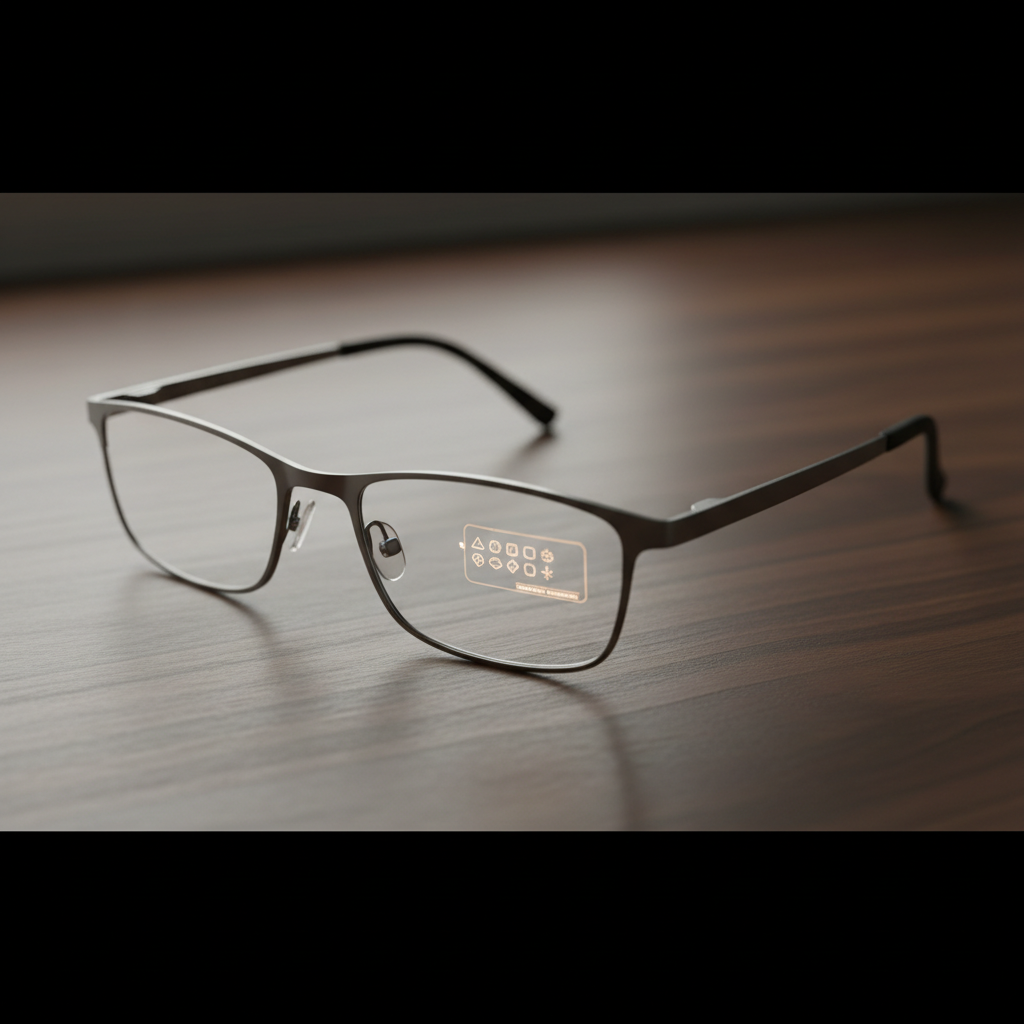
Enter the new minimalists. While the titans fiddle with their grand roadmaps, companies like Rokid are making a shrewd pivot. The same firm that built the 'Rokid AR Spatial'-a legitimate, if tethered, answer to the Vision Pro-is now shipping the 'Rokid Glasses.' At 49 grams, they are a dead ringer for classic Wayfarers, but with a simple, green monochrome HUD in the corner of your eye. They don't promise a metaverse; they promise on-device translation and notifications. It’s a tool, not a world. This same ethos drives startups like Mentra, whose bet on an open-source OS is paired with deliberately 'modest' hardware, and Brilliant Labs, whose Frame glasses are explicitly designed as an ambient interface for AI. They are betting that users want a smart assistant they can wear, not a laptop they have to strap to their skull.
This isn't just a niche rebellion; it's a savvy exploitation of a market gap the giants have created themselves. Apple’s rumored 'Vision Air,' a lighter and more affordable headset, isn't expected until 2027 at the earliest. That's a three-year window for these HUD-only devices to establish a foothold. Meta's success with the current Ray-Ban Meta proves the public's appetite for a glasses-first form factor, but its future plans for 'super sensing' risk bogging the device down in the same privacy and social acceptance battles that hobbled Google Glass a decade ago. A simple, private, display-only device suddenly looks incredibly appealing in comparison.
The software landscape tells the same story. The demise of platforms like Adobe Aero and Meta’s Spark AR, coupled with the rise of 'no-code' creation tools like Trace, shows a clear trend towards simplification. Building for a full 3D spatial environment is hard. Building for a monochrome HUD is not. It’s a solved problem, allowing these smaller players to deliver genuine utility *now*, while the rest of the industry argues about file standards.
Forget the 'iPhone moment' for AR. We are witnessing a bifurcation of the market. On one end, you'll have the heavyweight spatial computers-the Vision Pros of the world-which will be powerful, expensive, and used for specific, high-value work and entertainment. On the other end, you'll have the lightweight 'smart viewers.' And right now, all the practical momentum is with the latter. It's a quiet comeback, but the return of the simple HUD may just be the smartest play in wearables today.
Interactive guide — prices, displays, cameras, battery.
Share this story