News · Rokid
Rokid AI Glasses Style: Voice-First AI and All-Day Comfort Redefine Smart Eyewear
Rokid's latest innovation, the AI Glasses Style, ditches traditional displays for a voice-first AI experience. It focuses on extended battery life and a remarkably lightweight design.
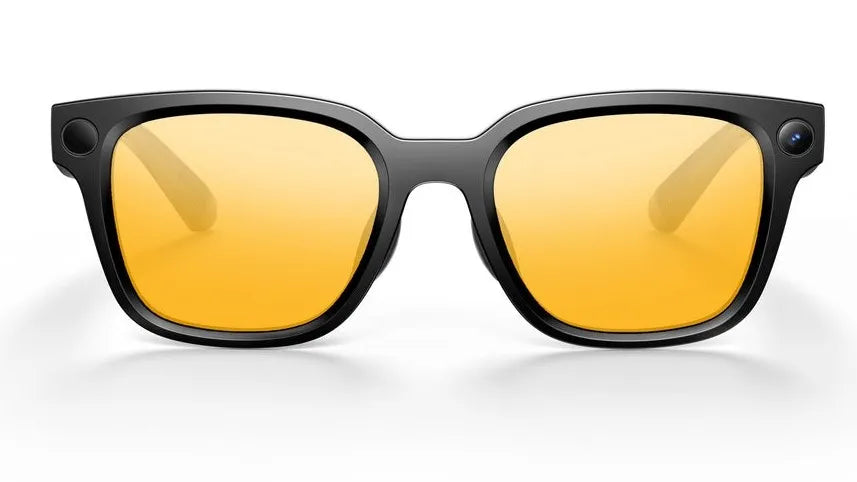
At the start of CES 2026 in Las Vegas, Rokid unveiled its new AI Glasses Style, a device notable for its departure from traditional microdisplays. These smart glasses prioritize artificial intelligence and camera features over augmented reality overlays, aiming for comfort and functionality during all-day wear. The glasses are priced under $300, with pre-orders currently open.
Detailing the announcement, global.rokid.com reports that Rokid made a 'radical move' by introducing smart glasses without a traditional microdisplay. While most companies focus on integrating displays into lenses, the outlet notes Rokid chose to emphasize AI, camera capabilities, and user comfort. Display technology has often presented challenges for smart glasses, contributing to increased weight, faster battery drain, and discomfort during prolonged use. Rokid's solution, according to global.rokid.com, is to simply remove the display and leverage AI for interaction.
The AI Glasses Style weigh just 38.5 grams, making them feel 'more like regular spectacles than most other smart glasses,' per global.rokid.com. Instead of AR overlays, the interaction is powered by a voice-first interface, integrating AI assistants like ChatGPT and DeepSeek. The device includes a 12MP Sony camera, specifically designed for capturing 'instant, social-ready vertical video.' The piece also describes how this camera allows users to capture photos or clips without needing to pull out a phone.
The glasses feature built-in microphones and open-ear speakers, enabling users to interact with AI for tasks such as requesting directions, summarizing meetings, or instant speech translation. Inside, the device utilizes two chips: an NXP RT600 for low-power operations and Qualcomm’s AR1 platform for AI and imaging processing. global.rokid.com claims the battery can sustain up to 12 hours of use, with audio playing through the arm-mounted speakers.
From a design perspective, Rokid's goal for the Style appears to be seamless integration into everyday wear. The frames are compatible with prescription lenses, including transition and tinted options. They feature thin, scratch-resistant lenses, according to global.rokid.com. The outlet positions this model as Rokid's 'most consumer-friendly one yet,' contrasting it with previous models that it says were 'aimed more at enterprise or niche use cases.'
Our take: Rokid's decision to forgo a display is a bold strategic pivot in the increasingly crowded smart glasses market. By prioritizing weight, battery life, and AI-driven utility, they are carving out a distinct niche that directly addresses common user complaints about current AR glasses. This 'voice-first' approach could democratize smart eyewear, making sophisticated AI assistance accessible and unobtrusive for daily wear, without the visual complexities of AR overlays that often struggle with brightness and field of view. We've been tracking a growing consumer appetite for subtle, functional wearables, and the AI Glasses Style appears poised to meet that demand, potentially setting a new standard for what a mainstream smart glass can be.
Interactive guide — prices, displays, cameras, battery.
Share this story