Analysis · -
Meta's Stealth Win: Why Ray-Ban Beats Vision Pro in the AI Glasses War
Apple's retreat from high-cost spatial compute confirms a seismic industry shift. Meta, despite its camera baggage, understood the true battleground for everyday smart glasses all along.
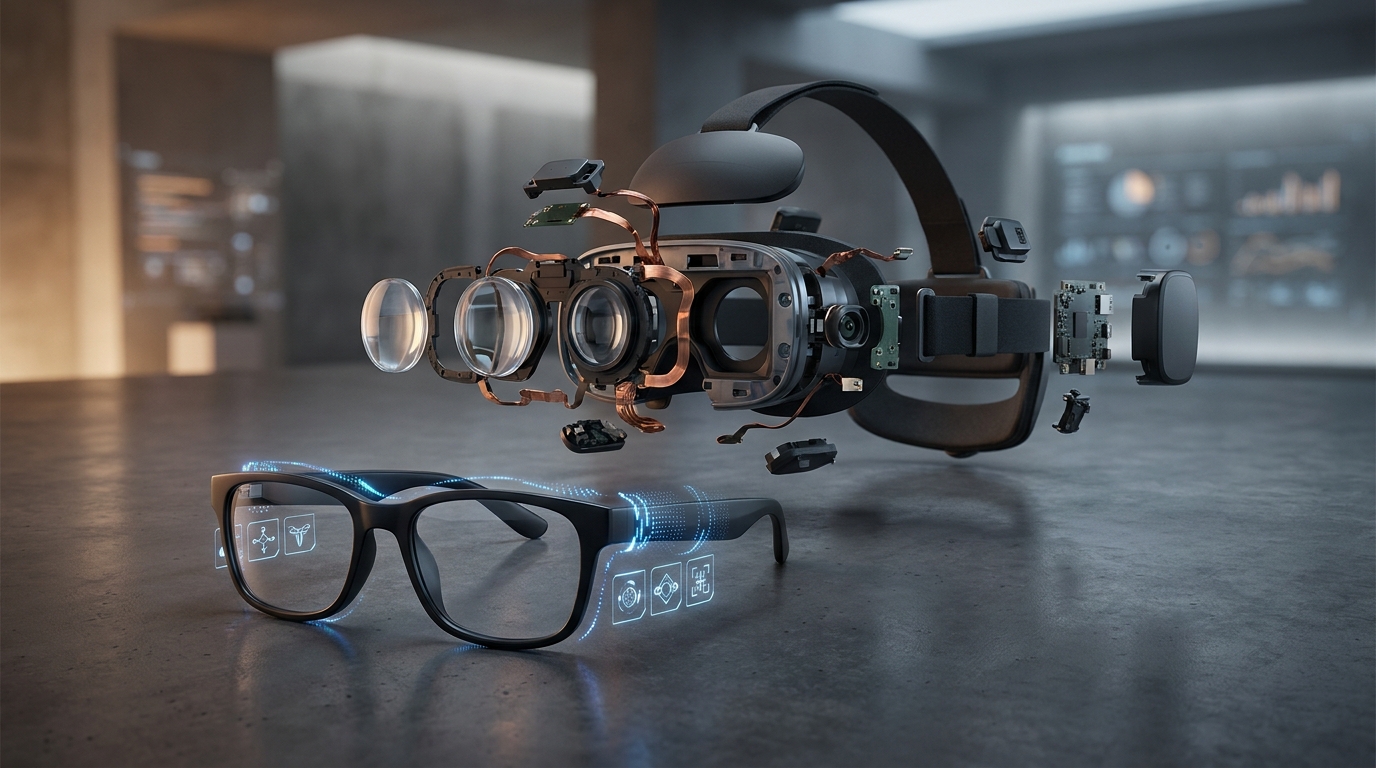
The smart eyewear landscape is a graveyard of grand visions and failed promises, yet a clear victor is emerging from the haze. While Apple's Vision Pro captured headlines with its spatial computing spectacle, it is Meta's more grounded, albeit controversial, Ray-Ban approach that is quietly winning the war for mainstream AI glasses.
Recent reports paint a stark picture: Apple is reportedly trimming its Vision Pro and Siri teams, pivoting decisively towards "Meta-like AI smart glasses." This is not merely a strategic adjustment, it is a concession. The era of high-fidelity, high-cost virtual escapism is giving way to a more intimate, integrated future, precisely the future Meta has been building towards.
Meta grasped early that the average user does not want a face computer, they want an unobtrusive AI assistant. The shift across the industry confirms this, from vague promises of VR worlds to the concrete reality of ubiquitous, always-on AI woven into lightweight frames. Apple's pivot is a validation of Meta's core thesis, not a rejection.
Of course, Meta's path has been fraught with its own significant hurdles, primarily the pervasive distrust surrounding its integrated cameras. The constant fear of "covert surveillance" has plagued Meta's Ray-Ban line, leading to the unfortunate moniker of "pervert glasses." This is a social problem, not just a technical one, and it continues to alienate a significant portion of the potential market.
Meta's response, exemplified by its recently granted 'kill switch' patent, is a telling admission of this pervasive distrust. While a hardware-based privacy control is a tangible step, it remains a reactive measure, a band-aid attempting to address a foundational issue. It signals Meta is playing defense, but it also signals they are still in the game, actively iterating on a product that is already in users' hands.
Contrast this with the Vision Pro's initial trajectory. Apple built an undeniably impressive piece of technology, but one that fundamentally misread the mass market's desire for daily utility and affordability. At $3,499, it was a niche luxury, not a ubiquitous companion. The ROG XBOX Ally X20 bundle with XREAL AR Glasses at $2,499 highlights how expensive these niche, immersive experiences remain.
The market is demanding discretion, not overt displays of technology. RayNeo's iO glasses exemplify this perfectly: a camera-free design with a subtle monochrome display and robust AI capabilities. This deliberate absence of cameras is a direct shot at the privacy concerns that plague Meta's offerings, demonstrating that some brands are getting the 'discreet' part right from the outset.
RayNeo's strategic split, offering camera-free iO for work and immersive GT for play, further underscores the industry's newfound understanding. Generalist, all-in-one gadgets are out. Targeted devices that respect social norms and specific use cases are in. This specialization, much like Meta's focus on a subtle, AI-first form factor, stands in direct opposition to the Vision Pro's maximalist approach.
The core needs of the everyday user, trust and real-world utility, continue to be underestimated by many. While the narrative is shifting towards AI assistants, the execution often fails. Meta's Ray-Bans, despite their flaws, are at least attempting to address the 'everyday' part, even if they sometimes fumble the 'trust' aspect with their cameras.
Ultimately, Meta's long-term play, centered on accessible, AI-first eyewear, is demonstrating its resilience. While privacy concerns are real and require continuous, thoughtful solutions, Meta's commitment to the more discreet form factor, even with cameras, has positioned it to define what "smart glasses" mean for the average person. Apple's repositioning is a powerful testament to this reality.
The future of wearable tech is not about recreating reality on your face, it is about enhancing it subtly, intelligently, and accessibly. Meta, through its Ray-Ban line, pushed a vision of eyewear as an AI assistant, not a spatial computer. That vision, now being echoed by Apple's strategic pivot, confirms that Meta, for all its missteps, read the room correctly.
Interactive guide — prices, displays, cameras, battery.
Share this story