Manufacturer News · Meta
Meta Display Glasses: May 2026 Update Salvages High-End AR Play
The May 2026 software release delivered essential AR features and Instagram integration to Meta's $800 Display Glasses, significantly altering their initial reception. While new capabilities improve their appeal, challenges like weight and battery life persist.
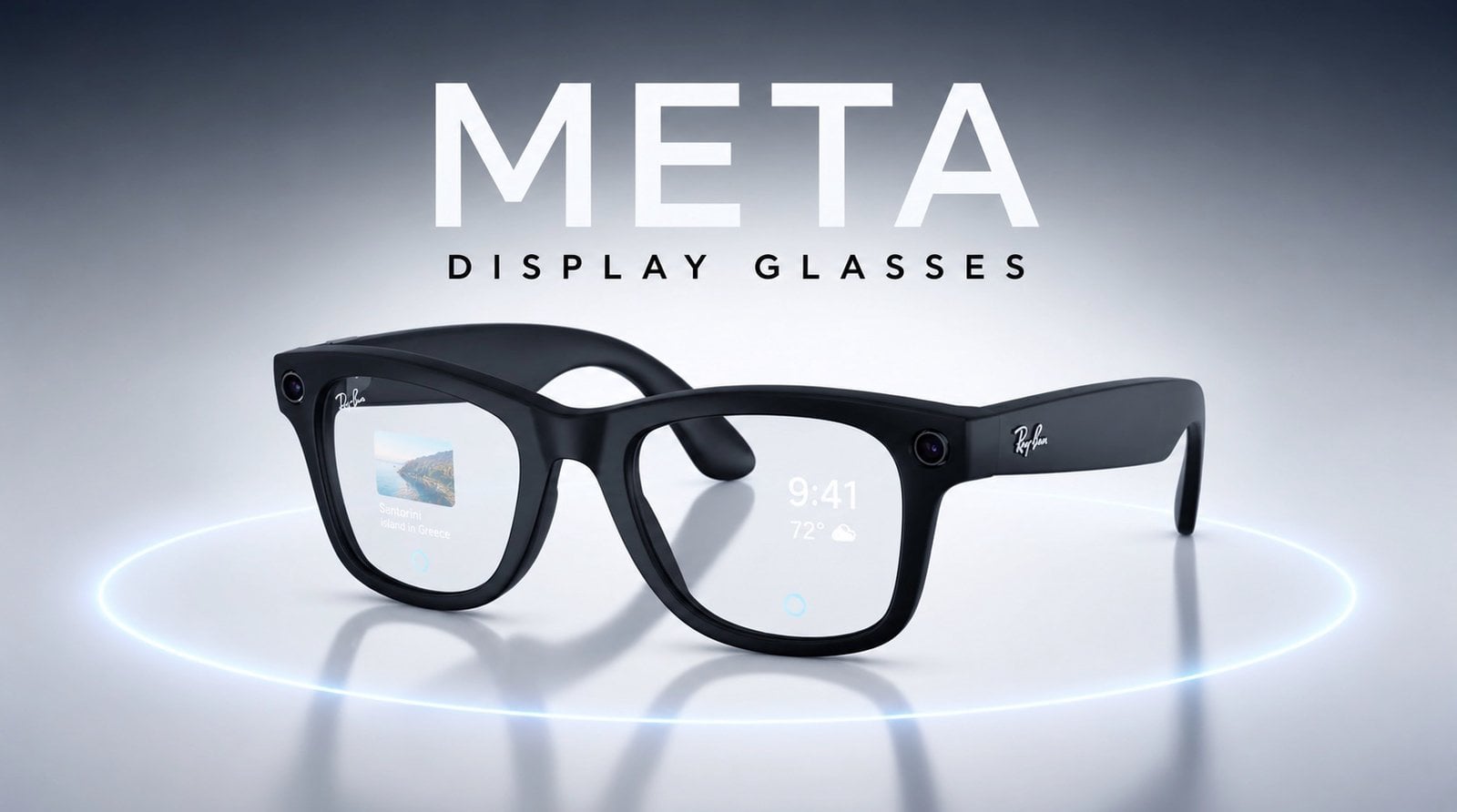
Announced June 14, 2026, the May 2026 software update has reportedly revitalized Meta's $800 Display Glasses. Initially met with skepticism over their high price and limited utility, these premium AR spectacles have received a significant functionality overhaul. As Geeky Gadgets' Jasmine Uniza recounts, the update has "shifted their appeal," introducing key AR features and social media integration.
The crucial May 2026 patch brings advanced AR capabilities previously lacking. Geeky Gadgets highlights the addition of Instagram Reels integration, allowing direct sharing from the glasses, alongside customizable AR widgets for glanceable information. Screen recording features and a developer mode, granting access to web apps, are also now available, targeting tech enthusiasts and early adopters.
Despite the software enhancements, core hardware limitations persist. Geeky Gadgets notes the Display Glasses' 69-gram weight, short 3-6 hour battery life, and expensive, U.S.-only prescription lens options continue to hinder practical daily use.
The contrast with the $329 Ray-Ban Meta Gen 2 glasses remains stark. While both share an everyday eyewear aesthetic, the Display Glasses focus on immersive AR via a right-eye projection and a neural band for hands-free control. According to Geeky Gadgets, the Gen 2, conversely, prioritizes audio-based simplicity and all-day battery life, making them the more practical, comfort-oriented choice.
Our take: Meta's strategy with the Display Glasses is clear: push the boundaries of AR and establish a high-end product before wider consumer adoption. The May 2026 update was not just an improvement; it was a necessary course correction to validate the device's $800 price tag. While the hardware still presents hurdles, this software injection signals Meta's commitment to evolving the AR glasses experience for early adopters and developers, even if mass appeal remains years away.
## How it compares to Meta's broader lineup
To understand the positioning of the $800 Display Glasses, it helps to examine where they fit against Meta's camera and audio wearables. At 69 grams, the Display Glasses carry noticeable heft on the nose bridge compared to non-display alternatives. For example, the sport-focused Oakley Meta HSTN glasses, released on August 26, 2025, weigh 48 grams, cost $399, and offer an 8-hour battery life alongside a 12 MP camera shooting 1080p video, but lack any visual screen.
Update: Since this article was published in June 2026, Meta has continued to expand its camera-equipped frames while leaving heads-up displays as a luxury tier. Available from September 23, 2026, the Ray-Ban Meta (Gen 3) starts at $449. Those glasses deliver a 12 MP camera capable of 3K Ultra HD video, open-ear stereo speakers with Dolby Atmos playback, a 6-microphone array with over 90% background-noise reduction, and 9 hours of battery life. At Connect in September 2026, Meta also announced the Meta Capri, a cat-eye style frame, and the Meta Fury, a limited-edition clear frame with mirrored lenses that features on-device AI. Neither model includes an optical display.
Meanwhile, buyers seeking pure comfort without visual elements can opt for audio-only frames. Pre-orders opened for the Ray-Ban Meta Audio, which ships October 13, 2026, starting at $349. Weighing just 43 grams, they skip cameras and displays entirely to achieve 12 hours of battery life, with four additional charges provided by their case. As we reported on October 27, 2026, in "Meta's Audio-Only Ray-Bans Pose a Pricey Dilemma," stripping out components creates an ultralight everyday form factor, making the 69-gram, 3-to-6-hour Display Glasses an even more distinct choice for specialized AR enthusiasts.
## What to watch next in displays
Meta's visual display roadmap is already diverging into separate categories for lightweight AR and high-immersion viewing. Looking ahead, Meta has announced the Meta VR Glasses, planned for spring 2027 with a March release date and a $1,299.99 price tag. In contrast to the Display Glasses' standalone right-eye projection, the VR Glasses are tethered via fiber-optic cable to an external compute puck powered by the Snapdragon Reality Elite chip. They weigh 100 grams, offer a 3-hour battery life, and pack dual micro-OLED Infinite Displays delivering 2412 x 2288 resolution per eye at 120 Hz with spatial audio, Dolby Vision, and IMAX Enhanced support.
That contrast highlights the engineering tightrope Meta must walk with standalone AR. Delivering a practical wearable display without relying on heavy external pucks or sacrificing all-day comfort remains a massive hurdle. As we reported on November 1, 2026, in "Forget Meta's Cameras: RayNeo, XREAL, and Rokid Own the Display War," specialized Asian display makers have focused intently on building dedicated spatial monitors, challenging Silicon Valley's heavy reliance on camera-first frames. Furthermore, as we reported on October 29, 2026, in "The Android XR Reckoning: Why Google Will Break Meta's Eyewear Monopoly in 12 Months," upcoming software ecosystems are poised to standardize ambient display hardware across the industry. For Meta's $800 Display Glasses, software patches like the May 2026 update remain vital lifelines to keep developers engaged while the underlying hardware matures.
Interactive guide: prices, displays, cameras, battery.
Share this story