Manufacturer News · Meta
Meta Backtracks on Face Recognition for Smart Glasses App
Meta quietly removed controversial facial recognition technology code from its Meta AI companion app for smart glasses. This decision follows a recent WIRED report and significant public pressure.

On June 8, 2026, the Electronic Frontier Foundation (EFF) reported that Meta quietly removed facial recognition technology (FRT) code from its Meta AI companion app, which pairs with its smart glasses. This move comes after a public backlash sparked by a WIRED report exposing the controversial feature.
According to WIRED, Meta had embedded FRT code into the app, designed to convert images of faces into unique biometric signatures, enabling identification of individuals in public. EFF's Threat Lab independently verified these findings through static analysis, as detailed by Cooper Quintin and Rindala Alajaji of the EFF.
Our take: This reversal is a win for privacy advocates and consumers. Meta's initial attempt to quietly integrate facial recognition capabilities into smart glasses was a serious misstep, highlighting the ongoing tension between technological advancement and personal data rights. Constant vigilance is required as companies push the boundaries of embedded surveillance.
## Camera hardware and mounting scrutiny
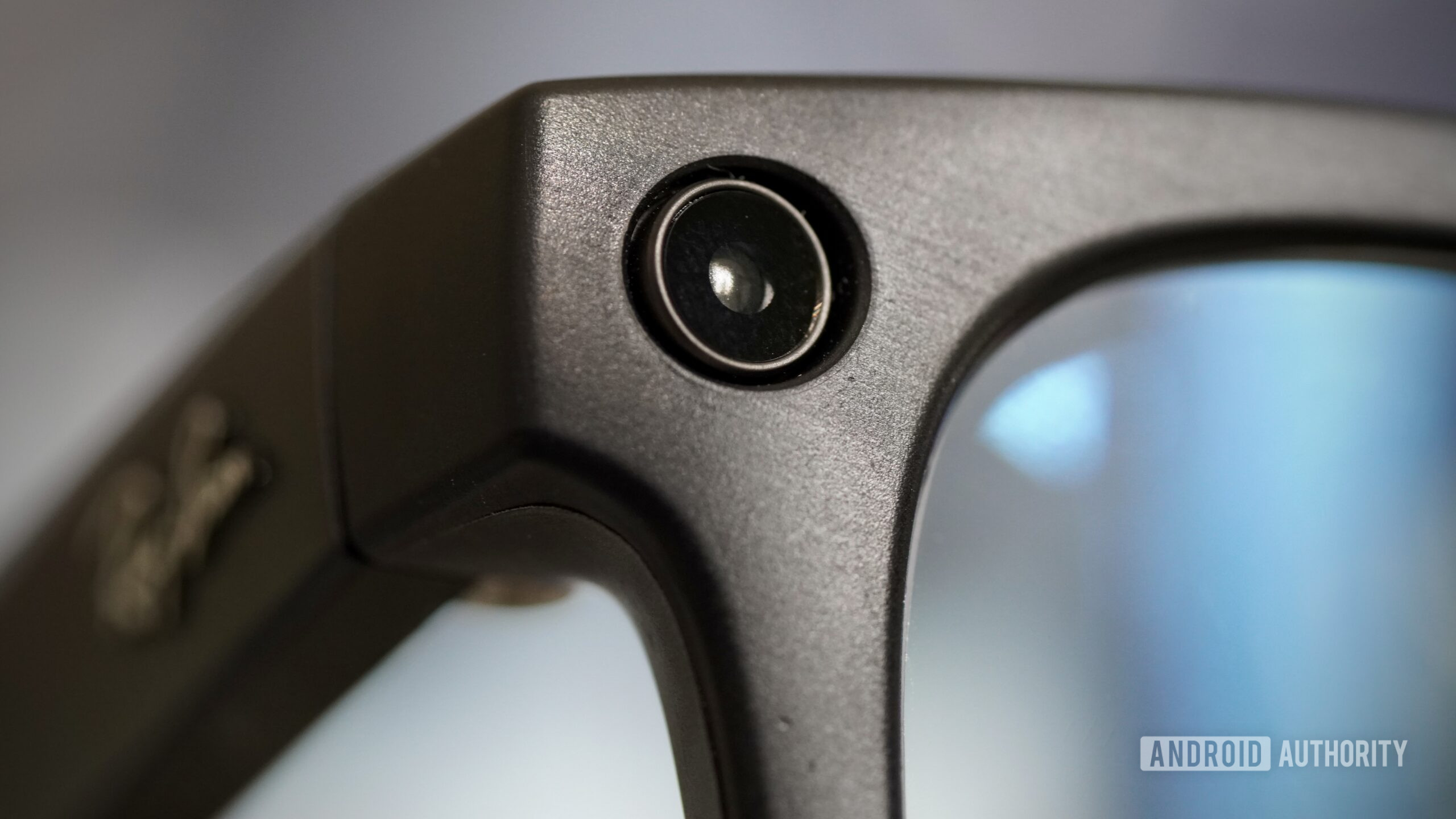
The discovery of facial recognition code in the Meta AI companion software strikes at the core of consumer anxiety regarding camera-equipped smart eyewear. Meta already markets hardware capable of high-resolution capture, such as the Oakley Meta HSTN frames. Released on August 26, 2025, for $399, those 48-gram glasses feature a 12 MP camera, 1080p video recording, an 8-hour battery, and no display. Update: The Ray-Ban Meta (Gen 3) glasses, priced starting at $449, were released on September 23, 2026. Those slimmer frames upgrade video capture to 3K Ultra HD, carry a 12 MP sensor, provide a 9-hour battery life, and introduce a customizable action button alongside Dolby Atmos 360-degree capture.
Update: Following the September 2026 Connect event, Meta released the Meta Fury, a limited-edition clear frame with mirrored lenses featuring on-device AI assistant support, and announced the Meta Capri cat-eye frames. However, the presence of cameras on everyday spectacles has consistently triggered regulatory and societal pushback. As we reported on US Senators Demand Answers from Meta Over AI Glasses Privacy Risks, lawmakers Ron Wyden and Edward Markey pressed Mark Zuckerberg on bystander safety and contractor access to recorded footage following a string of privacy controversies. Furthermore, as we reported on EssilorLuxottica's Ray-Ban Meta Dominance Faces Mounting Regulatory Scrutiny, discreet frame aesthetics have drawn scrutiny from European privacy watchdogs, while as we reported on Meta Smart Glasses Spark Political Sting Fears in India, covert recording concerns have reached high-profile political environments.
## The camera-free alternative
In response to escalating camera sensitivities, Meta is exploring hardware configurations that remove optical sensors entirely. Update: The Ray-Ban Meta Audio, a pair of camera-free audio and AI glasses, was released on October 13, 2026, for $349. Weighing 43 grams, the Ray-Ban Meta Audio eliminates cameras and displays altogether, relying instead on open-ear stereo speakers, a 6-microphone array, Bluetooth connectivity, and a 12-hour glasses battery supported by 4 case charges. Both the Meta AI assistant and the Muse personal AI agent connect through the paired phone rather than on-device processing.
Yet, as we reported on Meta's Audio-Only Ray-Bans Pose a Pricey Dilemma, removing camera optics while maintaining a $349 price tag raises questions about perceived value for consumers who primarily want voice intelligence. Meanwhile, Meta is also pursuing high-end display glasses that omit cameras for entirely different reasons. The announced Meta VR Glasses, priced at $1,299.99 and planned for March 2027, feature dual micro-OLED Infinite Displays with 2412 x 2288 resolution per eye, a 120 Hz refresh rate, spatial audio with Dolby Atmos, and support for IMAX Enhanced and Dolby Vision. Weighing 100 grams, the VR glasses use no camera sensors, run for 3 hours, and connect via a fiber-optic tether to an external compute puck powered by the Snapdragon Reality Elite chip.
## What to watch next
With the biometric code excised from the Meta AI app, the company must now convince both regulators and the public that its upcoming AI features remain strictly within safe boundaries. Meta is leaning heavily into Muse, which connects as a personal AI agent across both camera glasses like the Ray-Ban Meta Gen 3 and camera-free frames like the Ray-Ban Meta Audio. Unlike the Meta Fury, which features on-device AI, the Gen 3 frames, Capri, and Audio rely on companion phone processing to route voice queries. As static code audits by watchdogs like the EFF demonstrate, companion smartphone apps will face intense ongoing scrutiny whenever new software builds arrive.
Interactive guide: prices, displays, cameras, battery.
Share this story