Manufacturer News · Magic Leap
Magic Leap Pivots to Waveguides, Eyes AI Glasses Component Market
The augmented reality pioneer will no longer build its own devices, instead focusing on supplying industry-leading waveguide technology and integration expertise to partners. The move aims to accelerate the development of AI display glasses.

Magic Leap, a long-standing player in augmented reality optics, announced a significant strategic shift on July 9, 2026. The company is stepping back from developing its own first-party devices to become a critical partner in the evolving AI display glasses ecosystem. Its new focus centers on supplying advanced waveguides and offering device integration expertise to other technology firms.
According to Magic Leap News, this pivot positions the company to address a key market need for high-performance waveguides. Magic Leap asserts its decade-plus of deep AR expertise and a cost-efficient manufacturing process can save partners years of research and development, significantly reducing time to market for new AI display glasses.
Scott Carden, Magic Leap's SVP of display engineering and manufacturing, stated via Magic Leap News that the company is "seizing the moment where our AR innovation and manufacturing expertise create the greatest market impact." Carden emphasized Magic Leap's capability to solve the toughest challenges in scaling waveguide production, from performance to manufacturing and full-device integration, thereby helping partners bring AI display glasses to consumers faster.
Magic Leap News points to the rising adoption of "displayless glasses," including audio and AI wearables, as a critical indicator for the extended reality (XR) market. The outlet highlights a 44.4% jump in total XR device shipments in 2025, suggesting consumers readily adopt AI wearables when they are "useful, stylish, and affordable." The next logical step, as Magic Leap News frames it, is integrating visual AI content through all-day wearable AR displays, with the near-eye display waveguide remaining a primary technical hurdle.
Magic Leap's waveguide manufacturing process is touted for its repeatability and volume readiness. The company claims a structural advantage over competitors, citing "more precise outputs" achieved through a proprietary Jet and Flash Imprint Lithography (J-FIL) process. This method purportedly ensures unit-to-unit consistency, boosts yield, and cuts down on material waste. Additionally, its surface-relief grating diffractive waveguide architecture requires "significantly fewer process steps" than rivals, enabling quicker production cycles, faster design iterations, and a more direct path from prototype to mass production without compromising optical quality. Having built AR devices itself, Magic Leap also offers partners "invaluable integration expertise" to guide crucial product decisions and avoid delays.
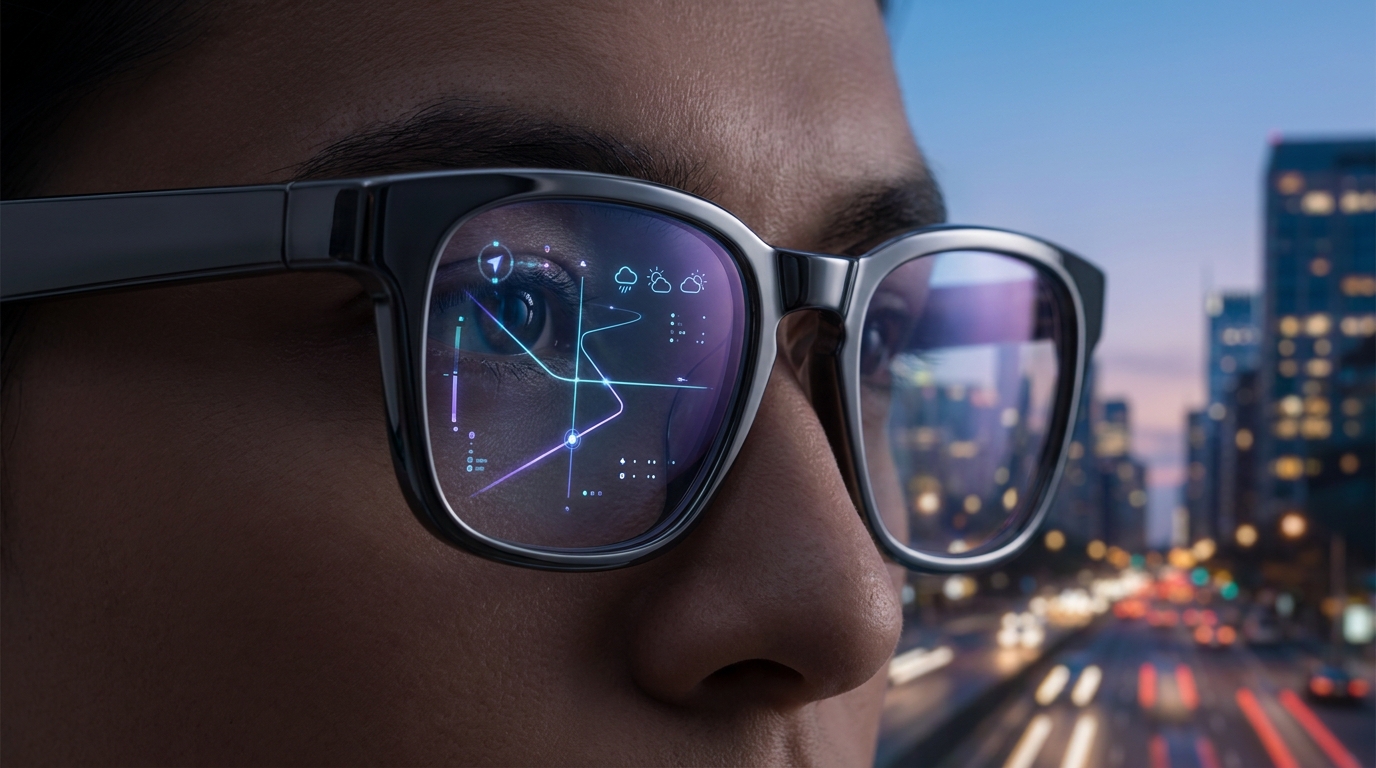
The company's diffractive waveguides are designed to deliver the performance required by AI display applications in a thin, lightweight form factor suitable for wearable glasses. Key capabilities include support for increasingly larger fields-of-view, higher resolution, broad compatibility with commercial light engine technology, an expanded eyebox for diverse users, and strong brightness and color quality within a compact design. Magic Leap emphasizes a focus on human comfort, drawing on its deep understanding of the visual system to provide high-utility AR experiences.
Our take: This strategic pivot by Magic Leap is a smart move that reflects the current state of the smart glasses market. While building complete devices is costly and competitive, becoming a specialized component supplier, particularly for core technologies like waveguides, positions Magic Leap as an indispensable partner for brands rushing to enter the AI glasses space. With many tech giants now exploring or already launching AI-centric eyewear, a reliable, high-performance waveguide supplier could be highly lucrative. Magic Leap's extensive experience in AR hardware development gives it a distinct advantage in offering both components and crucial integration know-how. This could significantly accelerate the next generation of visual AI wearables.
Interactive guide — prices, displays, cameras, battery.
Share this story