News · Magic Leap
Magic Leap 2 Targets Enterprise AR with Firm Price and September Launch
Magic Leap's latest augmented reality headset, the Magic Leap 2, has locked down official pricing and a release date. Positioned to challenge Microsoft's HoloLens 2, this device is squarely aimed at the enterprise market.
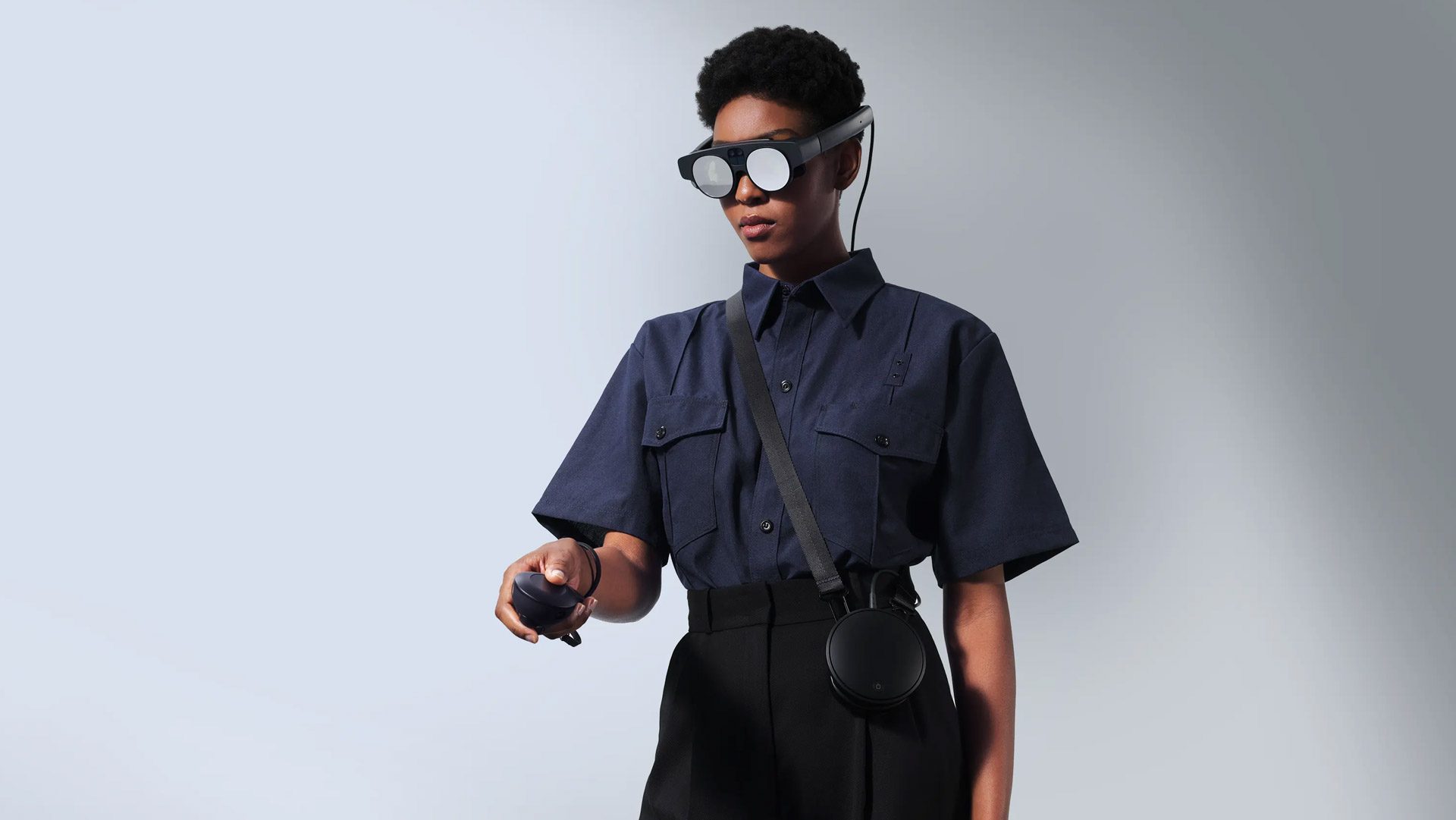
Magic Leap today announced the official pricing tiers and launch details for its Magic Leap 2 augmented reality headset, with a release date set for September 30th, 2022. The company detailed three distinct versions, each targeting different enterprise needs.
According to Ben Lang of RoadToVR, the Magic Leap 2 will launch first in the US, Canada, United Kingdom, Germany, France, Italy, Spain, and Saudi Arabia. They also report that the company plans to expand availability to Japan and Singapore by the end of the year.
Ben Lang of RoadToVR outlines the three versions and their associated costs: a base model at $3,299, another for $4,099 offering a one-year warranty and access to developer tools and 'monthly early releases,' and a premium $4,999 option that includes a two-year warranty and enterprise management features. Lang notes that the entry-level price point positions the Magic Leap 2 to directly compete with Microsoft's HoloLens 2, undercutting its $3,500 base price by $200.
RoadToVR's report further details the Magic Leap 2's specifications, including a 70-degree field-of-view, 1,440 x 1,760 resolution, and a refresh rate of 120Hz. The device boasts an impressive brightness range from 20 to 2,000 nits and weighs 260g. Powering the headset is an AMD 7nm Quad-core Zen2 X86 CPU, and it features a 12.6MP autofocus RGB camera capable of 4k video at 30fps.
Our take: Magic Leap's targeted enterprise strategy with the Magic Leap 2 is a calculated move to differentiate itself in the increasingly competitive AR landscape. By directly challenging HoloLens 2 on price and emphasizing enterprise features, they are signaling a clear commitment to professional applications over a broad consumer market. This also indicates an industry-wide trend toward more robust, application-specific AR devices for businesses before wider consumer adoption, reminiscent of early computing's enterprise-first rollouts.
Interactive guide — prices, displays, cameras, battery.
Share this story