Analysis · —
2026: The Global Gaze. USA vs. China, The Fight for Your Face Intensifies.
The year 2026 marks the decisive inflection point for smart glasses, defining whether Western individualism or state-backed might will dominate our digital periphery. This geopolitical tech contest pits privacy-first innovation against seamless, opaque integration.
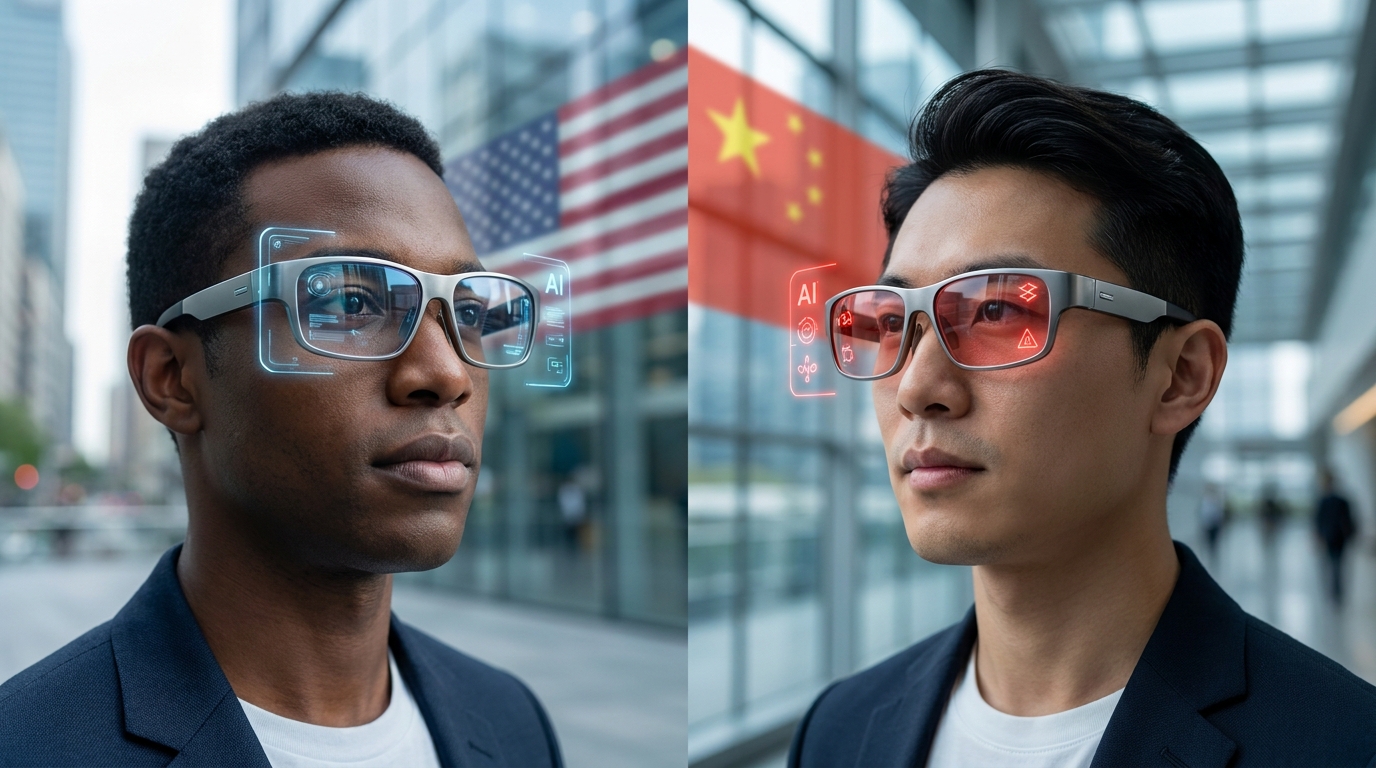
The year 2026 is not merely another calendar mark, it is the coming-of-age for smart glasses, a moment poised to reshape the geopolitical tech landscape. While Western discourse fixates on Meta's evolving strategy or Samsung's Android XR play, a far more significant, unspoken contest is escalating. This is the race between USA-led innovation and China's formidable, often opaque, tech ambitions, with our faces as the ultimate prize.
On the American front, Meta has undeniably commanded attention, particularly with its Ray-Ban AI glasses. The company's 'silent victory,' as we have previously argued, stems from a pragmatic understanding: the mass consumer does not want screens plastered across their face. Pervasive intelligence, not immersive isolation, is the path to winning the future.
Meta's recent launch of the Ray-Ban Meta Audio glasses, starting at a competitive $349, further solidifies this blueprint. These glasses prioritize enhanced comfort, lighter design, and significantly extended battery life for all-day wear. Their real-world utility and cultural penetration are evidenced by projects like the 'MA VIE WORLD TOUR' documentary, filmed predominantly on Ray-Ban Meta smart glasses for Doja Cat.
The future of Meta's play lies with its groundbreaking Muse AI agent, slated for smart glasses. Muse is not merely a chatbot, it is a sophisticated agent designed to execute complex tasks autonomously and reduce smartphone reliance. Operating from a persistent Linux virtual machine in the cloud, Muse exemplifies the cutting edge of always-on, proactive AI for the Western market.
However, this powerful innovation comes with a caveat for independent builders: the 'walled garden' aspect of Meta's ecosystem. While Muse's capabilities are revolutionary, the true spirit of open innovation often struggles within such proprietary confines. This tension between a powerful, centralized AI and the desire for open platforms will be a defining characteristic of the Western approach.
Further cementing the Western presence, Samsung's 'Intelligent Eyewear' is set for a November launch, featuring a competitive weight of approximately 41 grams. Collaborations with fashion giants like Gentle Monster and Warby Parker signal a serious intent to integrate smart technology into desirable, everyday frames. This broadens the US/Western offensive beyond Meta's singular brand partnership.
China, meanwhile, is launching a direct, aggressive counter-offensive. Alibaba Group Holding Ltd. officially unveiled its new generation of AI glasses, priced sharply at $450. This move signals Alibaba's serious intent to integrate AI into daily consumer hardware, expanding beyond its core e-commerce and cloud services, directly challenging existing players in the sub-$500 segment.
Beyond general consumer AI, Chinese manufacturers are also carving out specific, high-value niches. ASUS, for instance, bundled ROG XREAL R1 Edition 20 Gaming AR Glasses with its premium ROG XBOX Ally X20 handheld. This strategy embraces display-inclusive AR for dedicated gaming experiences, contrasting Meta's display-less mass-market approach and demonstrating a diversified Chinese strategy.
The philosophical divide is stark. The Western strategy, largely led by Meta, prioritizes discretion, comfort, and an AI-first, display-less experience, appealing to a 'privacy-first innovation' ethos. China's approach, however, leans towards aggressive pricing, seamless ecosystem integration, and a willingness to explore display-inclusive AR, perhaps with a more 'opaque integration' of data and services.
This divergence sets up a profound battle for the consumer's face and their data. Will the subtle, ever-present AI of Meta's Ray-Ban glasses, bolstered by Muse, win on the strength of utility and comfort? Or will the aggressive pricing and ecosystem plays from Chinese giants like Alibaba, alongside niche AR offerings like XREAL, capture significant market share?
The stakes are higher than mere market share, this is a contest for influence, data control, and the future of daily interaction. Who ultimately controls the 'digital periphery' of billions will have profound geopolitical implications. The 'global gaze' of 2026 is truly on this evolving technological and ideological showdown.
Meta's early lead with its AI-first, discreet eyewear positions it strongly for broad mass adoption. Its focus on audio, comfort, and a powerful AI agent seems to align with prevailing consumer preferences. However, China's aggressive pricing and diverse product entries, including specialized AR, cannot be underestimated, especially within their vast domestic markets and beyond.
The smart glasses arena is a battlefield of grand visions and pragmatic realities. Both sides possess significant resources and distinct strategies to win the race. As we move deeper into 2026, the real-world performance and adoption rates of these competing philosophies will provide the clearest indicators of who is truly winning the fight for our faces.
Interactive guide — prices, displays, cameras, battery.
Share this story