Analysis · -
The Blind Spot: What 2026 Smart Glasses Still Get Wrong About Everyday Life
Wearables makers keep building for covert surveillance and Marvel fantasies. Real consumers are pushing back with copyright hacks, regulatory alarms, and cooling demand.
The smart glasses industry in 2026 is suffering from a massive reality gap. Silicon Valley and luxury eyewear boardrooms remain convinced that everyday consumers want an invisible surveillance rig or a cinematic heads-up computer strapped to their faces. The broader public, however, is telling a very different story. Between cooling sales growth and viral survival hacks, the disconnect between manufacturer fantasies and daily user reality has never been wider.
Look no further than EssilorLuxottica's latest financial ledger for proof that the initial novelty wave has crested. While the Ray-Ban Meta maker still commanded over 80 percent of AI eyewear shipments earlier this year, its wearable revenue growth slammed the brakes, tumbling from nearly 100 percent to a modest 20 percent. Traditional frames had to bail out the balance sheet, leaving company stock still roughly 47 percent below its historic highs. The market is waking up to the fact that turning an iconic pair of sunglasses into a recording gadget does not guarantee an unstoppable smartphone replacement.
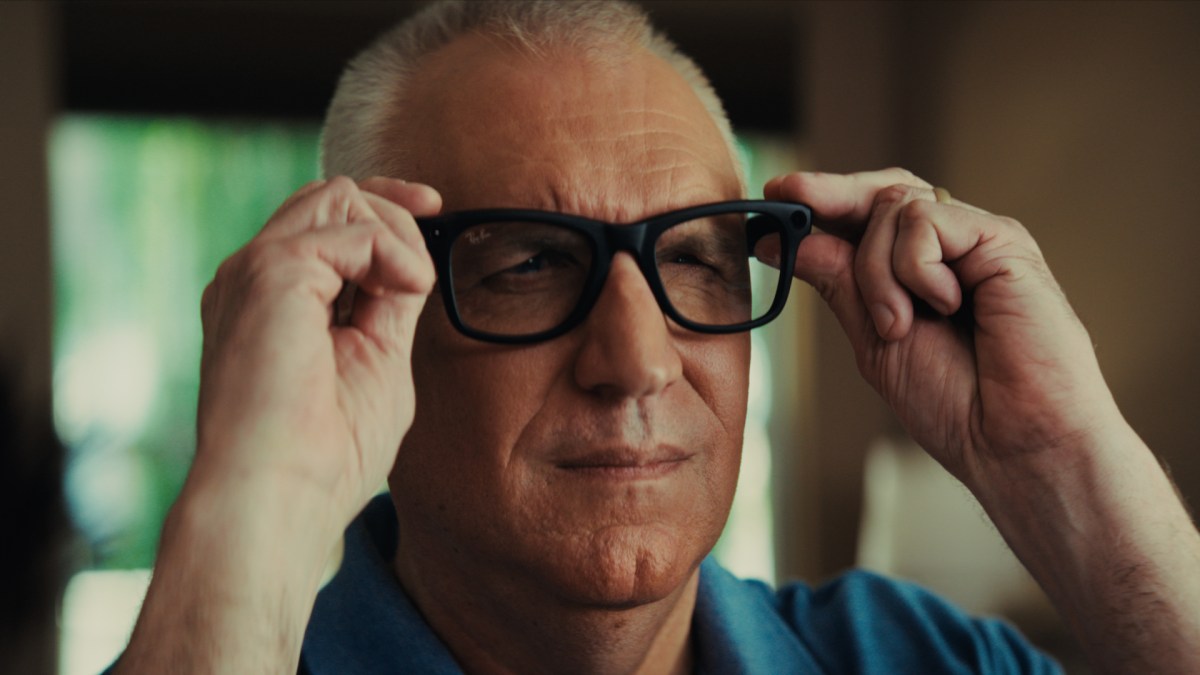
That sales deceleration is intimately tied to a deepening cultural backlash over privacy and consent. Nothing captured this tension better than the viral movement instructing bystanders to blast Disney tunes whenever they suspect someone is filming them with Ray-Ban Meta frames. The logic is as ingenious as it is damning: automated copyright algorithms will swiftly suppress the footage where personal dignity and consent protocols fail. When public spaces feel so threatened by wearable tech that people weaponize Mickey Mouse to protect their privacy, the product has fundamentally failed the social acceptability test.
European regulators are no longer treating that public unease as mere paranoia. Privacy watchdogs across the EU are actively scrutinizing the discreet form factor that made the Ray-Ban Meta frames a commercial hit in the first place. When an LED indicator light is the only frail barrier between ambient recording and secret surveillance, pushback is inevitable. Tech giants expected the public to simply adapt to always-on cameras, but everyday citizens and regulatory bodies are proving far less compliant than anticipated.
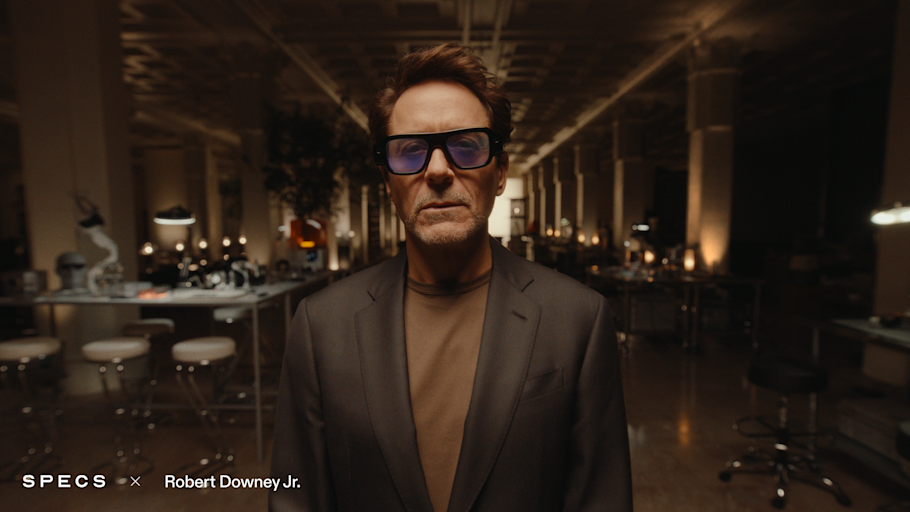
Rather than solving these structural social problems, brands are retreating into high-gloss marketing illusions. Snap's announcement appointing Robert Downey Jr. as its lead spokesman and Chief Customer Experience Officer for Specs AR glasses reads like a relic from an outdated playbook. Tapping Hollywood's Tony Stark to demonstrate golfing and TV-watching in augmented reality assumes that mainstream adoption is just a charismatic celebrity endorsement away. But consumers do not need an Iron Man fantasy to justify wearing hardware on their faces all afternoon.
What makes this miscalculation particularly frustrating is that the hardware is quietly excelling in spaces tech marketers treat as secondary. Consider the genuine, life-altering breakthroughs occurring in assistive technology. For individuals like Ian Torrie in the UK, who lost his vision after a stroke, Meta's audio and camera systems connect directly with remote assistants to unlock real independence. Similarly, Meta's partnership with the American Council of the Blind to distribute hardware to visually impaired veterans demonstrates an undeniable, profound utility.
When smart glasses serve as a second pair of eyes for someone who truly needs environmental descriptions, the technology feels miraculous. In these assistive scenarios, the camera is not a social predator or a tool for vanity vlogging, but an essential sensory bridge. Yet mainstream hardware roadmaps rarely prioritize this high-impact, ambient problem-solving. Instead, consumer product launches still focus on broadcasting content and tricking algorithms into serving social video feeds.
Meanwhile, the visual hardware battle is fracturing into radically different, incompatible visions of what users actually want to see. INMO just unveiled the GO3, boasting dual 1,500-nit MicroLED displays, Google's Gemini AI, and an interchangeable modular battery system. INMO understands that all-day utility requires practical power swapping and true head-up data without pulling out a smartphone. Yet shoving twin displays and modular power packs onto a nose bridge pushes the absolute physical limits of daily comfort and aesthetic discretion.
On the opposite side of the spectrum sits the Xreal One Pro+, which deliberately ditches outward-facing cameras altogether. By focusing strictly on a 1,200-nit display, upgraded nose pads, and 60Hz spatial conversion algorithms, Xreal is betting that users simply want private, comfortable personal screens for media consumption. It is an honest admission of consumer boundaries: eliminating the camera instantly kills bystander paranoia and regulatory headaches. But it also reduces smart glasses to a passive wearable monitor, conceding ground on context-aware ambient AI.
This polarization leaves the everyday consumer stranded in no-man's-land. You can purchase camera-heavy glasses that make everyone in your local cafe deeply uncomfortable, or you can buy tethered display goggles that look awkward during a commute. You can chase the displayless voice-assistant dream with Meta, or you can strap on heavy enterprise-grade AR prototypes. None of these options seamlessly weave into the texture of ordinary life without demanding severe ergonomic, social, or financial compromises.
EssilorLuxottica chief Francesco Milleri has repeatedly insisted that connected eyewear will eventually displace smartphones entirely. But phones succeeded because they respect interpersonal social contracts: they sit in pockets, enter rooms quietly, and signal their use unmistakably. By assuming that everyday users would gladly sacrifice communal trust for hands-free convenience, smart glasses makers built for an audience of self-absorbed content creators rather than normal citizens.
The hardware of 2026 proves that optical engines are getting brighter and AI models are getting sharper. What the industry has not figured out is how to design for human empathy, quiet utility, and unobtrusive presence. Until smart glasses stop acting like celebrity vanity projects or clandestine surveillance toys, they will remain trapped as niche tech novelties, watched with suspicion by the very people they were meant to win over.
Interactive guide — prices, displays, cameras, battery.
Share this story