News · Meta
Meta Unveils Ray-Ban Smart Glasses Geared for Corrective Lenses
Meta expands its smart glasses lineup with two new 'Optics Styles' designed to seamlessly integrate a broad spectrum of prescription lenses, addressing a key challenge in wearable technology.
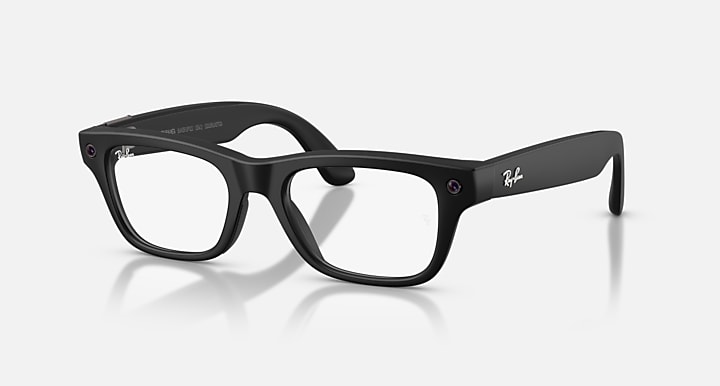
Meta Ray-Ban smart glasses in the new rectangular Blayzer style, matte black, optimized for prescription lenses.
In a significant move for the smart glasses industry, Meta has announced two new styles of its AI-powered Ray-Ban smart glasses, specifically engineered to accommodate prescription lenses. These new "Optics Styles," dubbed "Blayzer" (rectangular) and "Scriber" (circular), aim to bridge the gap between cutting-edge wearable tech and the common need for vision correction. This release marks a recognition from Meta that for smart glasses to achieve mainstream adoption, they must function not just as innovative gadgets, but also as essential optical devices.
Beyond their stylish new designs, these prescription-optimized frames feature several practical enhancements. Users will benefit from overextension hinges, interchangeable nose pads, and adjustable temple tips, all designed to allow opticians to customize the fit more precisely. These thoughtful adjustments ensure comfort and stability for daily wear, a crucial factor for anyone relying on glasses for clear vision. The frames are available in a diverse palette, including classic matte and transparent blacks, along with more adventurous dark olive, ice gray, and stone beige. Pre-orders are open now, with availability slated for April 14th, priced at $499.
Perhaps the most compelling aspect of this launch is Meta’s claim of supporting “nearly all prescriptions.” This is a substantial leap from previous models, which were limited to a ±6 range (and ±4 for the Display glasses). While direct purchases from Meta's site still adhere to the ±6 range, customers with stronger prescriptions can take the frames to an optician or a LensCrafters-type store for a wider, potentially unrestricted, range of lens integration. This flexibility is pivotal for broadening the appeal of smart glasses to a segment of the population previously underserved by current offerings.
The launch arrives amid ongoing discussions about smart glass privacy and misuse. Concerns around features like proposed facial recognition and incidents of privacy invasion by users have generated scrutiny for Meta’s prior smart glasses. This latest rollout shines a spotlight on another foundational hurdle for AI glasses widespread adoption: the critical need for comprehensive vision support and customizable fit. For many, integrating smart technology into eyewear is only viable if it seamlessly serves their core need for vision correction, challenging manufacturers to master both gadgetry and optical utility.
In addition to the hardware advancements, Meta is rolling out a suite of intriguing software updates for its Ray-Ban smart glasses. Slated for release later this summer, a new AI-powered nutrition logging feature will allow users to simply use a voice prompt and photograph their meal to add it to a food log within the Meta AI app. Looking ahead, Meta anticipates the glasses will gain the capability to automate this process without explicit prompts, streamlining daily health tracking. The company is also expanding WhatsApp summaries to its Early Access program, enabling hands-free message overviews that are processed on-device with end-to-end encryption for enhanced privacy.
For users of the Ray-Ban Display models, Meta is introducing two new games: "2048" and a platformer called "GOAT," both of which leverage the Neural Band for an interactive experience. These additions are available now, offering new entertainment options. Furthermore, the Neural handwriting feature will see a broader rollout in the coming weeks, including support for iMessage, enhancing communication capabilities. Lastly, turn-by-turn navigation will extend its coverage to all US cities starting in May, further solidifying the Ray-Ban smart glasses' utility as a daily companion.
Share this story