Analysis · Meta
Meta Ray-Ban Costs: Optics Drive Price, Users Prioritize Camera
New teardown and buyer surveys reveal the true manufacturing costs of Meta's Ray-Ban smart glasses and what real consumers value most. This data challenges current product strategies, highlighting a significant disconnect between expense and user demand.
A recent in-depth analysis from Wellsenn XR, highlighted on LinkedIn Pulse, sheds light on the manufacturing economics of Meta's Ray-Ban smart glasses. The report details the hardware bill of materials (BOM) at approximately $553.79 for a device that retails for $800. This crucial delta between production cost and retail price, alongside consumer usage patterns, maps the current landscape for AI smart glasses.
Wellsenn XR's teardown identifies optics as the dominant cost driver. The optical components, including the waveguide lens, LCoS micro-display, and optical engine, constitute roughly 45% of the total BOM, approximately $250. The waveguide lens alone, reportedly supplied by Schott/Lumus with an OmniVision LCoS micro-display and Goertek optical engine, accounts for about $150, or 27% of the BOM. By contrast, the Qualcomm Snapdragon AR1 Gen 1 SoC, often seen as a critical component, costs around $54, making up less than 10% of the BOM, while Qualcomm's total silicon contribution is only slightly higher. Wellsenn XR argues that controlling high-yield, low-cost waveguide manufacturing, not the SoC, is the true competitive moat in this category.
The supply chain analysis also notes that this is not yet a China-centric story. Approximately 61% of the BOM value originates from overseas suppliers (non-China), with U.S. suppliers holding about 39%. China's direct share in BOM value is around 28%. Despite deep assembly involvement in China, the primary value remains concentrated in Western optics, micro-displays, and silicon, presenting both supply chain vulnerabilities and localization opportunities.
Beyond cost, Wellsenn XR's survey of 200 verified buyers of China's Quark AI Glasses S1 provides critical insights into user demand. The findings offer a reality check for product strategists, revealing a significant mismatch between advertised features and actual usage.
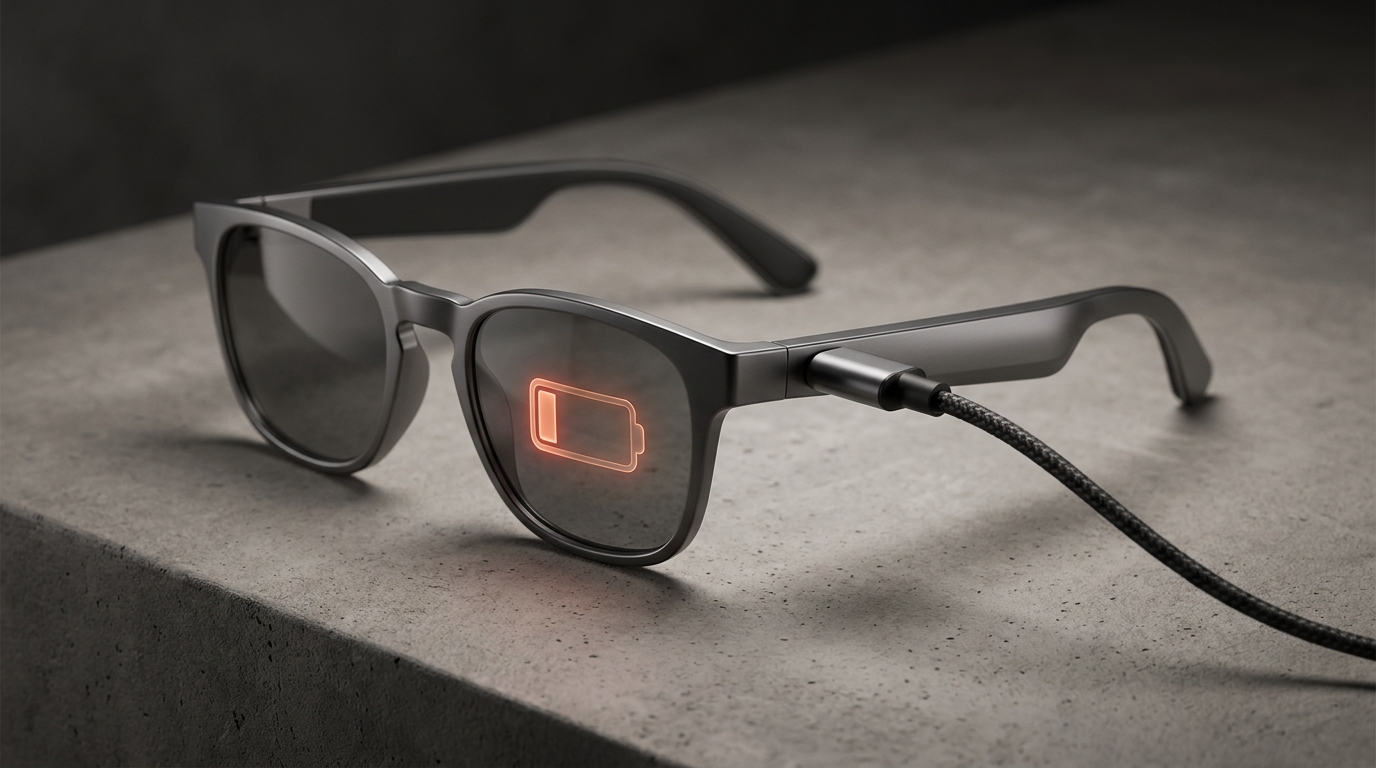
The survey indicates that the camera, not the display, is the primary draw. Photo and video capture emerged as the most-used feature, followed by AI Q&A and navigation. Despite being the most expensive subsystem, the display is not yet a daily driver. While 98% of users felt the product offered good value, clustering around a $420 price point, the display experience was rated as 'good enough' by 77% of respondents, with over half explicitly desiring higher brightness. Battery life, however, was a universal complaint. Demographically, the buyer pool is narrow: approximately 91% male, skewed towards consumers born between 1980 and 2000, consistent across multiple Wellsenn XR surveys. This highlights an early-adopter market, not yet a mass market.
Wellsenn XR's strategic read is clear: the category is being marketed on its display capabilities but used predominantly for camera and AI voice functions. This fundamental mismatch signals a need for a product strategy shift. They suggest that for the next 18-24 months, a 'camera-first AI glasses with a restrained, ultra-bright monochrome HUD' is a more viable hardware bet than a maximalist full-color AR display that significantly inflates BOM and compromises battery life.
Our take: The Wellsenn XR report confirms what Smart Glasses Daily has long suspected: manufacturers are over-indexing on display technology while consumers are quietly building an entirely different product-market fit around cameras and conversational AI. The cost structure of current devices, heavily weighted by complex optical systems, clashes directly with user behavior. Success in the near-term smart glasses market will hinge on prioritizing robust battery life and a high-quality camera experience, complemented by a functional but not necessarily extravagant display. The industry must solve its fundamental cost-value equation before mass adoption can begin.
Interactive guide — prices, displays, cameras, battery.
Share this story