Analysis · —
Mentra and the Open-Source Frontier: The Smart Glasses Hacker's Manifesto
While industry giants battle for proprietary dominance, a quiet revolution is brewing. Open-source innovation, epitomized by projects like Mentra, offers a pathway for hackers and builders to redefine smart glasses on their own terms.

The smart glasses landscape is a battleground, with titans like Meta and Snap pouring billions into vertically integrated ecosystems. We see Meta's Ray-Ban Display, a $799 entry showcasing in-lens translation, and Snap's $2,195 Specs, a "true AR glasses" play. These devices, alongside Acer's calculated dual-model strategy, aim for market capture through closed systems and controlled experiences.
But beneath this high-stakes corporate competition, a more democratic vision for smart eyewear is taking root. The fragmentation of the market, which sees a variety of ambitious hardware plays with disparate software, is also creating fertile ground for open standards. Android XR, though still proprietary, hints at a consolidated operating system that could eventually open avenues for developers.
Consider the aggressive pricing strategies from newcomers like BlackSheep, whose AG18 Smart AI Glasses retail for an astonishing $64.95. This Chinese entrant fundamentally challenges the notion that advanced eyewear must carry a premium tag. Their move not only democratizes access to basic AI interaction but also signals that the core technology is becoming significantly cheaper to produce, lowering the barrier for independent development.
This cost reduction, combined with a growing interest in adaptable hardware, paves the way for projects like Mentra. If a sub-$65 device from an unknown brand can deliver AI features, what could a community of dedicated hackers achieve with readily available components and open protocols? The answer, potentially, is a smart glasses platform built for true user agency, not corporate control.
Mentra represents a philosophical counterpoint to the fashion-forward, camera-centric approach of Ray-Ban Meta, or Snap's ambition for a "see-through computer." While these major players focus on curated experiences, often prioritizing style or specific AR functionality, Mentra can thrive by enabling diverse, user-defined applications, from local notifications to custom AI models.
The inherent limitations of current commercial offerings, such as Meta Ray-Ban's reliance on a wristband called Meta Neural Band for certain features, or its limited language support for live translation, highlight areas where open-source solutions can innovate faster. A community-driven project can respond to niche needs, integrate obscure APIs, and bypass the profit motives that often constrain corporate R&D.
The very nature of smart glasses, often struggling with user experience and practical integration into daily life, makes them ripe for open-source disruption. As our Original "Still Too Tech, Not Enough Life" articulated, many devices are designed from a tech-first perspective. Mentra, on the other hand, can be built from a use-case first, community-driven perspective.
Even as companies like EssilorLuxottica partner with Applied Materials to accelerate AR displays, and NuCurrent pioneers NFC charging to enable sleeker designs, these advancements are primarily for tightly controlled ecosystems. An open-source project like Mentra can adopt these innovations and integrate them into a modular framework, giving builders choices rather than mandates.
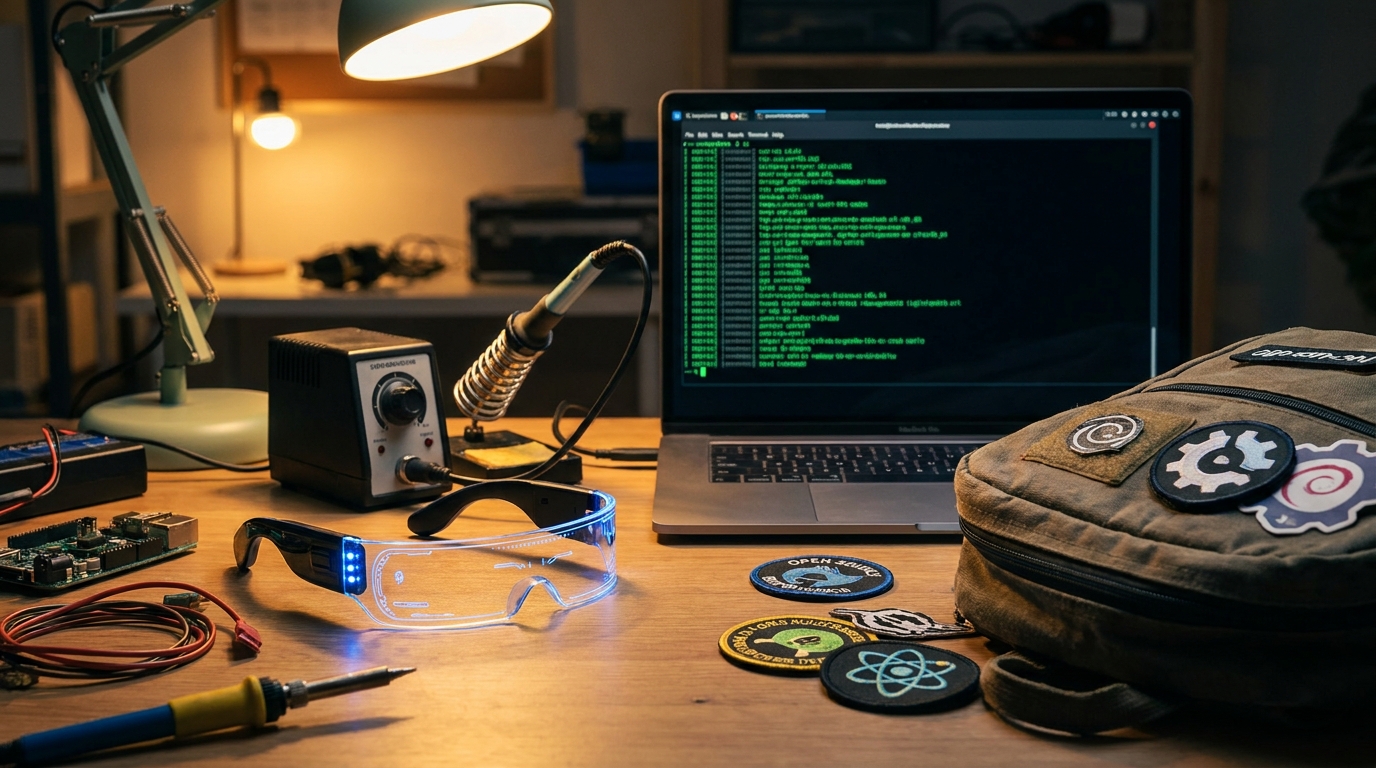
The hacker and builder community, often overlooked by the mainstream industry, represents a critical force for innovation. They are not chasing mass-market adoption or quarterly earnings. They are driven by curiosity, the desire to create, and the need for tools that truly serve their specific purposes. Mentra, or projects like it, can become the foundational layer for this next wave of innovation.
Therefore, as the smart glasses market diversifies, and as the silicon war between giants intensifies, the most compelling opportunities may not lie with the next billion-dollar device. They may emerge from the open-source movement, empowering hackers to build smart eyewear that truly belongs to them, unburdened by corporate agendas or artificial limitations.
Interactive guide — prices, displays, cameras, battery.
Share this story