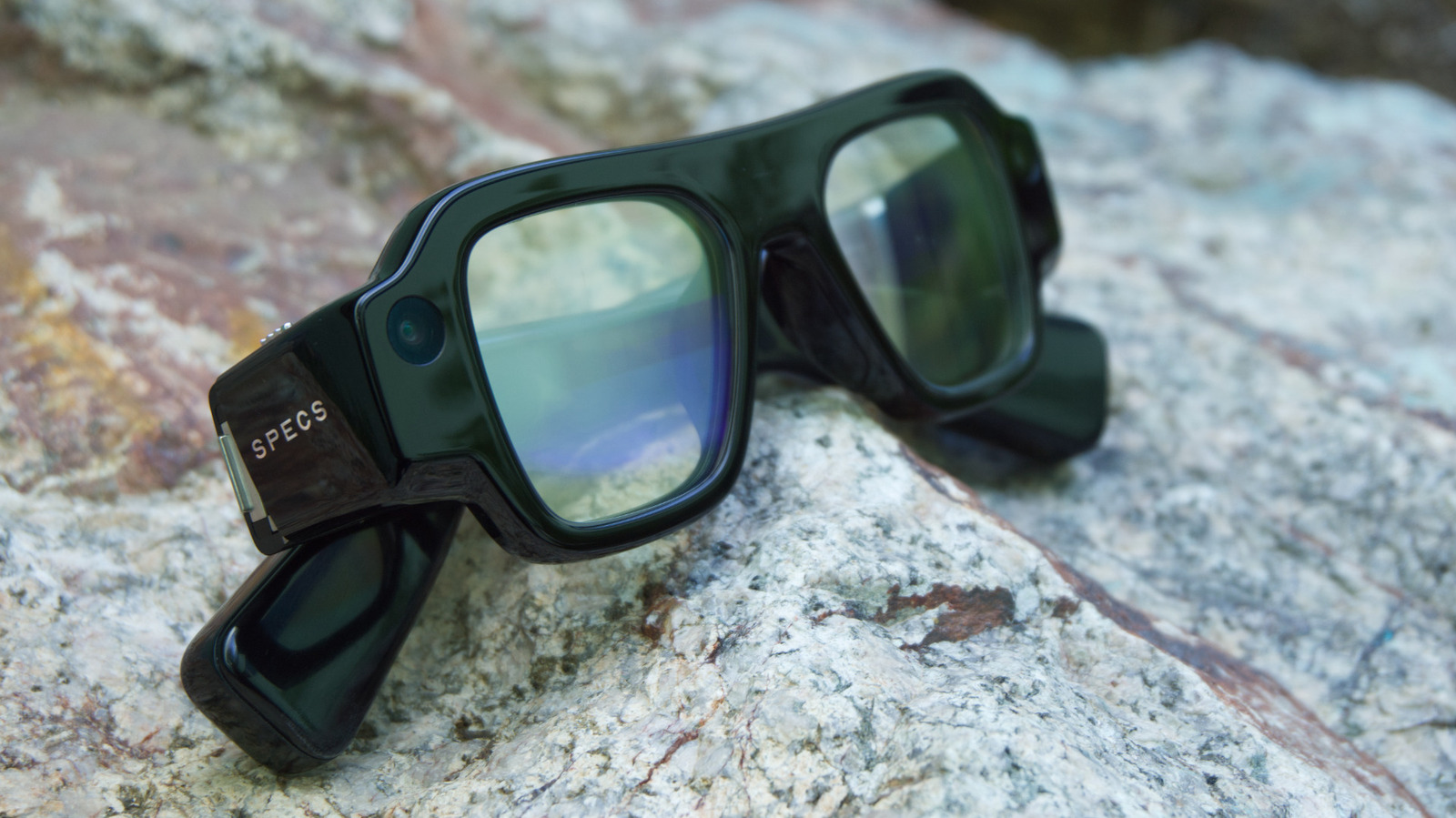
Guides · BlackSheep
BlackSheep's Ultra-Affordable AI Glasses Play: Disruptor or Distraction?
A new entrant from China, BlackSheep, is shaking up the smart-glasses landscape with its aggressively priced AG18 AI glasses. We examine if this low-cost gambit represents a genuine threat to established players or a mere footnote in a rapidly evolving market.
The smart-glasses market often feels like a high-stakes poker game played exclusively by giants, with entry points typically starting in the hundreds, if not thousands, of dollars. Then BlackSheep walked in, tossing a $64.95 chip onto the table, and suddenly everyone took notice. This Chinese eyewear group is not just another startup; it’s a direct challenge to the notion that AI-powered eyewear must carry a premium price tag.
BlackSheep’s arrival with its AG18 Smart AI Glasses isn't merely about affordability; it’s about accessibility. In a space where technological advancements frequently outpace consumer adoption, a device priced like a budget pair of headphones could unlock a new wave of users. The question isn't whether BlackSheep can compete on features with a Ray-Ban Meta, but whether its pricing strategy can fundamentally alter market expectations.
Our editorial stance is clear: BlackSheep matters. The buzz from early reviews, like Florian Bayard's assessment in 01net, confirms surprising AI capabilities for the money. This isn't just a toy; it's a statement that practical, everyday AI assistance can be democratized, potentially forcing established players to re-evaluate their own entry-level strategies.
BlackSheep emerges from the deep manufacturing backbone of the Chinese eyewear industry. While their history isn't widely publicized in the Western tech sphere, their ability to deliver a functional product at this price point speaks volumes about their operational efficiency and supply chain mastery. They are not a tech-first company pivoting to eyewear; they are an eyewear group integrating AI.
This heritage positions them uniquely to understand conventional eyewear design and mass production, sidestepping many of the form-factor and manufacturing hurdles that plague new tech entrants. Their target demographic appears to be broad: anyone curious about smart glasses but unwilling to commit significant capital, or those seeking a minimalist, non-AR-driven AI companion.
The timing is astute. As AI becomes increasingly ubiquitous and conversational interfaces mature, the demand for subtle, integrated assistance grows. BlackSheep capitalizes on this zeitgeist, offering a familiar form factor with unobtrusive AI capabilities, rather than overwhelming users with complex AR overlays or unfamiliar interfaces. It's an approach focused on utility, not spectacle.
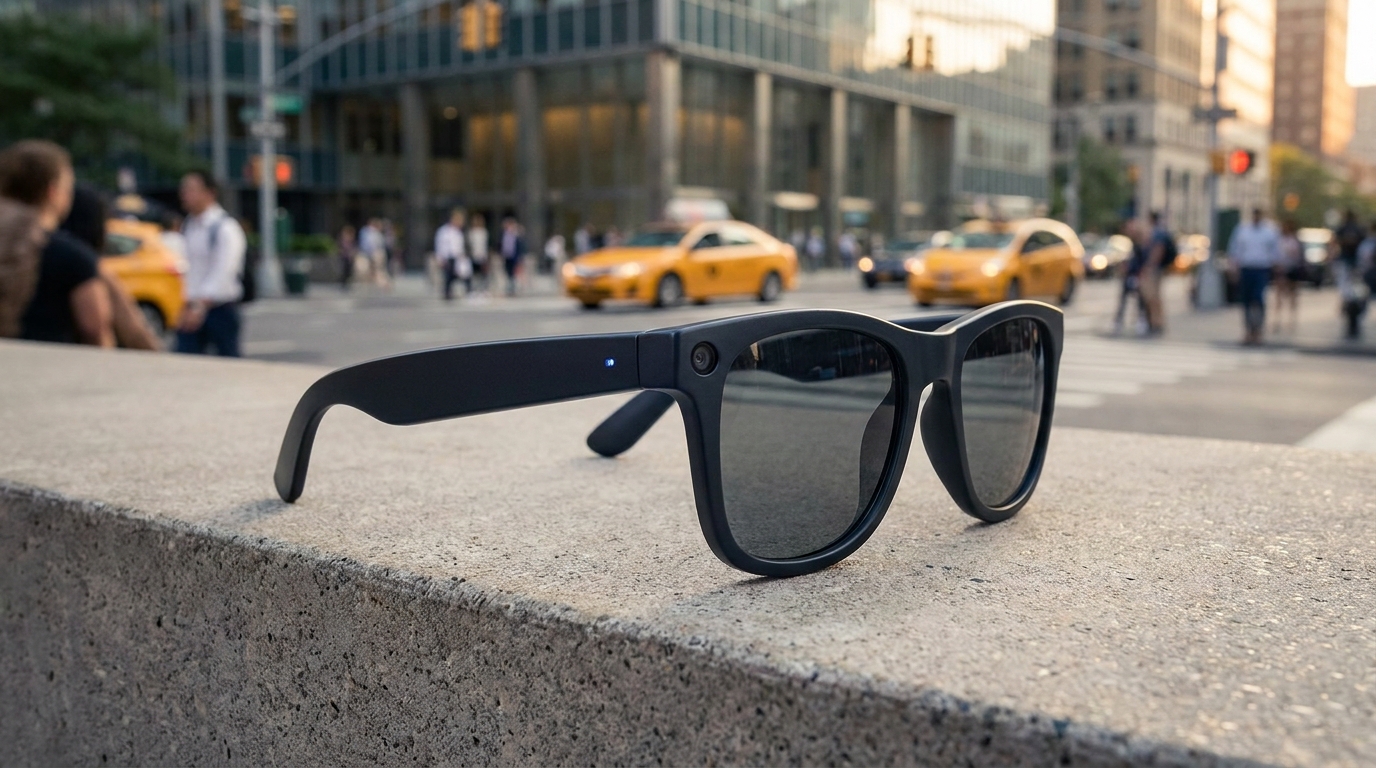
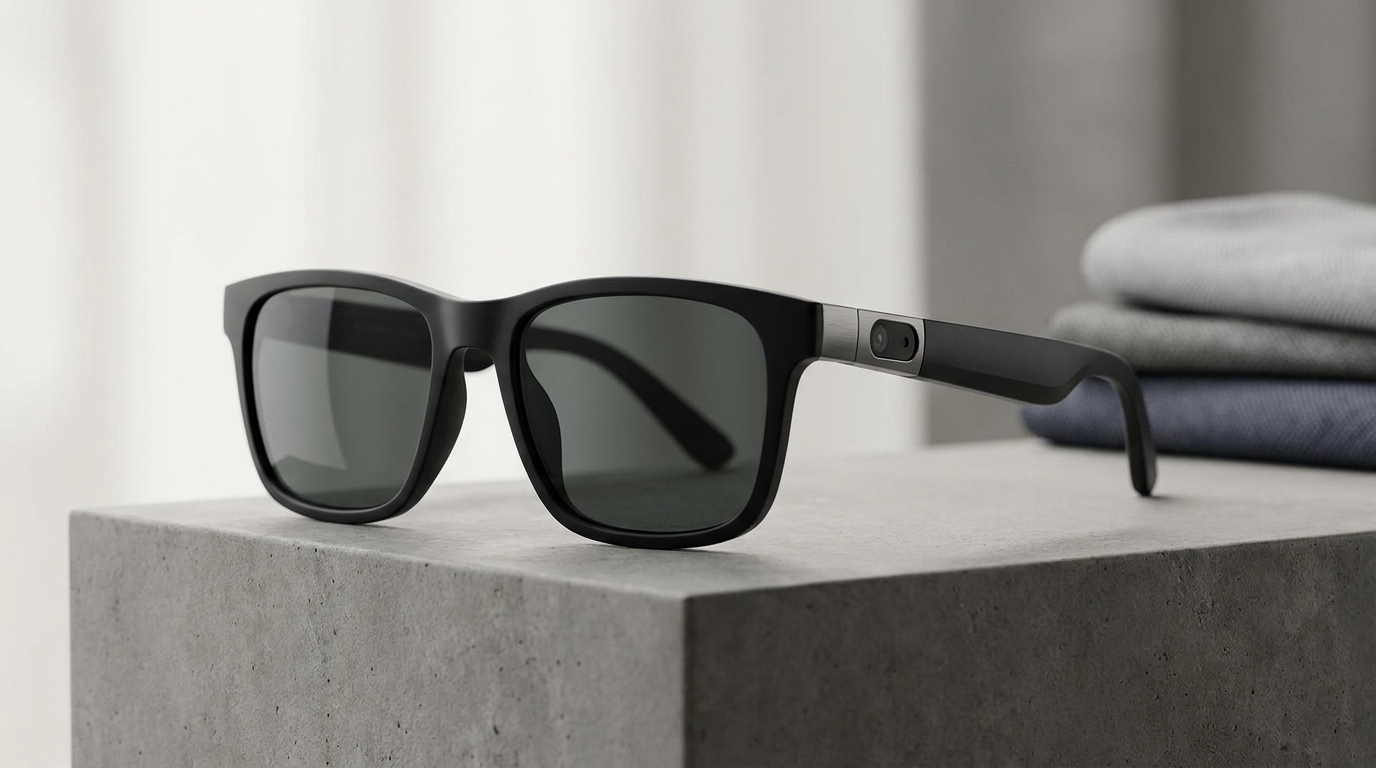
Currently, BlackSheep's flagship offering is the AG18 Smart AI Glasses. Available for a striking $64.95, these are squarely positioned as AI Glasses, eschewing complex integrated displays for a more streamlined, app-dependent experience. The design adheres to a conventional eyewear aesthetic, utilizing a lightweight TR90 frame that helps maintain their unassuming presence.
Under the hood, the AG18 features dual 8MP cameras, a notable inclusion for a device at this price point. Powering its intelligence is the HeyCyan app, which facilitates real-time translation, image recognition, and provides a voice assistant. This reliance on a smartphone app is crucial; the glasses act as a peripheral, offloading significant processing to the connected device.
Battery life, a common pain point for wearables, is stated at 410 mAh, translating to an estimated 2-4 hours of mixed use. While not groundbreaking, it's competitive for this form factor and price, suggesting a design choice prioritizing lightweight comfort and affordability over all-day endurance. The AG18 is designed for bursts of utility, not sustained, intensive engagement.
When positioning BlackSheep against its competitors, the contrast is stark. Halliday, with its proactive AI and innovative DigiWindow display, occupies the high-end of intelligent eyewear, pushing boundaries of integrated AR and sophisticated contextual awareness. BlackSheep, conversely, is the entry point, offering reactive, app-driven AI that prioritizes accessibility and cost over advanced display technology or autonomous intelligence.
Sony, while a formidable player in the broader XR landscape and a key supplier of micro-OLED components like the SRG-X1, operates primarily as a technology enabler and through high-profile XR partnerships. They are setting the stage for future high-fidelity AR experiences. BlackSheep, on the other hand, is delivering a finished, ultra-affordable consumer product *today*, focused on immediate AI utility rather than future immersive realities.
Vuzix, known for its enterprise-grade AR glasses like the Z100 and Shield, caters to industrial and professional applications demanding robust performance, durability, and specific task-oriented functionalities. Their focus is on productivity in demanding environments. BlackSheep targets the general consumer, prioritizing discreet AI assistance and a familiar form factor over ruggedness or complex AR overlays, operating in fundamentally different market segments.
The verdict from Smart Glasses Daily is unambiguous: BlackSheep has carved out a vital niche. For the price-sensitive early adopter, the curious tech enthusiast, or anyone seeking a low-risk entry into wearable AI, the AG18 is a compelling gateway device. Its core strength lies in its unbeatable affordability combined with surprisingly functional, app-driven AI capabilities and an utterly conventional eyewear form factor.
However, weaknesses are inherent to its price point: battery life demands frequent recharging, and the reliance on a connected smartphone for its intelligence means it's not a truly standalone device. Future iterations must address these limitations, but more critically, BlackSheep needs to prove it can build a robust ecosystem around HeyCyan and maintain product quality at scale. We'll be watching closely in the next 12 months for signs of brand expansion beyond 'cheap' and any moves towards integrated processing or discreet displays.
Interactive guide — prices, displays, cameras, battery.
Share this story