Analysis · Meta
The Invisible Revolution: Why Display-Less AI Glasses Will Win the Masses
While the industry fixates on elaborate AR overlays, Meta's subtle, AI-first approach has unlocked the path to mass adoption. Real innovation isn't about pixels, it's about discreet utility that integrates seamlessly into everyday life.

The smart glasses market is not a battle for the most impressive visual spectacle; it is a fundamental contest for everyday attention and trust. Companies like Apple, with their ambitious augmented reality headsets, are pouring billions into digitally overlaying our physical world. Yet, the real mass-market play, the one that will genuinely reshape our daily interactions, is emerging from a far more understated, AI-first approach.
Meta, through its Ray-Ban Meta and the new Meta Glasses lines, is charting a course defined by subtle integration and widespread accessibility, not just cutting-edge AR. This strategy recognizes a critical truth: smart glasses must first be excellent, wearable glasses. Their multi-year partnership with EssilorLuxottica, the parent company of iconic brands like Ray-Ban and Oakley, provides undeniable eyewear pedigree, a foundation Apple lacks.
The launch of Meta Glasses, starting at an aggressive $299, further cements this market-capture strategy. Offerings like Adventurer, Fury, and even a Kylie Jenner-designed Meta Glasses by Kylie make fashion-forward AI accessible to a broad demographic. This focus on style, affordability, and practical utility stands in stark contrast to the maximalist, high-cost strategy seen with devices like Snap's astronomically priced $2,195 SPECS.
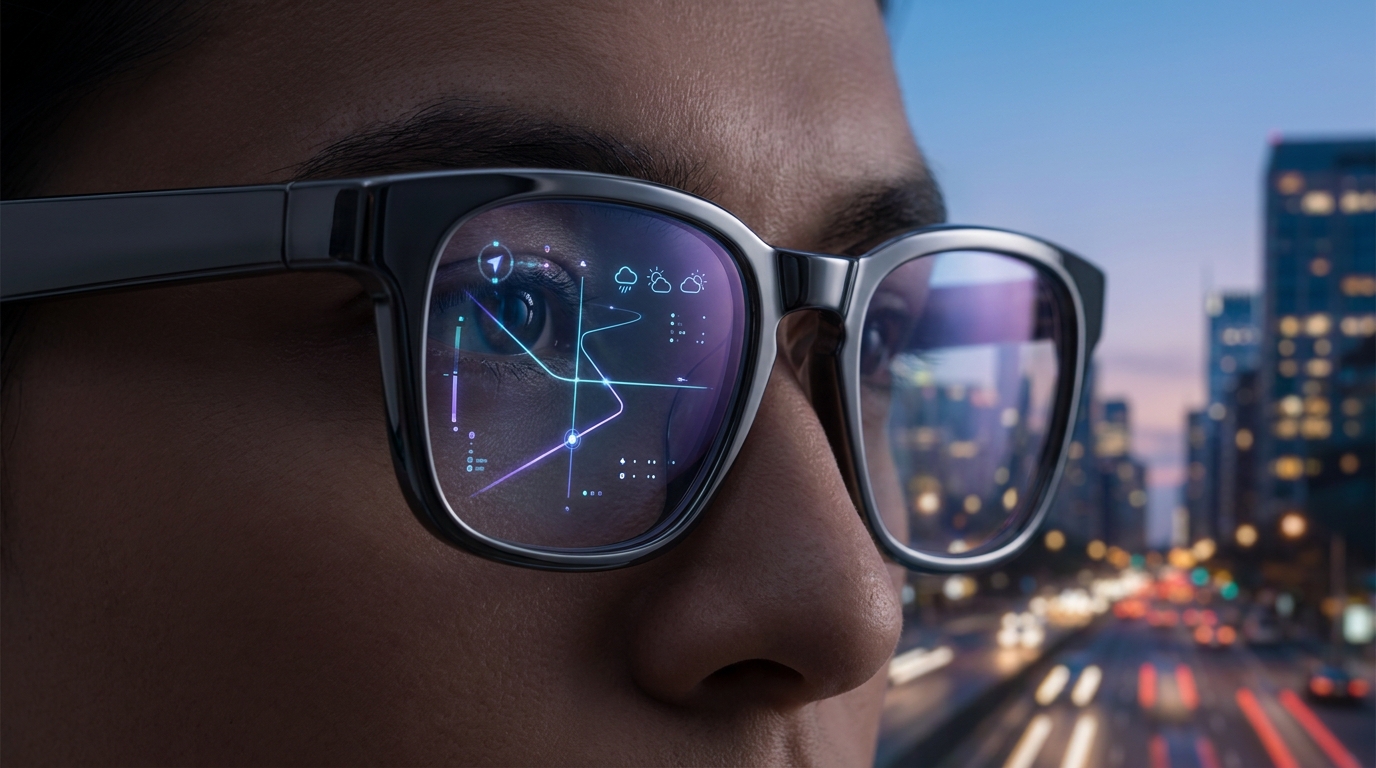
The industry's persistent fixation on complex, power-hungry displays has actively alienated everyday users. As we have argued before, this 'see-through computer' approach consistently misses the mark, creating expensive, often cumbersome devices that struggle to justify their visual bombardment. Display-less AI glasses offer utility without the digital noise, an invisible companion rather than a constant visual interruption.
Meta's core insight is deceptively simple: ambient AI, not digital illusions, is the key to widespread adoption. The integration of sophisticated on-device intelligence via Muse Spark AI, boosted by firmware v26, positions Meta's offerings as discreet, everyday AI companions. This technology works in the background, offering assistance without demanding constant visual engagement, a silent revolution for the mass market.
This shift towards display-less, AI-first devices is not unique to Meta. New entrants like Thunderbird, with their V3 AI Glasses, are explicitly branding their hardware as 'AI Glasses,' signaling a clear focus on ambient computing. These players understand that user experience and computational prowess are paramount, not just the ability to beam pixels into our eyes.
Of course, privacy remains a paramount concern, even for devices without a display. Meta's aggressive measures to prevent covert recording, including mandatory camera disables and legal threats against modders, highlight ongoing public scrutiny. The mandatory recording LED and the automatic camera disabling if tampered with, are necessary steps to build the public trust essential for mass adoption of *any* smart eyewear.
The recent crypto fraud case in Gassin-Saint-Tropez, where smart glasses were reportedly leveraged, further underscores the potential for misuse of advanced tech. While details remain scarce, it is a stark reminder that device manufacturers must proactively address these challenges, ensuring user safety and ethical use, regardless of whether a display is present.
This battle for the face is unfolding within a larger geopolitical context, as the US and China vie for digital supremacy in ambient computing. Companies like ByteDance, with their stealthy smart glasses play, are making ambitious moves, aiming for a persistent, immersive digital layer. This is not merely a competition for market share; it's a high-stakes race to define and control the future of how we interact with information.
Big Tech's aggressive push towards proprietary AI ecosystems, from Meta's Muse Spark AI and the Meta One Premium subscription to ByteDance's ambitions, reflects a broader industry trend. These 'walled gardens' aim to lock users into specific platforms, making the underlying AI and services the real value proposition, rather than just the hardware.
The essence of the display-less AI glasses revolution lies in its ability to offer genuine, unobtrusive utility. These devices prioritize ambient intelligence, fashion, and accessibility over a maximalist visual experience. They are designed to blend into our lives, providing subtle enhancements rather than overwhelming us with digital overlays.
Meta's strategy with Ray-Ban Meta and the new Meta Glasses is a masterclass in market capture, decisively outmaneuvering the grand, yet ultimately niche, ambitions of competitors focused solely on AR spectacles. It proves that the path to widespread adoption is paved not with dazzling displays, but with discreet, fashion-forward hardware powered by invisible, intelligent AI.
The smart glasses market is at a critical juncture, and the true innovators are those who recognize that the future is not about spectacle, but about seamless integration. It is about devices that enhance our reality subtly, intelligently, and without demanding we constantly stare at a screen beamed into our eyes. The invisible revolution is already here, and it is winning.
Forget elaborate AR visions. The real competition is for discreet utility, for an AI companion that fits effortlessly into our lives, and for the trust of a mass market wary of digital overload. The display-less AI glasses are not just a niche; they are the inevitable, dominant future.
Interactive guide — prices, displays, cameras, battery.
Share this story