Manufacturer News · Snap
Snap's First Spectacles Developer Bootcamp: Shaping the Future of AR
Snap hosted its inaugural Spectacles Developer Bootcamp, giving creators an inside track on SnapOS, spatial mapping, and AI tooling ahead of AWE.
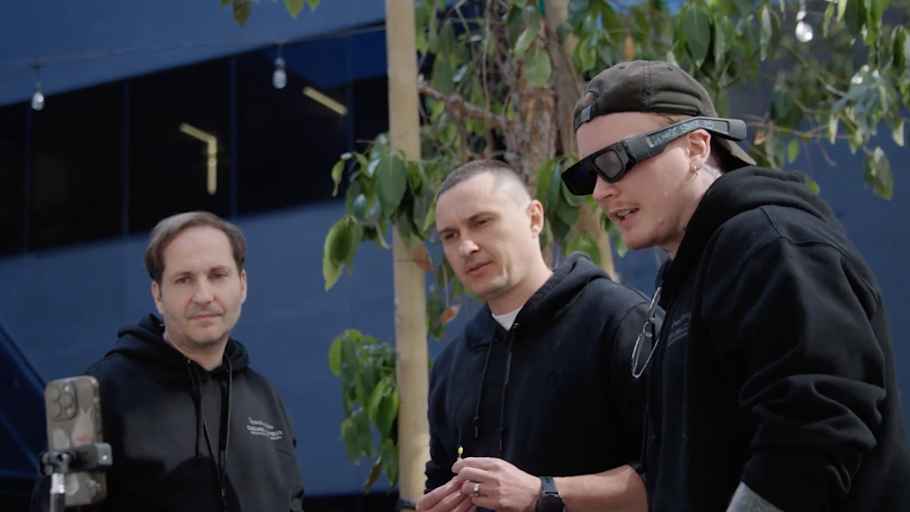
On May 12, 2026, Snap revealed details from its inaugural Spectacles Developer Bootcamp, an intensive gathering hosted at the company's Santa Monica headquarters. The event brought together 45 of its most active augmented reality creators from across the globe, including developers traveling from Sweden, Belgium, and Zambia. The single-day summit provided creators with direct access to Snap's core engineering teams, underscoring the company's deliberate push to cultivate a dedicated, specialized creator base around its standalone AR platform.
Rather than treating the day as a high-level marketing showcase, Snap structured the technical sessions around the complex operational challenges of building standalone wearable AR. Engineers walked developers through the forthcoming roadmap for SnapOS, alongside a deep technical dive into sparse mapping. According to Snap Newsroom, sparse mapping allows Spectacles to understand, anchor, and remember physical environments, enabling persistent digital artifacts that remain stable over extended sessions without overtaxing the onboard computing hardware.
The bootcamp also placed significant weight on AI-native Lens development, highlighting a dedicated session on the platform's Agent Manager. As AI agents increasingly handle contextual scene understanding and interactive voice logic, Snap demonstrated how spatial creators can weave real-time machine intelligence directly into their experiences. Technical leads also tackled real-world rendering constraints, offering practical guides on 3D mesh decimation, shader optimization, and integrating the Spectacles Interaction Kit (SIK) to keep framerates steady on a compact wearable profile.
Data persistence formed another major pillar of the workshops. Snap engineers highlighted cloud-backed persistence using Supabase through Snap Cloud, allowing multiple users to interact with shared spatial objects over time. As Snap Newsroom reported, developer Baruch Geuze noted that the direct access to Snap's engineering team shifted his perspective from simply making lenses to thinking in terms of spatial products and long-term use cases. Developer Steven Wolpe echoed the enthusiasm, highlighting the momentum heading into upcoming industry events.
The Santa Monica summit acts as an operational prelude to the Augmented World Expo (AWE) in June, where Snap plans to share broader updates regarding its SPECS platform and expanded developer programs. By tightening ties with early adopters now, Snap is attempting to establish software depth before standalone AR glasses reach mainstream consumer retail volumes.
Our take: Snap understands something critical that many hardware manufacturers overlook: hardware is only as convincing as the software built on top of it. While competitors like Meta dominate display hype with prototypes like Orion, Snap's real advantage lies in its sticky, highly creative lens developer community. By arming developers with sparse mapping, AI agent frameworks, and persistent spatial backends, Snap is ensuring that when consumer-ready AR hardware finally scales, it will have functional, engaging software waiting on day one.
Interactive guide: prices, displays, cameras, battery.
Share this story