Reviews · Even Realities
Live-Captioning Glasses: Accessibility Tech for All
For those with hearing loss, and even those with perfect hearing, a new category of smart glasses is emerging. These devices transcribe real-time conversations into subtitles, offering a discrete visual aid.

Announced May 9, 2026, live-captioning eyeglasses are presented as a novel accessibility tool, serving as a complement to traditional hearing aids for individuals with hearing impairments. Instead of sound amplification, these glasses visualize speech as subtitles, transforming auditory information into text.
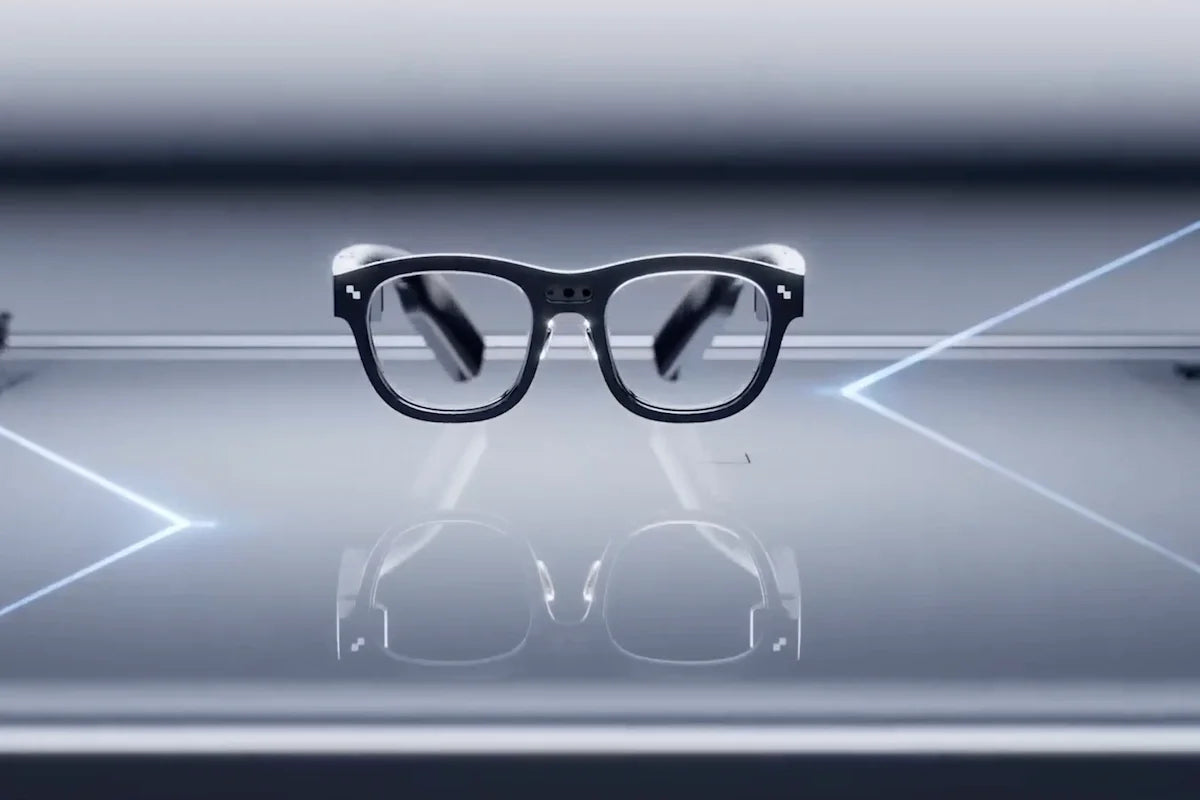
WIRED reports that captioning glasses are a distinct subset of smart eyewear, dedicated to displaying real-time subtitles directly in the user's field of vision. This functionality translates spoken words, whether from a personal conversation or cinematic dialogue, into text. The embedded displays typically utilize single-color screens, often green, designed solely for text legibility. Unlike general smart glasses, these devices prioritize captioning and generally omit features like camera recording or music playback, though some models may include navigation or live translation.
According to WIRED's testing, while all models performed their core function, the Even Realities G2 stood out as the top performer in the category. The essential features across these devices include real-time transcription, with the ability to archive conversation logs on a paired smartphone, which can be useful for recording meetings. However, effective recording necessitates close proximity to the speaker.
Many captioning glasses also incorporate language translation services, a benefit extending beyond users with hearing disabilities. These glasses can offer real-time foreign language subtitles, although the ability to translate the user's speech back to the foreign speaker is often rudimentary. Furthermore, several models integrate AI functionalities, such as voice assistants and summarized transcripts, akin to AI notetaking applications.
Our take: The clear focus of captioning glasses on a singular function - visual transcription - highlights a growing trend in specialized wearable technology. These are not merely general-purpose smart glasses with an added feature, but purpose-built devices addressing specific needs. The integration of AI for translation and summarization further elevates their utility, pushing the boundaries of what accessibility tech can achieve.
## How the hardware compares
Understanding why the Even Realities G2 led the testing category requires looking at how the underlying hardware developed. Even Realities first established its optical foundation with the G1, which was unveiled in June 2024 and shipped that August. The G1 uses micro-LED waveguide lenses with a 640x200 resolution, a 25-degree field of view, a 20 Hz refresh rate, and 1,000 nits of brightness backed by automatic brightness control. Built without cameras, the G1 delivers 36 hours of battery life on the frame, 2.5 recharges from its case, and relies on two microphones to power tools like Live captions, Transcribe, QuickNote, Translate, Teleprompt, and Navigate via iOS and Android apps connected over Bluetooth BLE 5.2.
The Even Realities G2, announced on November 12, 2025, alongside the R1 control ring, pushed those specifications further. Priced starting at $599 or €599, the 36-gram glasses upgrade the visual engine to a waveguide monochrome green micro-LED system known as HAO 2.0, raising peak brightness to 1,200 nits while maintaining 640x200 resolution per eye across the 25-degree field of view. For speech capture, the G2 doubles the microphone array from two to four microphones, enhancing transcription clarity while omitting speakers and cameras. Battery endurance increases to 48 hours - around two days when paired with a phone - with a charging case that holds seven full recharges. The G2 carries an IP65 water-resistance rating, supports prescription lenses from -12.00 to +12.00 as a paid extra, and links via Bluetooth LE to the Even Realities app and Even AI without relying on on-device AI processing.
## Updates since publication
Since this article was published on May 11, 2026, the discussion surrounding visual transcription glasses and the Even Realities G2 has expanded rapidly. Just before this report, on May 8, 2026, we reported on Even Realities introducing a Terminal Mode for the G2 to allow developers to monitor AI coding agents. Shortly after, on May 17, 2026, we reported on development insights, design philosophy, and future hardware plans from inside Even Realities.
On June 23, 2026, we reported on user case studies showing how both the G1 and G2 integrate into daily routines for legal professionals and Twitch streamers. Aesthetic details were clarified on July 16, 2026, when we reported on the G2's Lindberg-designed frames and micro-LED optics. The camera-free titanium frame was subsequently showcased at IFA 2026, where the manufacturer emphasized a GDPR-first posture and hands-on demonstrations highlighted fast Mandarin-to-English translation subtitles directly on the lens.
However, the discreet nature of transcription wearables has also generated controversy. On July 30, 2026, we reported on an ethics debate covered by Tom's Guide regarding the G2's capability to covertly record private conversations, which prompted public discussion with CEO Will Wang. Workplace practicality was explored further on August 16, 2026, when we reported on Popular Mechanics evaluating the G2 as an office-first tool; while its display supported focus without camera distractions, the AI and controls still needed refinement. Most recently, on November 2, 2026, we reported on Even Realities expanding the hardware family with a Tortoiseshell Brown 2 frame option alongside polarized clips and an eyewear chain.
Interactive guide: prices, displays, cameras, battery.
Share this story