Analysis · Google
The Android XR Coup: How Google's Open Ecosystem Takes the Smart-Glasses Crown
Apple's walled garden and Meta's empire building will be dwarfed. Android XR is poised to unleash an AI-first smart glasses revolution, leaving proprietary systems in the dust.
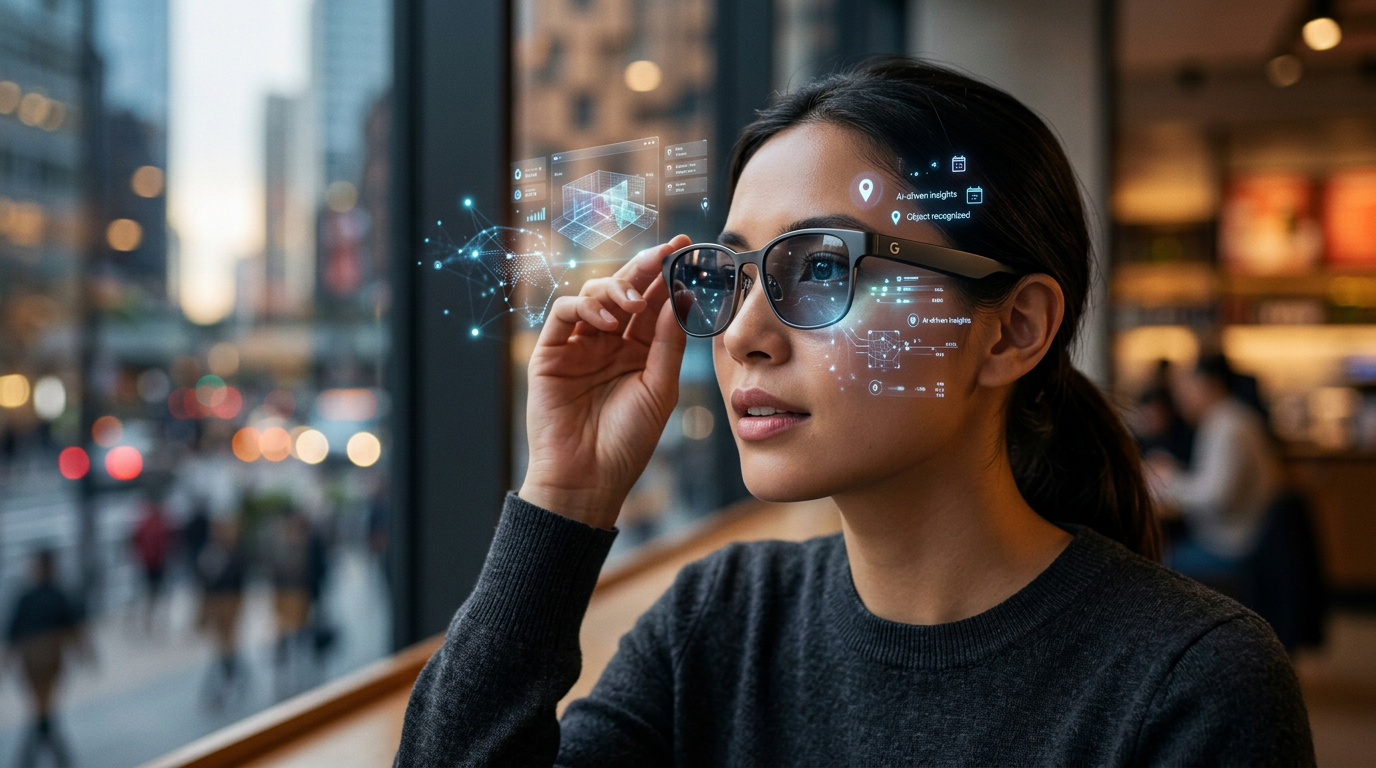
The smart glasses market is a battleground of grand ambitions and fundamental oversights. For years, the industry fixated on flashy AR displays, chasing a visual fantasy that consistently failed to resonate with the mainstream. This 'screen obsession' has created an infinite loophole: developers build for displays, which demand power, which drains batteries, making true 'always-on' AI impossible.
Our recurring thesis at Smart Glasses Daily has been clear: the obsession with AR displays is a dead end. Companies like Meta and Apple continue to pour resources into hardware form factors and display technologies, or ecosystem plays built on proprietary foundations. Meanwhile, a silent, tectonic shift is underway, largely driven by Google's strategic positioning of Android XR.
While Meta focuses on its Ray-Ban Meta sales tripling and Snap hosts developer bootcamps for Spectacles, these efforts, while noteworthy, are ultimately constrained. Snap's inaugural Spectacles Developer Bootcamp, bringing together 45 top developers, fostered collaboration around SnapOS, sparse mapping, and AI-native Lens development. Yet, this is still a closed system, limiting its ultimate reach and impact compared to an open platform.
Apple, too, is making moves, with rumored camera-equipped AirPods in final testing, poised to embed AI vision into a device people already wear. This is a clever flanking maneuver against Meta, suggesting Apple prioritizes lightweight, less power-hungry designs for AI integration. However, 'less power-hungry' is not 'power self-sufficient,' and the fundamental battery problem persists, hindering ubiquitous, always-on AI.
The Chinese market, as we've observed, offers a stark contrast. While Western companies chase displays and ecosystems, Chinese AI giants are quietly integrating their formidable AI directly into eyewear. Baidu and others are prioritizing seamless, AI-first interactions over visual spectacle, a philosophy that aligns more closely with the direction Android XR is taking.
The critical flaw remains the 'dead battery' problem, a fundamental obstacle preventing truly ubiquitous, always-on AI. Companies promise facial computing, but the reality is a user experience constantly tethered to a charger. Until this power dilemma is resolved, the promise of truly intelligent, always-available eyewear remains a distant dream for many proprietary systems.
Enter Android XR. While Apple clings to its walled garden and Meta builds its empire, Google is quietly laying the groundwork for a truly open, AI-first smart glasses ecosystem. This foundational shift, combined with massive innovation from hardware partners, is set to reshape the landscape dramatically within the next 12 months.
Consider the current market offerings: PCMag crowns Viture Beast and RayNeo Air 4 Pro as top picks for 2026, highlighting evolving features like cameras, displays, and sensors. Even Realities' G2 glasses, with their discreet design and focus on practical information like turn-by-turn directions, represent the kind of utilitarian, AI-driven functionality that thrives on open platforms.
We're also seeing dedicated accessibility tech like Live-Captioning Glasses from Even Realities, transcribing real-time conversations into subtitles. These devices, which prioritize function over flashy visuals, are prime candidates for integration into an open, Android XR-powered ecosystem. Their simplicity and clear value proposition are compelling.
The privacy concerns highlighted by incidents like the London smart glasses extortion case and the proposed ban on student smart glasses in Tennessee's Clarksville-Montgomery County School System are real. But these concerns also underscore the growing ubiquity of smart eyewear. Android XR, with Google's significant resources, will be better positioned to address these issues through platform-level controls and user education than fragmented, proprietary solutions.
Samsung's waveguide smart glasses demo with eMagin OLED microdisplays shows the potential for high-quality, integrated visuals. When coupled with the robust software and AI capabilities of an open platform like Android XR, such hardware advancements become truly transformative, moving beyond mere concepts to practical, widespread applications.
The key differentiator for Android XR will be its openness, allowing a diverse array of manufacturers and developers to innovate without the constraints of a single corporate gatekeeper. This will inevitably lead to an acceleration of development, a wider range of price points, and ultimately, greater market penetration than any closed system can achieve.
Within the next year, expect to see a surge of smart glasses powered by Android XR, offering a seamless, AI-first experience that prioritizes intelligence and utility over mere visual spectacle. Brands like Gucci partnering with Google on Android XR eyewear are just the beginning. This isn't just about competing; it's about defining the future of smart eyewear.
The 'Smart Glasses Hit Mainstream in 2026' narrative, driven by players like EssilorLuxottica's Ray-Ban Meta and XREAL, will soon be dominated by the Android XR phenomenon. Google is not just playing the long game; it's about to make the entire industry's chess pieces dance to its tune.
Interactive guide — prices, displays, cameras, battery.
Share this story