News · Meta
Smart Glasses: Profit, Power, and the Race for Optics
EssilorLuxottica reports significant AI glasses revenue growth and profitability, contrasting with Meta's Reality Labs losses. The market sees surging shipments, strong waveguide adoption, and a scramble for capital at the component level.
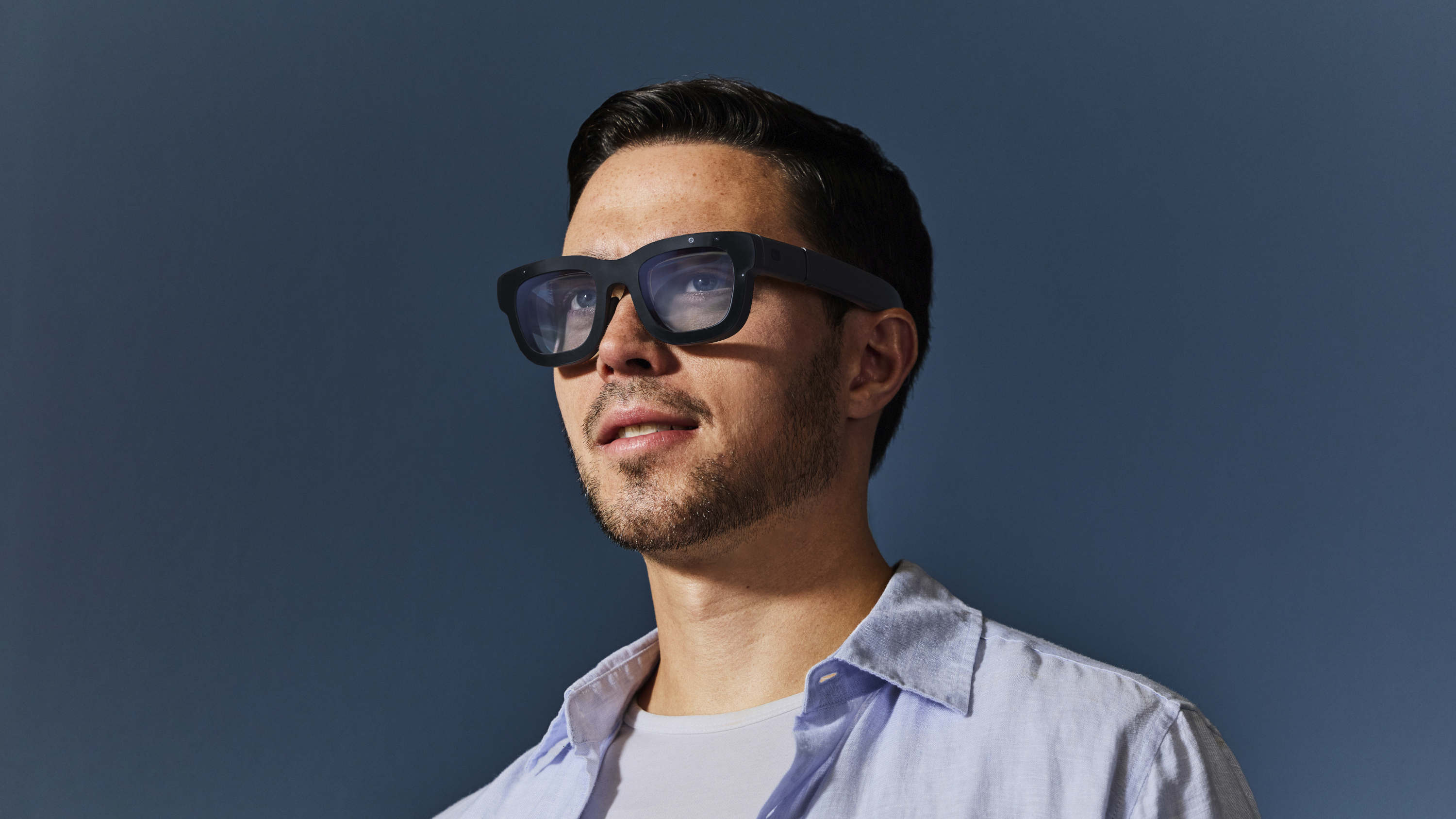
The smart glasses market is reaching a critical inflection point, as evidenced by recent financial disclosures and market analysis. Norman M. (XR Eyewear) highlighted key industry developments, including EssilorLuxottica's earnings, NVIDIA's XR AI beta, Loomos' launch, Japan's LBEC consortium, and Chinese waveguide funding rounds. We've compiled the market data, shipment shares, and financials to frame these headlines within a broader business context.
EssilorLuxottica, in its Q2 and H1 2026 results published on July 28, announced that its AI glasses revenue nearly doubled year-over-year in the quarter. The company reported overall group revenue up 9.7 percent in H1 at constant exchange rates, with Q2 up 8.7 percent. Significantly, EssilorLuxottica stated that its wearables line is now profitable, supported by higher average prices and increased prescription lens adoption. This follows the sale of 7 million Meta-partnered units in 2025, roughly triple the 2024 figure, as heise noted.
Our take: This profitability claim is a landmark. It offers the first clear indication that a smart glasses product line can operate with sustainable eyewear economics, moving beyond the subsidized gadget model. Further signaling this strategic shift, EssilorLuxottica also revealed a partnership with Applied Materials to develop next-generation intelligent optical systems, suggesting a move to vertically integrate more of the optics stack.
The financial picture differs sharply for the other side of the partnership. Meta's Q2 2026 results showed total revenue up 28 percent to 60.8 billion dollars. However, its Reality Labs division generated only 431 million dollars in revenue against an operating loss of 4.62 billion dollars, as CNBC reported. The industry's volume leader continues to fund its hardware ambitions largely through its core advertising business, while its optical partner captures the direct product margin.
Volume growth is undeniable. IDC reported approximately 2.25 million display-less smart glasses shipped in Q1 2026 alone, a 167 percent year-over-year increase. This single quarter's volume approaches the 2.7 million units shipped by the entire category in all of 2024. Display eyewear in the AR/VR segment also saw strong growth, up 86 percent. IDC projects 13.6 million display-less units for full year 2026, reaching 27.3 million by 2030 with an 18.9 percent compound annual growth rate (CAGR), generating 5.1 billion dollars in revenue this year. Average selling price (ASP) is expected to compress from roughly 376 dollars in 2026 to 229 dollars by 2030.
Display glasses are growing faster in percentage terms, forecast by IDC to hit 3 million units in 2026 and 12.2 million by 2030, a 41.9 percent CAGR, with ASPs stable between 516 and 547 dollars. Mixed reality headsets, by comparison, are projected to grow from 3.2 million units in 2026 to 10.4 million in 2030, with ASPs sliding slightly from 742 to 682 dollars.
Market share data from Q1 2026 confirms Meta's dominant position. IDC places Meta at 69.2 percent of the combined eyewear market. RayNeo follows at 3.4 percent, Xiaomi at 3.1 percent, Viture at 2.5 percent, and XREAL at 2 percent, with others comprising 19.8 percent. Counterpoint Research observed the overall intelligent eyewear market up 83 percent year-over-year in Q1 2026, with AR glasses up 136 percent and display-less smart glasses up 210 percent, while VR declined 17 percent. Counterpoint Research notes Meta's share of the display-less segment specifically grew to nearly 84 percent, up from 82 percent the previous quarter.
Within AR, the technology mix is rapidly evolving. While birdbath and flat prism designs still account for 58 percent of AR glasses shipments, this is down from 82 percent a year prior. Waveguide models have significantly expanded their share, jumping from 18 percent to 42 percent. RayNeo leads the birdbath segment with a 41 percent share. Viture experienced a 281 percent year-over-year surge, securing 34 percent and topping AR shipments outside China. XREAL, while cooling slightly, remains the first consumer AR manufacturer to file for an IPO. In the waveguide sector, Rokid holds the global lead, with Meta taking 38 percent, constrained by component yields for its Ray-Ban Display models. Even Realities and Alibaba trail with 9 percent and 5 percent respectively.
The capital markets present the next test for these burgeoning companies. XREAL filed for a Hong Kong listing in April, reporting roughly 516 million RMB (about 72 million dollars) in 2025 revenue, over 70 percent of which was international, according to UC Today. Rokid is also preparing its own Hong Kong IPO, the South China Morning Post reported. Both will be valued in a landscape where Meta controls significant distribution and giants like Google, Samsung, and Snap are entering with substantial platform assets.
The component layer saw direct capital movement this quarter. SEEV raised nearly 200 million RMB (about 28 million dollars) to scale AR waveguide output, expand globally, and fund research into full-color diffractive waveguides, anticipating a shift to multi-color technology by 2027. The company currently operates a million-unit nanoimprint line for single-green waveguides, utilized in devices like the Even Realities G1, and is developing silicon carbide etched full-color waveguides.
Source: Norman M. (XR Eyewear) ↗
Interactive guide — prices, displays, cameras, battery.
Share this story