Manufacturer News · Meta
Meta Smart Glasses Usage Triples, Company Calls It 'Fastest Growing' Category
During its Q1 2026 earnings call, Meta announced a dramatic surge in daily smart glasses engagement, alongside substantial sales figures.

On June 11, 2026, Meta announced a significant milestone for its smart glasses portfolio: daily usage has tripled year-over-year. Speaking to investors during the Q1 2026 earnings call, Mark Zuckerberg reportedly declared the category 'one of the fastest growing categories of consumer electronics ever,' as noted by UploadVR.
This surge in engagement follows strong sales performance. UploadVR reports that Meta's fashion, branding, and hardware partner, EssilorLuxottica, previously disclosed 7 million units of Ray-Ban Meta and Oakley Meta glasses were sold in 2025. According to EssilorLuxottica, these devices have become the 'dominant driver' of its wholesale growth.
The growth trajectory is prompting production considerations. Earlier this year, Bloomberg reported that Meta and EssilorLuxottica were discussing plans to potentially double or even triple smart glasses production capacity, though it remains unclear if these increases have been implemented.
Our take: These usage and sales figures, if sustained, suggest Meta is building significant traction in the smart eyewear market. The tripling of daily engagement is particularly compelling, indicating these devices are moving beyond novelty purchases to genuine utility for a growing user base. While specific active user counts are not yet public, the trajectory points to Meta's long-term bet on AR eyewear gaining tangible momentum.
## Hardware portfolio expansion
The momentum cited during Meta's earnings call was built on an evolving family of smart eyewear. Alongside Ray-Ban styles, the 7 million units sold in 2025 included the Oakley Meta HSTN, an AI-enabled frame that launched on August 26, 2025, for $399. That model weighs 48 grams, incorporates a 12 MP camera with 1080p video recording, and offers 8 hours of battery life.
Since this article was published, Meta and EssilorLuxottica have significantly diversified the lineup. On September 23, 2026, Meta released the Ray-Ban Meta (Gen 3) starting at $449. Gen 3 upgraded the formula with 3K Ultra HD video from its 12 MP camera, 9 hours of battery life, open-ear stereo with Dolby Atmos playback, and a 6-microphone array boasting over 90 percent background-noise reduction. At Connect 2026, Meta also revealed the cat-eye Meta Capri style, whose technical specifications and price remain unannounced, alongside Meta Fury, a limited-edition clear frame with mirrored lenses featuring on-device AI. Both Gen 3, Capri, and Fury connect to Meta AI and Muse, which functions as a personal AI agent.
To address buyers wary of wearable cameras, Meta also introduced the Ray-Ban Meta Audio. Available on pre-order before shipping on October 13, 2026, the $349 glasses shed the camera and display entirely. We reported on October 27, 2026, that Meta's audio-only Ray-Bans pose a pricey dilemma at that entry cost, though the 43-gram frame delivers open-ear stereo, a 6-microphone array, 12 hours of battery life, and four additional charges via the case.
## Scrutiny, privacy, and real-world utility
Update: As hardware shipments climbed throughout 2026, Meta encountered sharp regulatory and public resistance regarding bystander recording. As we reported on October 22, 2026, EssilorLuxottica's dominance faces mounting regulatory scrutiny from European privacy watchdogs concerned by the discreet form factor. International tensions followed shortly after; as we reported on October 27, 2026, Meta smart glasses sparked political sting fears in India after an official alleged the frames were deployed for covert recording during high-level meetings.
By the end of October, US lawmakers joined the fray. As we reported on October 31, 2026, US Senators Ron Wyden and Edward Markey demanded answers from Mark Zuckerberg over bystander safety and contractor access to recorded footage following a series of privacy controversies.
Despite these controversies, Meta has made progress validating real-world utility beyond novelty social media capture. As we reported on October 22, 2026, Meta AI glasses delivered independence for a man in the UK with sight impairment by connecting him with remote assistants who provided real-time descriptions of his surroundings. On that same day, we reported that Meta teamed up with the American Council of the Blind to donate smart glasses to blind and low-vision veterans across South Carolina.
## What to watch next
Meta's next phase involves moving beyond audio and camera frames into dedicated visual computing. Planned for spring 2027, the announced Meta VR Glasses will retail for $1,299.99. Designed for cinema, live sports, and workspace utility, the 100-gram headset uses a dual micro-OLED Infinite Display with 2412 x 2288 resolution per eye, a 120 Hz refresh rate, and spatial audio with Dolby Atmos. Unlike Meta's wireless glasses, this device requires a fiber-optic tether connecting to an external compute puck equipped with the Snapdragon Reality Elite chip, offering 3 hours of battery life.
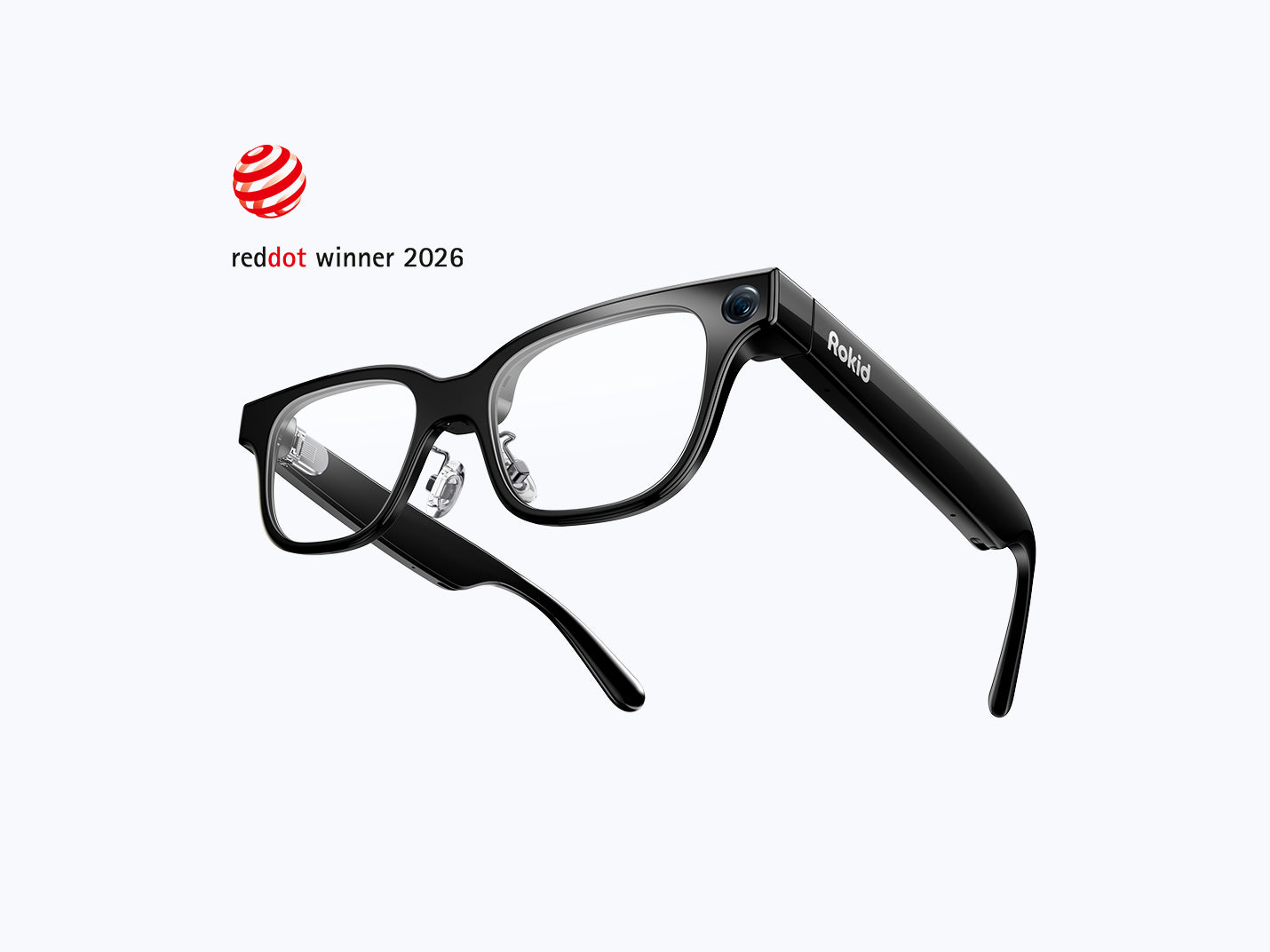
However, Meta will face heightened ecosystem rivalry. As we reported on October 29, 2026, the impending Android XR reckoning is positioned to break Meta's eyewear monopoly as Ray-Ban Meta sales stall and consumer pushback against integrated cameras peaks. Furthermore, as we reported on November 1, 2026, display specialists like RayNeo, XREAL, and Rokid have continued to dominate the display war by building private spatial monitors, offering an alternative path to Meta's camera-centric smart glasses.
Interactive guide: prices, displays, cameras, battery.
Share this story