
News · Meta
Privacy Backlash Builds Against Smart Glasses, Meta Sales Soar
Despite growing public concern over surreptitious recording, major tech firms anticipate selling millions of smart glasses. Meta's Ray-Ban models, in particular, are seeing unprecedented sales figures even as privacy debates intensify.
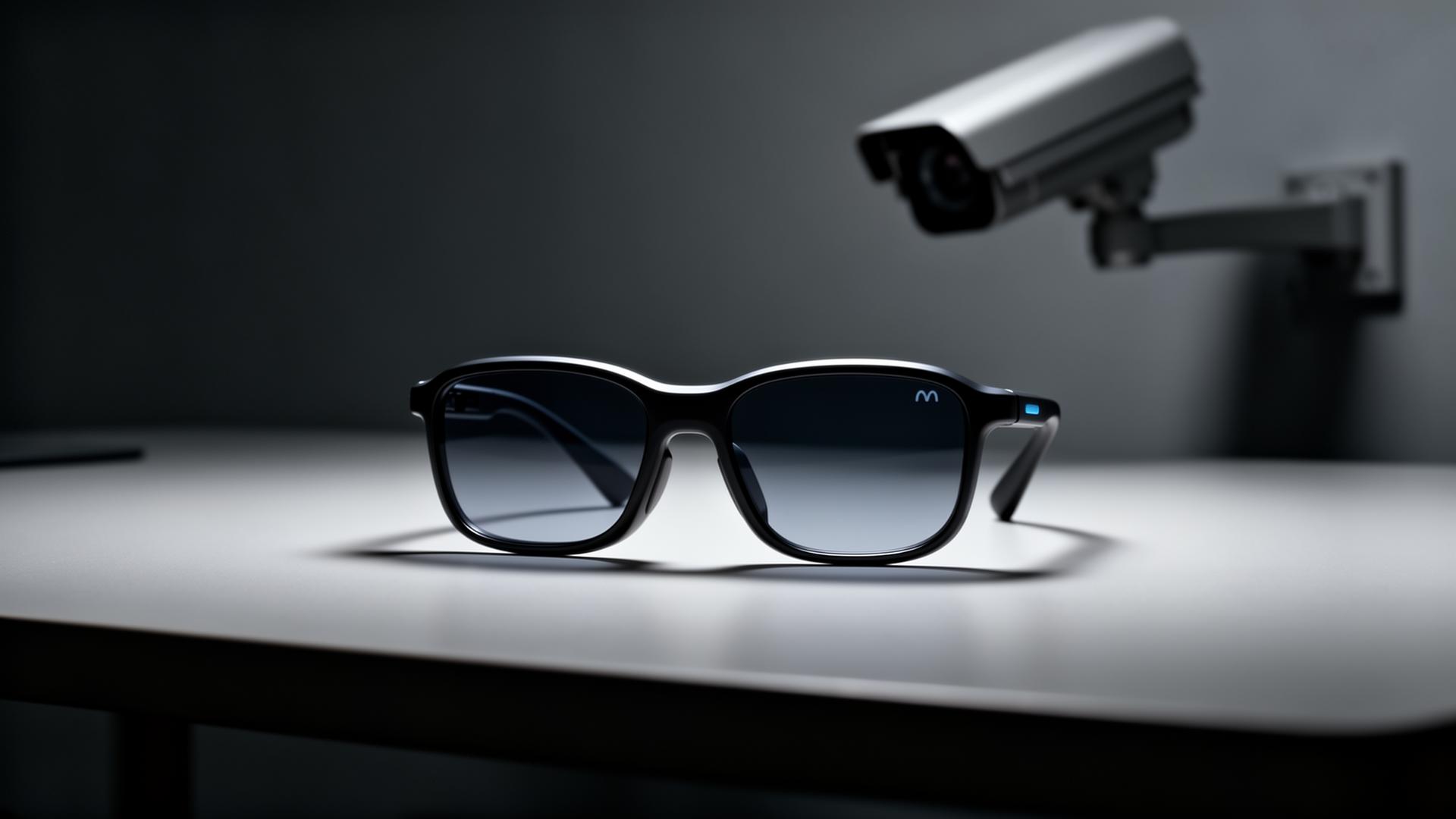
Smart glasses, particularly models from Meta, are navigating a complex landscape this week. While privacy advocates voice escalating concerns, the industry expects millions of units to sell in the coming years.
The core of the issue, according to www.bbc.com, revolves around non-consensual filming. The outlet reports incidents where individuals, primarily women in public settings like beaches or shops, have been filmed by men wearing Meta's Ray-Ban smart glasses. These interactions often involve casual questions or pick-up lines, with the recording happening without the subject's knowledge or explicit consent.
This surge in privacy complaints stands in stark contrast to the market performance of these devices. www.bbc.com notes that Meta's smart glasses are currently selling better than ever, suggesting consumer demand is outweighing public apprehension, at least for now.
Our take: The burgeoning smart glasses market is on a collision course with fundamental privacy rights. While innovation pushes boundaries, manufacturers must prioritize transparent usage indicators and robust consent mechanisms. Without proactive measures, the industry risks alienating a significant portion of potential users and inviting stricter regulation, potentially hindering adoption more than any technical limitation.
## Regulatory scrutiny and bystander pushback
The public unease reported by the BBC aligns with wider scrutiny facing Meta's eyewear. As we reported on EssilorLuxottica's Ray-Ban Meta Dominance Faces Mounting Regulatory Scrutiny, the discreet design fueling commercial success has drawn attention from European privacy watchdogs. Legislative pressure is also building in the United States. As we reported on US Senators Demand Answers from Meta Over AI Glasses Privacy Risks, lawmakers Ron Wyden and Edward Markey pressed Mark Zuckerberg on bystander safety and contractor access to recorded footage after multiple privacy controversies.
Concerns around covert filming have emerged internationally as well. As we reported on Meta Smart Glasses Spark Political Sting Fears in India, high-profile political gatherings faced a surveillance headache when an Indian official alleged Meta smart glasses were used for covert recording. Although accessibility initiatives highlight positive applications, such as when we reported on Meta Smart Glasses Empower Blind Veterans: A New Tool for Independence, public anxiety regarding surreptitious capture remains acute.
## Comparing Meta's camera and audio hardware
Meta's hardware catalog illustrates this tension between camera capabilities and privacy. For camera-equipped models, Meta released the Oakley Meta HSTN on August 26, 2025, priced at $399. The 48 g frames feature a 12 MP camera with 1080p video, 8 hours of battery life, and no display. Update: Since this article was published, the Ray-Ban Meta (Gen 3) launched on September 23, 2026, starting at $449. That model pairs a 12 MP camera with 3K Ultra HD video, 9 hours of battery, a customizable action button, open-ear stereo with Dolby Atmos playback, and a 6-microphone array cutting over 90% of background noise.
Update: Since this article was published, Meta announced the cat-eye Meta Capri at Connect 2026, featuring cameras, open-ear audio, and Meta AI with Muse, and the limited-edition Meta Fury arrived in September 2026 with a clear frame, mirrored lenses, on-device AI, and a camera.
To bypass camera concerns entirely, Meta is introducing camera-free alternatives. Update: Since this article was published, the Ray-Ban Meta Audio glasses were released on October 13, 2026, for $349, eliminating both camera and display. Weighing 43 g, they offer 12 hours of frame battery life, 4 case charges, open-ear stereo, a 6-microphone array, and Meta AI with Muse. As we reported on Meta's Audio-Only Ray-Bans Pose a Pricey Dilemma, starting at $349, these camera-free frames promise discreet AI assistance, but their premium price tag raises tough questions.
## What to watch next
Beyond audio glasses, Meta is separating visual experiences from public surveillance entirely with dedicated display hardware. The tethered Meta VR Glasses, priced at $1,299.99 and planned for spring 2027, feature no cameras. Built for cinema, sports, and workspace, the 100 g headset includes dual micro-OLED Infinite Displays with 2412 x 2288 resolution per eye, a 120 Hz refresh rate, a 3-hour battery, spatial audio with Dolby Atmos, and a fiber-optic cable tethered to a Snapdragon Reality Elite compute puck.
As consumer adoption expands, the smart glasses industry must demonstrate that wearable cameras can coexist with bystander privacy. Without convincing indicators that make recording obvious to everyone nearby, tech companies will face heightened pushback from lawmakers and the public alike.
Interactive guide: prices, displays, cameras, battery.
Share this story





