Analysis · —
What 2026 Smart Glasses Still Get Wrong About Everyday Users
Despite the breathless hype surrounding AI-first eyewear, the industry fundamentally misunderstands the average person. Critical flaws in privacy, battery life, and societal integration plague the supposed 'mainstream' revolution.
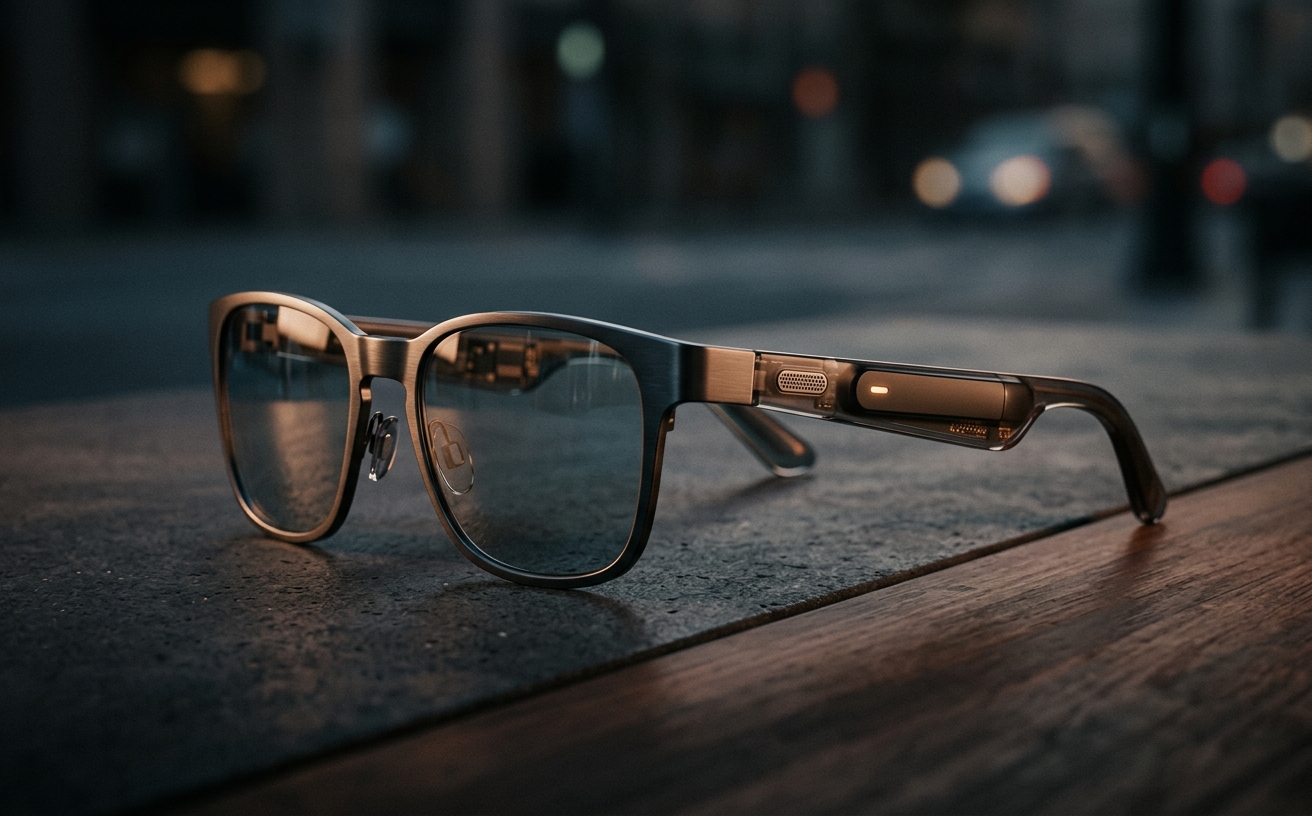
The year 2026 has been heralded as a turning point, the moment smart glasses shed their niche status and finally hit the mainstream. Optimistic reports trumpet everything from soaring sales of Ray-Ban Meta to the promising advent of Google's Android XR. Yet, beneath the surface of this perceived revolution, the industry continues to make fundamental, often dangerous, miscalculations about what everyday users truly need, want, and will accept.
Much of the recent excitement centers on the 'silent revolution' of AI assistants taking over eyewear. We at Smart Glasses Daily have consistently argued that AI-first, omnipresent intelligence is the true path forward, a vision seemingly embraced by Google's strategic positioning of Android XR. Samsung's imminent entry into the market with an Android XR-powered device only strengthens this narrative of an AI-driven future.
However, this pivot to AI is a half-truth, frequently undermined by a persistent 'screen obsession.' Companies like Meta and Apple still pour billions into hardware form factors and display technologies, fixating on a visual spectacle that drains resources and user patience. Even PCMag's top picks for 2026, like the Viture Beast, are celebrated for their 'immersive display' and 'expansive field of view,' reinforcing this misplaced priority.
This display-first approach creates an 'infinite loop of power demands' that directly sabotages the promise of 'always-on' AI. For the everyday user, a device constantly tethered to a charger or suffering from short battery life is not an omnipresent assistant, it is a frustrating burden. The industry's inability to deliver true all-day power remains a critical flaw, regardless of how intelligent the AI may be.
Far more egregious than battery woes is the industry's catastrophic oversight regarding privacy. The recent 'London incident,' where a British woman was unknowingly filmed by a man using smart glasses and then extorted, stands as a chilling indictment. This wasn't a hypothetical scenario, but a very real, humiliating exploitation enabled by discreet recording technology.
The perpetrator in the London incident reportedly had 'no phone, he did not have a camera directly in my face.' This near-invisibility weaponizes discretion, turning smart glasses into perfect tools for illicit recording and exploitation. ExtremeTech rightly points out how easily bad actors can leverage such wearable cameras for financial gain or malicious intent.
The societal backlash is already underway, a direct consequence of this unchecked privacy erosion. The Clarksville-Montgomery County School System in Tennessee, for instance, is moving to ban smart glasses for students. This swift institutional response signals a profound mistrust, highlighting how rapidly the technology is outrunning ethical frameworks and user acceptance.
These school bans are not isolated incidents of tech-phobia. They reflect a broader, justified societal anxiety about the 'recording and dissemination of fight videos' and, by extension, any unconsented recording in public or semi-public spaces. The implication is clear: if you are wearing smart glasses with a camera, you are viewed with suspicion.
To claim 'smart glasses hit mainstream in 2026' while such fundamental privacy and trust issues remain unaddressed is disingenuous. While sales figures for devices like Ray-Ban Meta may triple, this adoption occurs within a vacuum, ignoring the growing discomfort and potential for misuse that impacts not just the user, but everyone around them.
Indeed, some smart eyewear does offer genuine utility, like the live-captioning glasses from Even Realities, providing vital accessibility for individuals with hearing loss. These devices prioritize a specific, practical function and often omit cameras altogether. This distinction is crucial, showcasing how purpose-built solutions can find acceptance where general-purpose, camera-laden devices stumble.
Even Google's Android XR, while promising an 'open ecosystem' and unleashing an 'AI-first smart glasses revolution,' comes with an inherent risk. An open platform means a wider array of applications, not all of which will respect user privacy or societal norms. The industry cannot simply hand over the keys and absolve itself of responsibility.
Manufacturers like Samsung, Meta, and Snap, currently focused on 'sophisticated AR experiences' at developer bootcamps, must shift their focus. Building robust, user-friendly devices means prioritizing trust and ethical design as much as, if not more than, advanced features or display grandeur. Without it, the market will remain fragmented and distrusted.
The disconnect is stark: developers in Santa Monica collaborate on 'AI-native Lens development' for Snap Spectacles, while in London, citizens are victimized by unconsented recordings. This chasm between technological ambition and real-world ethical implications defines the smart glasses landscape of 2026.
Until smart glasses manufacturers genuinely address the specter of privacy invasion, the practical demands of battery life, and the imperative for seamless, ethical societal integration, the 'everyday user' will remain wary. 2026, then, might be remembered less for its triumphs and more for its glaring missteps.
Interactive guide — prices, displays, cameras, battery.
Share this story