Smart Glasses Daily

指南 · Acer· (English original)

Acer's Smart Glasses Gambit: A Full Overview of Their Dual-Front Entry

The Taiwanese tech giant, a familiar name in PCs, just dropped two distinct smart glasses models, signaling a serious and strategic play. We break down Acer's entry, its products, and how it stacks up against the competition.

C. LAURENT· French 特派记者·2026年6月21日·4 分钟阅读
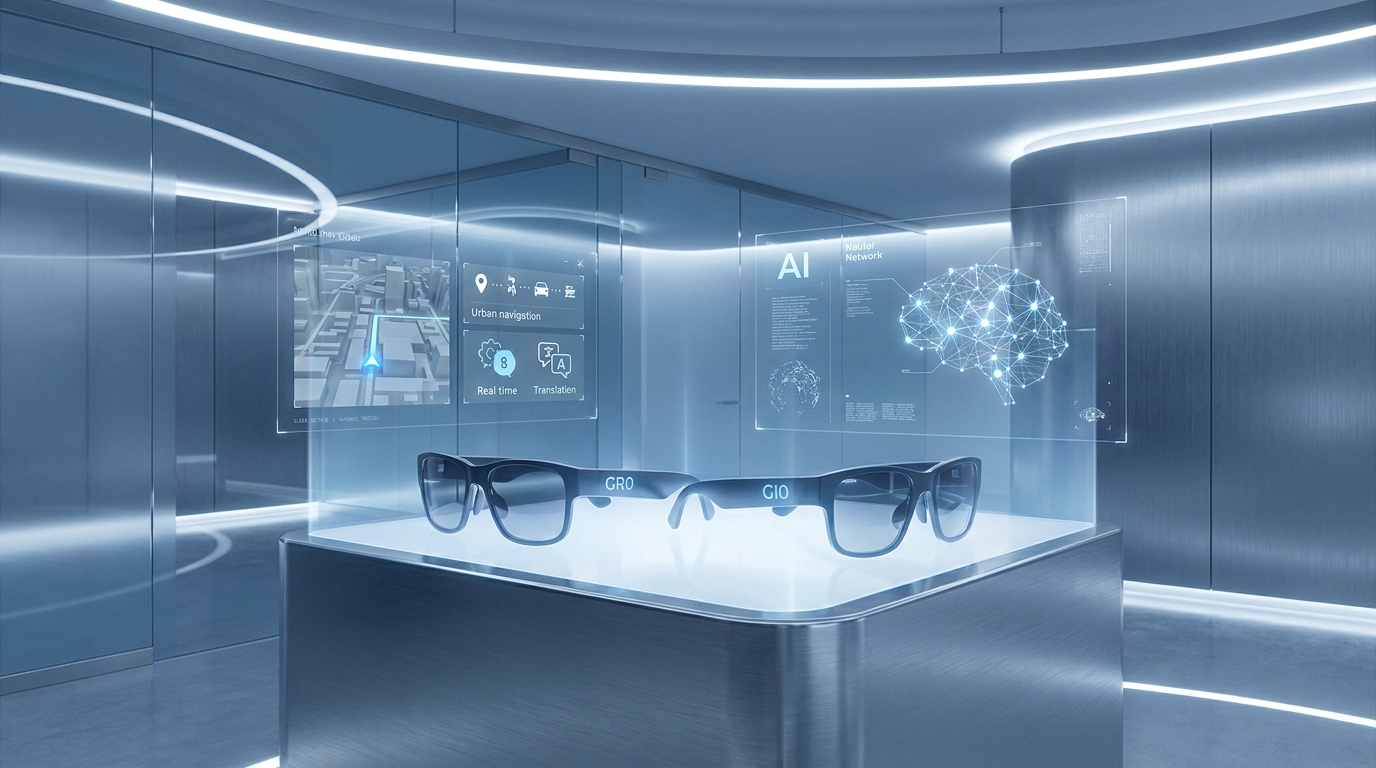
Acer smart glasses (GR0 and GI0) displayed in a clean, futuristic editorial setting, highlighting both their AR and AI capabilities.

Image: Smart Glasses Daily Guides

版权与下架

Acer, a name synonymous with accessible computing for decades, has officially entered the smart glasses arena, and their move is anything but tentative. On June 1, 2026, the company unveiled not one, but two new smart eyewear products, immediately staking a claim in a market increasingly defined by ambitious AR and AI integration. This isn't just Acer dipping a toe; it's a calculated, dual-front offensive that demands attention.

This entrance fundamentally shifts the competitive landscape. With established players like Apple and Samsung refining their strategies, and innovative specialists like Halliday pushing the envelope, Acer's robust manufacturing capabilities and global distribution network position them as an immediate force. Their arrival could democratize advanced smart glass features or carve out lucrative, specific niches, making this a pivotal moment for the industry and for consumers.

Acer has long been a bedrock of the global technology sector, building a reputation on reliable, value-driven PCs, monitors, and projectors. Founded in Taiwan in 1976, their history is one of adapting to market shifts, from early desktop computing to notebooks and gaming rigs. While they lack a direct legacy in head-mounted displays beyond enterprise VR headsets, their deep experience in hardware design, supply chain management, and consumer electronics distribution is formidable.

Why smart glasses, and why now? The market is maturing beyond nascent experiments. AI is becoming a non-negotiable feature, and the form factors are evolving. Acer likely perceives an opening, perhaps for more accessible price points or specific enterprise applications, that allows them to leverage their existing scale. It’s a natural evolution for a company always looking to capture the next wave of computing, moving from the desk to the face.

Their timing also aligns with broader industry trends where major players are consolidating or expanding their wearable tech portfolios. Acer’s move signals a belief that smart glasses are no longer a niche curiosity but a mainstream computing platform in the making. Their strategy appears to be one of targeted disruption, rather than a broad-stroke challenge to the premium segment.

Acer’s initial smart glasses lineup consists of two distinct devices: the AR Vision GR0 and the AI-Powered GI0. This immediate segmentation is telling, indicating a strategic attempt to address different facets of the nascent smart glasses market from day one. Details remain somewhat sparse, but the core functionalities and target audiences are clearly delineated.

The AR Vision GR0 is positioned as a tethered headset focused on high-fidelity augmented reality visuals. While specific resolution, field of view, or processing power figures are not yet public, the tethered design strongly suggests an emphasis on sustained performance and graphical intensity. This form factor typically caters to professional users in fields like design, engineering, or specialized training, where robust visuals and consistent power delivery are paramount, or to prosumers seeking an immersive AR experience.

In contrast, the AI-Powered GI0 represents Acer’s play for a more mainstream, daily-wear experience. This model is described as lighter and wireless, with a distinct focus on AI capabilities. This implies a device designed for on-the-go assistance, contextual information delivery, and potentially voice-controlled interactions. The lack of a tether points to greater portability and user comfort, likely targeting a broader consumer base or professionals requiring hands-free, intelligent assistance throughout their day.

Acer's dual-pronged approach immediately sets them up for a fascinating competitive dynamic. Against Samsung's Android XR glasses and rumored Galaxy XR headset, Acer's GR0 could vie for a segment of the enterprise or prosumer AR market, potentially offering a more focused, high-fidelity experience if priced competitively. The GI0, being AI-focused and wireless, will find itself competing with Samsung's broader vision for everyday smart glasses, where ecosystem integration will be key for both.

When stacked against Halliday’s proactive AI glasses with DigiWindow, Acer’s AI-Powered GI0 faces a direct challenge in the utility and intelligence department. Halliday has established a reputation for sophisticated, anticipatory AI. Acer will need to demonstrate truly compelling and intuitive AI features in the GI0 to stand out, moving beyond basic voice commands to genuine proactive assistance that justifies its place on the face. Their success here will hinge on the depth and integration of their AI engine.

Apple's Vision Pro currently sets the premium benchmark for spatial computing, while rumored Apple Glasses loom as a potential future consumer offering. Acer’s GR0 is unlikely to compete directly with the Vision Pro on sheer brand prestige or initial feature set, but it could offer a more specialized, potentially more accessible alternative for specific industrial or professional AR use cases. The GI0's wireless, AI-first approach places it in a similar conceptual category to potential future Apple Glasses, targeting everyday utility, albeit likely at a different price point and with a different ecosystem strategy.

Acer's foray into smart glasses is a serious proposition, indicative of a company determined to remain relevant in the next wave of personal computing. The AR Vision GR0 and AI-Powered GI0 signal a smart, segmented attack. The GR0 appears aimed at specific, high-demand AR applications, likely within enterprise, while the GI0 aims for broader appeal through accessible AI assistance.

Our verdict is that Acer’s strengths lie in its manufacturing scale, established distribution, and the strategic clarity of its two-model launch. They have the potential to carve out significant market share by offering compelling value or by targeting underserved niches. However, their immediate weaknesses include an unproven track record in smart glasses, the lack of a mature proprietary ecosystem compared to giants like Apple or Samsung, and the ultimate unknown of their products' true performance and detailed specifications. What to watch over the next 12 months are the actual capabilities of the GI0’s AI, the price points of both models, and whether Acer can leverage its PC channels for effective developer support and market penetration. This isn't just another entrant; it's Acer, and that means it’s worth watching closely.

每周简报

智能眼镜资讯,每周五直送邮箱。.

每周五清晨一封简报。无废话。一键退订。

我们绝不会分享您的邮箱。

相关文章

BlackSheep AG18智能AI眼镜在一个干净、专业的影棚环境中, 突出其时尚、传统眼镜设计和巧妙的技术集成。

Guides · BlackSheep

BlackSheep的超实惠AI眼镜布局: 颠覆者还是干扰项?

中国新入局者BlackSheep凭借其极具竞争力的AG18 AI眼镜, 正在撼动智能眼镜市场格局。我们将探讨这种低成本策略是真正威胁了老牌玩家, 还是在快速发展的市场中昙花一现。

M. BELL·4 min read

Jun 21, 2026

一副经典Wayfarer款式的Ray-Ban Meta智能眼镜特写, 置于抛光表面, 背景模糊, 营造出现代社论风格的场景。摄像头镜头和扬声器

Guides · Ray-Ban Meta

Ray-Ban Meta: AI眼镜时尚外表下的现实审视

Meta与Ray-Ban合作进军智能眼镜市场, 为大众提供了时尚与拍摄功能。但其融合AI野心和关键隐私问题的做法, 需要我们仔细审视。

C. LAURENT·4 min read

Jun 21, 2026

讨论焦点

热议

本周空间计算领域最具争议的文章。

为你精选

为你推荐

从评测、新闻与分析中精选,你可能错过的内容。