Guides · Ray-Ban
Brand Guide: Ray-Ban's Smart Glasses Play Is About Style, Not Screens
The iconic eyewear brand isn't building an AR headset. It's betting that looking good and capturing moments is the key to mainstream adoption, a direct challenge to the tech-first industry.
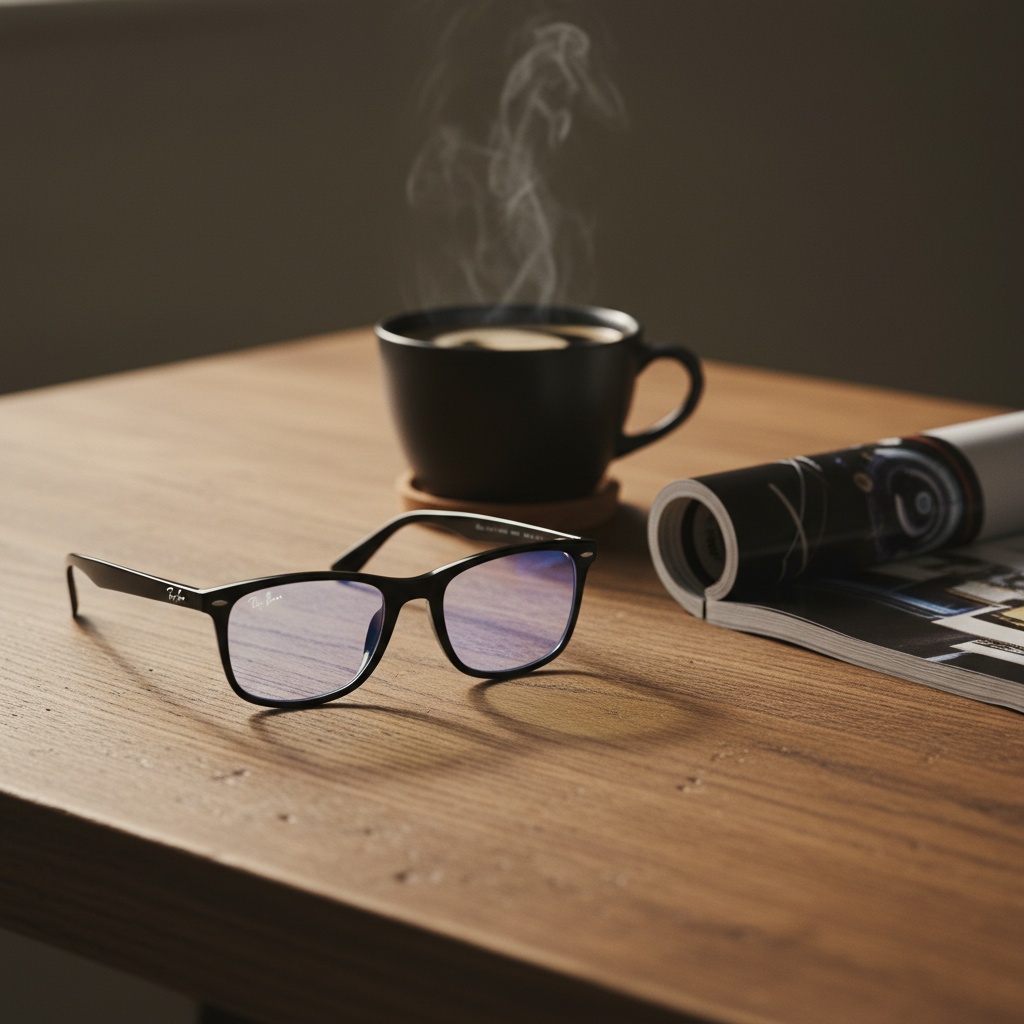
In a market crowded with bulky, tech-forward headsets promising to layer digital worlds over our own, the most significant player might be the one doing the least. Ray-Ban, the titan of timeless cool, has entered the smart glasses fray not with a mind-bending augmented reality display, but with something far more radical: a pair of glasses that look and feel like, well, glasses.
This is the core of Ray-Ban's thesis, executed in partnership with Meta. They are wagering that the path to putting smart technology on every face isn't through ever-more-powerful processors and brighter screens, but through fashion, social proof, and seamless integration into daily life. They aren’t selling a metaverse portal; they're selling an accessory that captures your life without making you look like a test pilot.
To understand Ray-Ban's strategy, you must first understand the brand. For nearly a century, Ray-Ban has been a fixture of popular culture, defining effortless style with its Wayfarer and Aviator frames. It is not a technology company dabbling in fashion; it is a fashion and culture company embedding technology. This distinction is its greatest advantage, granting it access to a mainstream audience that would never consider a more overtly 'techy' device.
The move into smart glasses is not a solo venture but a deeply strategic alliance. Meta provides the silicon, software, and AI backbone; Ray-Ban provides the iconic design, manufacturing prowess, and global retail footprint. It's a symbiotic relationship: Meta gets a stylish, socially acceptable Trojan horse for its AI and social platforms, while Ray-Ban gets to define the next evolution of eyewear.
Their target is not the developer, the enterprise user, or the hardcore gamer. It is the style-conscious consumer, the Instagram-native creative, and the everyday person curious about wearable tech but repelled by the cyborg aesthetic. Ray-Ban is selling a lifestyle upgrade, not a productivity tool. The product is designed to be worn to a brunch, a concert, or a walk in the park-scenarios where competitor products would remain in a backpack.
The timing is driven by technological miniaturization and strategic necessity. The components for high-quality cameras and open-ear audio are finally small enough to be integrated without compromising the classic Ray-Ban form factor. Simultaneously, Meta is urgently seeking hardware that extends its ecosystem beyond the phone screen and the niche Quest headset, making our real-world interactions shareable and AI-analyzable.
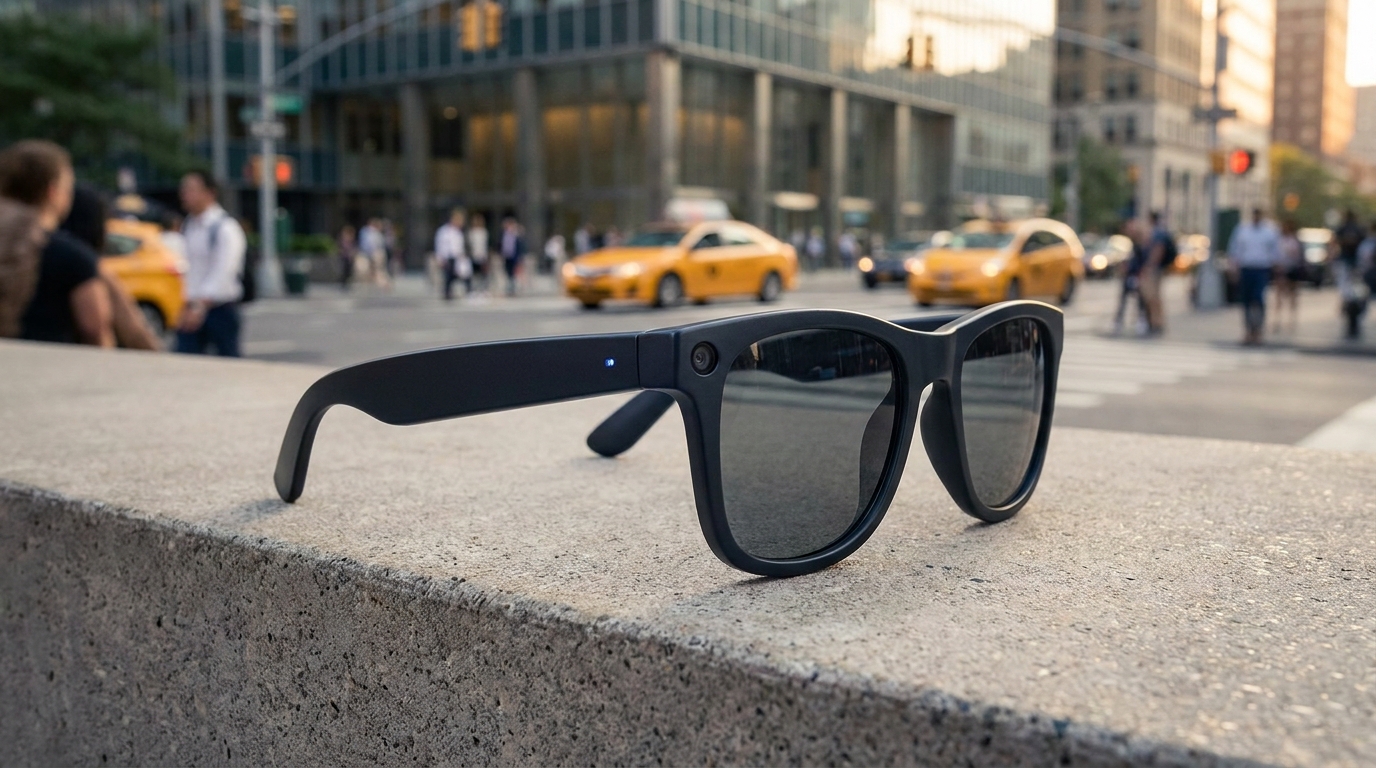
Currently, the product lineup consists of the 'Ray-Ban Meta Smart Glasses.' Critically, these glasses have no visual display. Forget metrics like field-of-view or nits of brightness; they are simply not part of the product's vocabulary. Instead, the hardware is centered on two core functions: capture and audio.
The first-generation models, now being discounted, feature dual cameras embedded in the frame's corners for capturing first-person perspective photos and videos. A set of discreet open-ear speakers allows for taking calls and listening to music, while voice commands via "Hey Meta" or a small touchpad on the temple arm provide control. The entire experience is designed to be hands-free and immediate.
The real evolution is happening in the software. Through updates, the glasses are being transformed from simple camera devices into a powerful, real-world AI assistant. Powered by Meta AI, the glasses can now identify landmarks, translate text on a sign, and answer contextual questions about what the wearer is seeing. This positions the product as a true 'AI Glasses' contender, not just a content capture tool.
As we’ve covered, the recent record-low prices on these Gen 1 models are a classic market signal. This points directly to inventory clearance ahead of a next-generation launch. We anticipate Gen 2 will feature significant upgrades to the camera sensors, AI processing capabilities, and potentially an expanded range of styles to cement their fashion-first positioning.
Placing Ray-Ban against competitors like the TCL RayNeo X3, ASUS AirVision M1, or Viture Pro XR reveals a fundamental divergence in strategy. Those companies are locked in a battle to create the best wearable 'personal display'-a private, virtual monitor for watching movies or extending a laptop screen. They are utility-focused and tethered, either physically or wirelessly, to a host device.
Ray-Ban’s primary differentiator is social acceptability. The Ray-Ban Meta glasses are indistinguishable from their analog counterparts to the casual observer. They are an all-day wearable. In stark contrast, devices from ASUS, TCL, and Viture are task-specific accessories. Their form factor, while improving, remains overtly technological and unsuitable for continuous, casual wear. No one is wearing a pair of AirVision M1s on a first date.
Furthermore, Ray-Ban operates within the powerful, if closed, Meta ecosystem. The glasses are optimized for instant sharing to Instagram and Facebook, creating a sticky feedback loop for social media users. While competitors offer more open connectivity to platforms like Android or Windows, Ray-Ban offers a polished, integrated experience for Meta’s billions of users, coupled with an increasingly sophisticated and proprietary AI that the others cannot match.
The SGD Verdict: The Ray-Ban Meta Smart Glasses are for the person who values style over screens. They are the definitive choice for capturing and sharing life's moments seamlessly, and the only viable option for a consumer who wants smart features without the social stigma of typical tech eyewear. Their primary strength is their design; their weakness is the lack of a visual display and the privacy concerns inherent to an always-on camera from Meta.
Looking ahead, the next 12 months will be defined by the launch of a Gen 2 product. We will be watching for three key developments: a leap in camera and AI performance, the introduction of live-streaming capabilities to challenge services like Twitch, and the public and regulatory response to a more powerful, AI-seeing camera being worn in public. Ray-Ban isn’t trying to win the AR arms race; it's playing a different game entirely, and it's on the verge of lapping the field.
Interactive guide — prices, displays, cameras, battery.
Share this story