Smart Glasses Daily

分析 · · (English original)

Your Glasses Are About to Get a Ghost in the Machine

The smart glasses war isn't about cameras or style anymore. It's a brutal race between Meta, Apple, and Google to own the always-on AI assistant that will live on your face.

W. CHEN· Chinese 特派員·2026年4月22日·5 分で読了
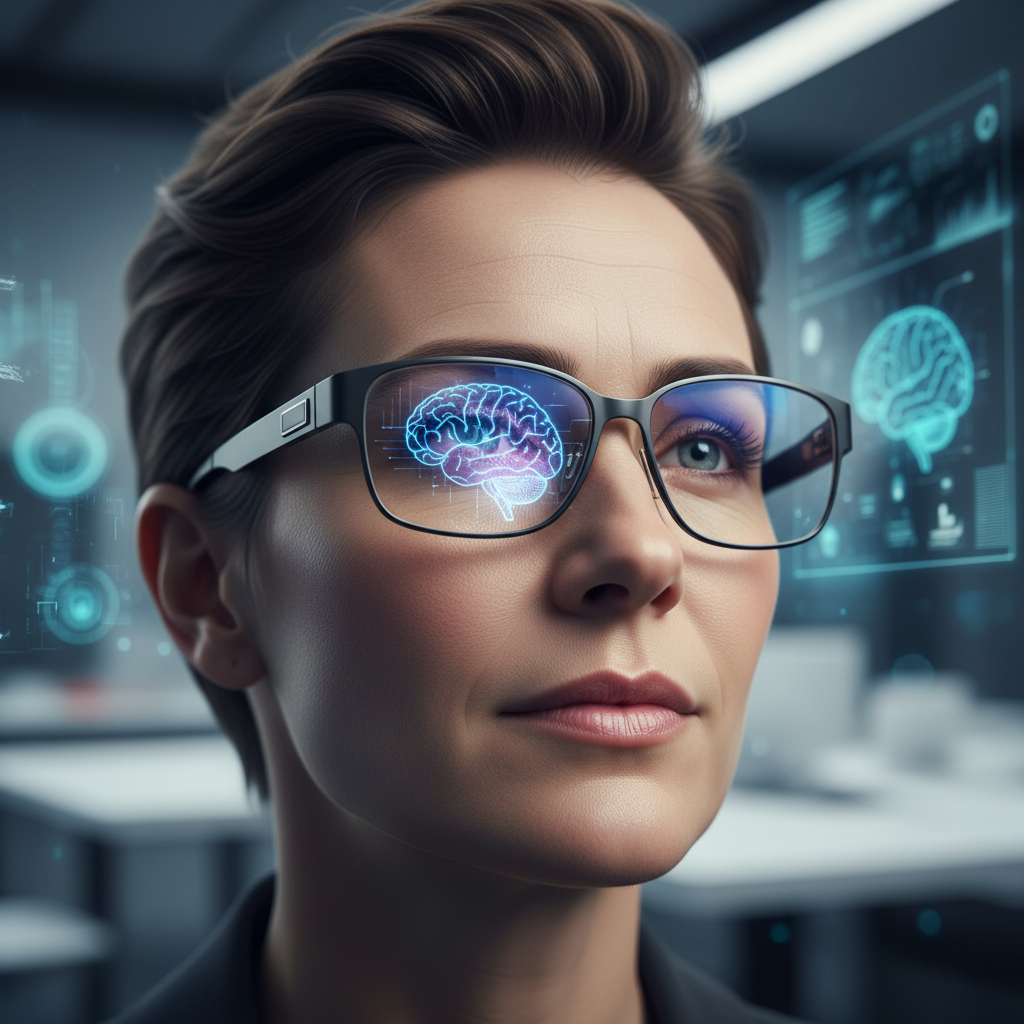
A close-up shot of a person wearing stylish smart glasses, with a faint, glowing digital brain graphic superimposed over the lens, representing the AI assistant within.

A close-up shot of a person wearing stylish smart glasses, with a faint, glowing digital brain graphic superimposed over the lens, representing the AI assistant within.

Let’s get one thing straight: the debate over whether people will wear smart glasses is over. The retail success of the Ray-Ban Meta collaboration proved that if you nail the form factor, people will put a computer on their face. But obsessing over the hardware is missing the point. The mounting evidence, from budget filings to competitive product launches, shows the real war is for the AI that will live inside the frame—a persistent, conversational intelligence that mediates your reality.

Meta and Ray-Ban cracked the first part of the code: make a desirable object. As their own brand guide states, the play is about style, not screens. The result, as WIRED puts it, are “some of the nicest glasses I’ve ever worn.” This strategy normalized the idea of a face computer, but the camera and open-ear audio were just the Trojan horse. The true product is the integrated Meta AI, an assistant capable of everything from identifying flora to providing real-time information.

This AI-centric approach is the new battleground, and the hardware is rapidly becoming a commodity. Look no further than Huawei, which just launched its own camera-equipped smart glasses on HarmonyOS. The feature set—a 12MP camera, translation, a voice assistant—is a near-perfect echo of Ray-Ban Meta’s offering. Huawei's only meaningful differentiator is a spec-sheet win on battery life, underscoring that the physical device is now a template, an interchangeable vessel for a competing intelligence.

This pivot to AI-as-the-product explains the investor anxiety swirling around EssilorLuxottica. The eyewear conglomerate is reportedly facing pressure over the lower margins on its high-tech collaborations. This isn't a surprise. When the hardware becomes a container for a tech partner’s AI, the value shifts from the physical frame to the software and services—a domain where an eyewear maker has little control and sees less profit.

This is why the next phase of this war won't be about gadgets, but platforms. As we’ve argued before, the “Android XR invasion” is coming. The messy, fragmented market of one-off products from brands like Reebok and Huawei is about to be consolidated by a pincer movement from Google and Samsung, turning this into a full-blown platform war. Your next pair of smart glasses won't just be 'smart'; they will be an endpoint for Meta AI, Google Assistant, or Siri.

And Apple is coming to burn the whole thing down. According to Bloomberg's Mark Gurman, Cupertino is preparing a “multi-pronged assault” designed to “pull the rug out” from under Meta. The strategy isn’t just one pair of glasses; it’s a full ecosystem that includes multiple prototypes, camera-equipped AirPods, and a dedicated AI wearable. Apple isn't just trying to sell you a frame; it's orchestrating a market entry to make its AI the indispensable layer between you and the world, deeply integrated with the iPhone.

Apple’s reported development of four distinct AI glasses designs—internally dubbed N50—confirms a deliberate and patient strategy. With styles ranging from Wayfarer-esque frames to designs mimicking Tim Cook's own eyewear, Apple is aiming to blanket the market with choice. But the real weapon is the seamless integration with iOS, creating a walled garden for your face that would make Meta's early lead feel like a distant memory.

For years, the biggest barrier to smart glasses has been the awkwardness of control—clumsy frame taps, unreliable gestures, and socially awkward voice commands. While niche players like Sensoryx are betting on physical controllers like a “magic ring,” the platform giants are solving the input problem by making the AI the interface. When you can have a natural, ongoing conversation with your glasses, the need for physical input dramatically recedes.

But the convenience of an always-on AI companion has a deeply unsettling flip side. The same fundamental technology that allows Meta AI to identify a plant in a “weirdly cheery voice” can be weaponized for surveillance. And it’s not a hypothetical threat; it’s already happening.

Look no further than the Department of Homeland Security's 'ICE Glasses.' Budget documents reveal a plan to equip federal agents with eyewear that uses real-time AI to identify individuals from a distance based on biometric data like facial features and walking gait. This isn't science fiction. This is a government agency actively developing the dystopian potential of the very technology Meta is normalizing for the mass market.

The convenience of asking your glasses, “What’s that building?” is inextricably linked to the power to ask, “Who is that person?” The rise of the always-on AI assistant in our eyewear forces a stark and unavoidable trade-off. We are gaining a powerful tool for navigating the world, but in doing so, we are building and participating in an unprecedented infrastructure for surveillance, both corporate and state-sponsored.

So as the platform wars heat up, and as Apple prepares its meticulously planned assault, remember what the fight is really about. The price drops on first-generation Ray-Ban Metas aren't just about clearing inventory; they're about accelerating the adoption of the AI platform. The game isn't about selling you a new pair of sunglasses. It's about convincing you to install a new operating system for your life, with all the power, convenience, and peril that entails.

この記事をシェア

ウィークリーブリーフ

スマートグラスを、毎週金曜の朝あなたの受信箱に。.

毎週金曜の朝、鋭いメールを一通。無駄なし。ワンクリックで解除可能。

メールアドレスを共有することはありません。

関連記事

スマートグラスを着用した連邦捜査官

Analysis

国土安全保障省の「ICE Glasses」:監視問題の新時代

国土安全保障省は、連邦捜査官向けに生体認証データを使用して個人をリアルタイムで識別するスマートグラスを開発していると報じられています。このテクノロジーは、対象者だけでなく、すべてのアメリカ人にとって重大なプライバシー懸念を引き起こします。

J. MARCHAND·2 min read

Apr 22, 2026

Appleロゴをあしらった、洗練された未来的なスマートグラスの様式化されたレンダリングで、高度なAR機能を示唆しています。

Analysis · Apple

グルマン氏:Appleのメガネ戦略はMetaのAR先行優位を標的

Bloombergのマーク・グルマン氏がAppleのスマートグラスにおける長期戦略を明らかにした。これには、カメラを搭載したAirPodsやAIウェアラブルの可能性も含まれる。この戦略は、成長著しいAR分野におけるMetaの先行優位を覆すことを目的としている。

W. CHEN·2 min read

Apr 22, 2026

A sleek pair of modern smart glasses rests between a Samsung Galaxy phone and a Google Pixel phone, with a glowing Android XR logo reflected in the lens of the glasses.

Analysis

The Android XR Invasion Is Coming. It Will Change Everything.

For years, the smart glasses market has been a chaotic gold rush defined by Meta. In the next 12 months, a pincer movement by Samsung and Google will turn it into a full-blown platform war, with Android XR as the weapon of choice.

S. WHITMAN·5 min read

Apr 21, 2026

話題の中心

話題の記事

今週、空間コンピューティングで最も議論を呼んでいる記事。

あなたへの選りすぐり

あなたへ

レビュー・ニュース・分析の中から、見逃していたかもしれない記事を厳選。