Guides · -
-'s minimalist vision: Why display-less smart glasses just might disrupt the market
While rivals chase immersive displays and augmented reality, a new player, -, is betting on the power of the invisible. Their entry signals a radical pivot towards ambient AI, challenging the very definition of smart eyewear.

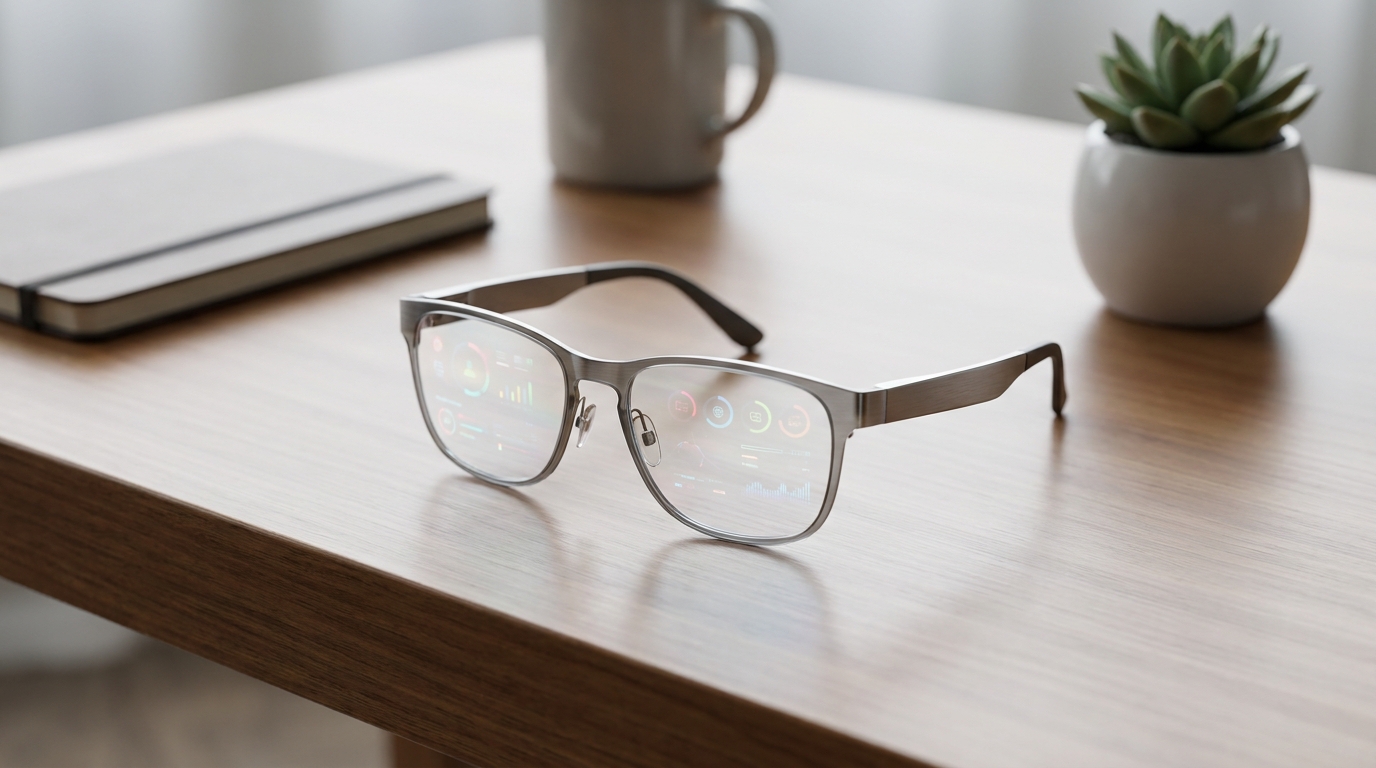
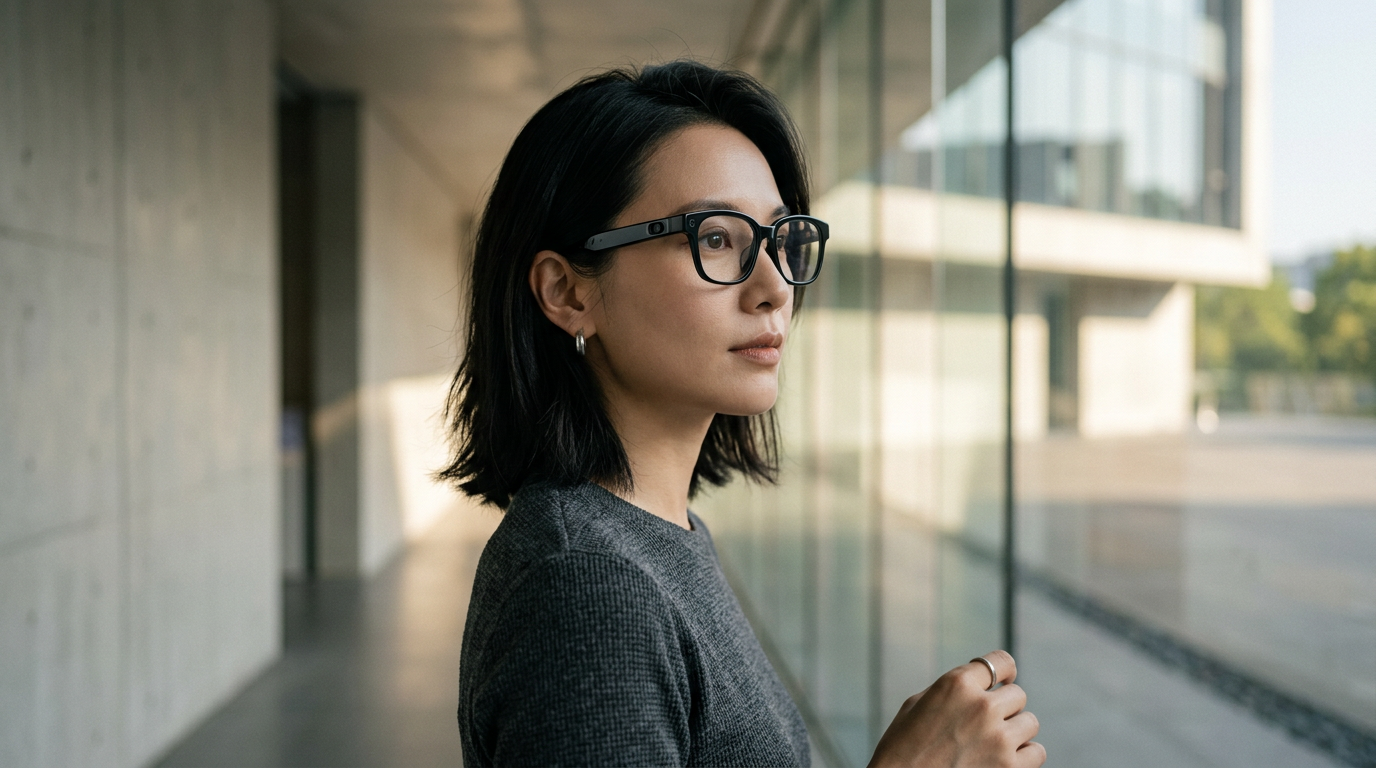
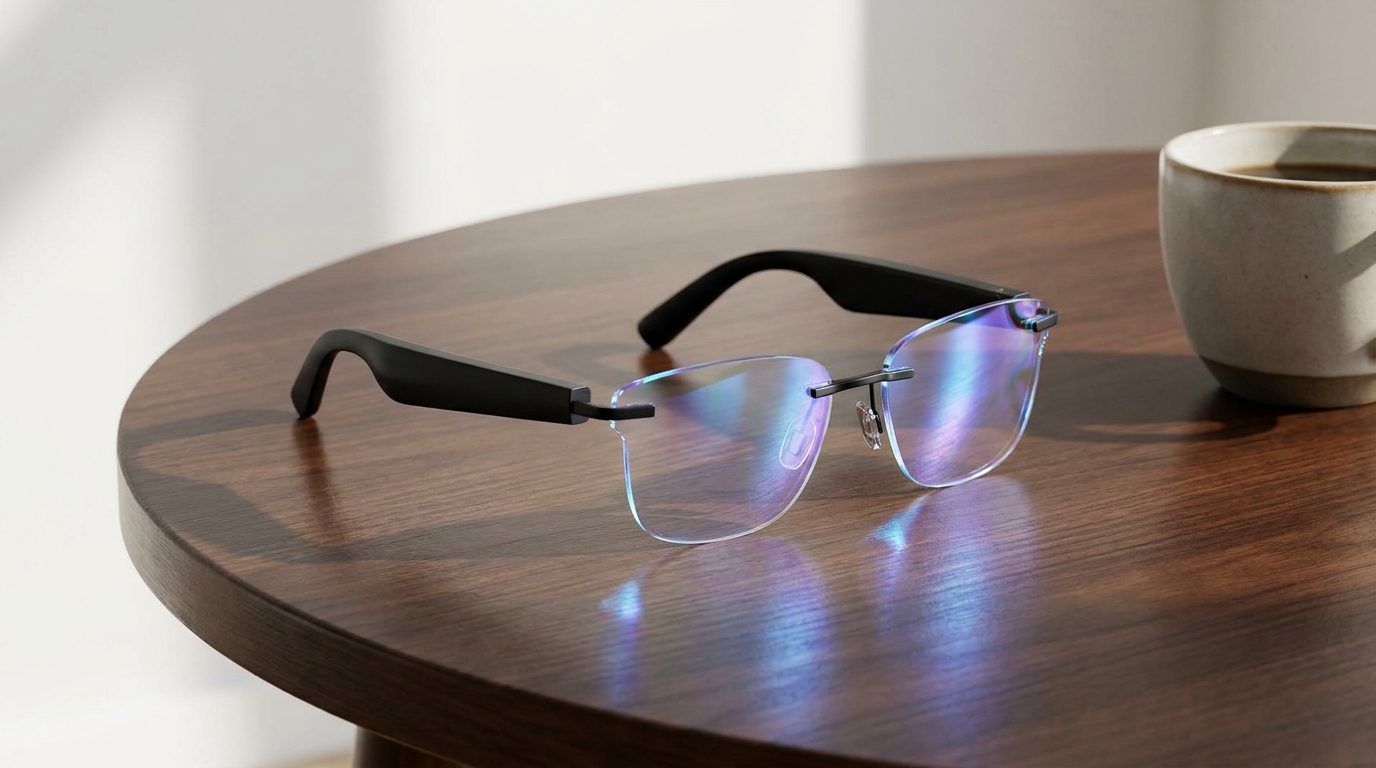
minimalist, sleek smart glasses by - in a modern editorial setting, emphasizing lightweight design and subtle integration into everyday wear
The smart glasses industry is at a critical juncture, choked by its own ambition. For years, the relentless pursuit of immersive augmented reality has led to bulky, power-hungry devices with prohibitive price tags and questionable mainstream appeal. From the clunky prototypes of yesteryear to today's high-fidelity headsets, the underlying assumption has been that more screen real estate, more visual overlay, is the only path forward. But what if the future of smart glasses isn't about what you see, but what you don't?
Enter -, a new name on the radar that appears to be championing precisely this contrarian viewpoint. This burgeoning entity is not just another competitor; it's a philosophical counterpoint, a direct challenge to the display-centric dogma that has dominated the conversation. Their emergence aligns uncannily with our own editorial thesis, articulated in "The Invisible Hand: Why Display-Less AI Glasses Are the Real Mass-Market Play," suggesting a shared conviction that true mass adoption hinges on subtlety, not spectacle.
- is not just launching a product; it’s launching a paradigm shift. They are betting that the real value of smart glasses lies not in grafting digital overlays onto our physical world, but in seamlessly integrating intelligent assistance that enhances our reality without visually intruding upon it. This isn't about seeing augmented environments; it's about experiencing an augmented existence, where information and interaction become ambient, almost instinctive.
While the specific corporate lineage of - remains somewhat under wraps, their strategic positioning is crystal clear: they are a stealth entrant capitalizing on the prevailing market fatigue with cumbersome AR. Their timing is impeccable, coinciding with a broader societal yearning for less screen time and more meaningful, unobtrusive technological integration. This isn't just a startup trying to carve out a niche; it's a movement pushing for a fundamental re-evaluation of what 'smart' truly means in the context of personal eyewear.
Their target demographic is not the tech-enthusiast eager for virtual worlds, but the everyday individual seeking practical, discreet augmentation. Imagine a world where your eyewear acts as a silent co-pilot, enhancing your memory, anticipating your needs, or streamlining your daily tasks without ever demanding your visual attention. This segment, largely ignored by the display-heavy incumbents, represents a vast, untapped market hungry for utility over spectacle, discretion over dazzling visuals. - is positioned to capture it.
Given the publicly known insights and the explicit reference to display-less AI glasses, -'s product lineup, while lacking specific model names or detailed specifications, is clearly defined by its core philosophy. We anticipate their offerings to be ultra-lightweight frames that prioritize form factor, battery life, and powerful, localized AI processing. These are not glasses designed to show you digital objects; they are designed to *understand* your world and *assist* you within it, subtly.
Expect a focus on advanced audio interfaces, including sophisticated microphone arrays for crystal-clear voice commands and contextual sound analysis. Haptic feedback and subtle LED indicators would likely serve as the primary means of user notification, ensuring that interactions remain private and non-disruptive to the user or those around them. The 'display' in -'s world is the user's own mind, informed by seamless, ambient data streams delivered through audio and haptics, rather than projected visuals.
Their smart glasses will likely serve as personal AI companions, offering real-time language translation, intelligent scheduling assistance, contextual reminders, and information retrieval via discreet voice commands. The emphasis will be on processing data at the edge, maximizing privacy and minimizing latency. Without the power draw of a high-resolution display, these devices promise multi-day battery life, a critical differentiator for true all-day wear.
Positioning - against the established players reveals a stark contrast in vision. Meta, with its Ray-Ban Meta series and forthcoming Display glasses, still leans heavily into visual capture and social sharing, alongside nascent AI features. Apple's Vision Pro, and likely its rumored Apple Glasses, represent the zenith of the immersive, display-driven experience, demanding significant user attention and investment. Lenovo's Legion Glasses target consumer entertainment, while ThinkReality A3 serves industrial AR — both entirely dependent on their integrated screens.
-, in contrast, directly challenges this display-first orthodoxy. Their concrete differentiators are their deliberate *lack of a display*, their singular focus on *ambient, personal AI*, and an *ultra-minimalist form factor* that seamlessly integrates into daily life. This philosophical divergence positions them not as a rival chasing the same prize, but as an alternative addressing an entirely different set of user needs and desires. Their likely significantly lower price point, stemming from simpler hardware, will further democratize access to smart assistance.
Where Meta wants to capture your life, and Apple wants to immerse you in digital worlds, - wants to simply *enhance* your life, discreetly and without visual friction. They are not competing on who has the best AR graphics or the most expansive digital canvas; they are competing on who can make the most helpful, least intrusive, and most truly ambient intelligent assistant. This makes direct comparisons difficult, as their value proposition exists on a parallel, rather than convergent, track.
For whom is - building? They are building for the individual who finds current smart glasses either too obtrusive, too expensive, or too focused on experiences they don't need. They are for the privacy-conscious, the style-aware seeking subtle tech, and anyone yearning for AI assistance that feels like an extension of their own intuition, rather than a separate device. This is for the person who values a clear line of sight, both literally and metaphorically, in their daily tech interactions.
The strengths of - lie in its bold, differentiated vision, its potential for true mass-market adoption due to unparalleled form factor and battery life, and its alignment with a growing sentiment against screen-centric living. The weaknesses, however, are also significant: educating a market accustomed to visual feedback about the value of an 'invisible' interface will be an uphill battle. Their success hinges entirely on the sophistication of their AI and the seamlessness of their audio-based user experience. Can ambient AI truly deliver indispensable value without a screen?
In the next 12 months, we will be watching - with keen interest. Our focus will be on their first concrete product reveal: specifically, the robustness of their AI engine, their approach to third-party integrations, and their communication strategy for defining value without a visible display. Can they make the 'invisible' truly indispensable? If they can execute on their vision, - might not just disrupt the smart glasses market; they might redefine it entirely, proving that sometimes, less is indeed more.
Share this story